
South Korea has about 11 million crypto exchange accounts, roughly a fifth of its population, while more than 99% of the global stablecoin market is denominated in US dollars.
This situation illustrates how nations determine who can issue their own digital currencies, with South Korea poised to make a significant decision in Asia.
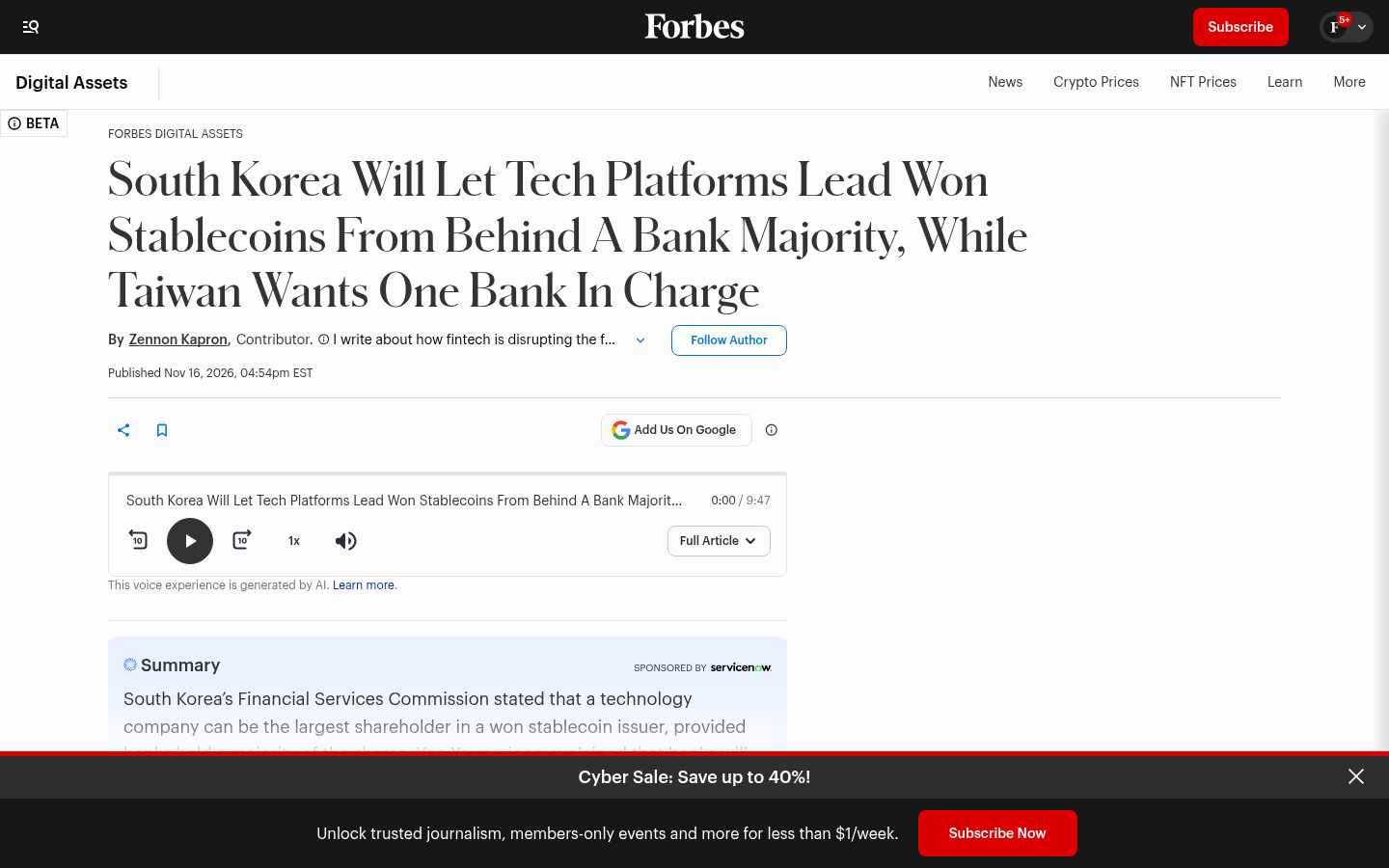
The government aims to establish a won stablecoin to reduce the reliance on dollar-pegged tokens in its crypto market. A central issue that has delayed the law for over a year is the question of who should oversee the issuance.
The Financial Services Commission has proposed a balanced approach: while technology firms can lead the issuance of a won stablecoin, banks must maintain ownership of at least 50% plus one share.
This analysis will explore the details of the proposed rule, the motivations behind the Bank of Korea's position, the implications for companies like Naver, Kakao, and Toss, and how it compares to regulations in Taiwan, Hong Kong, and Japan.
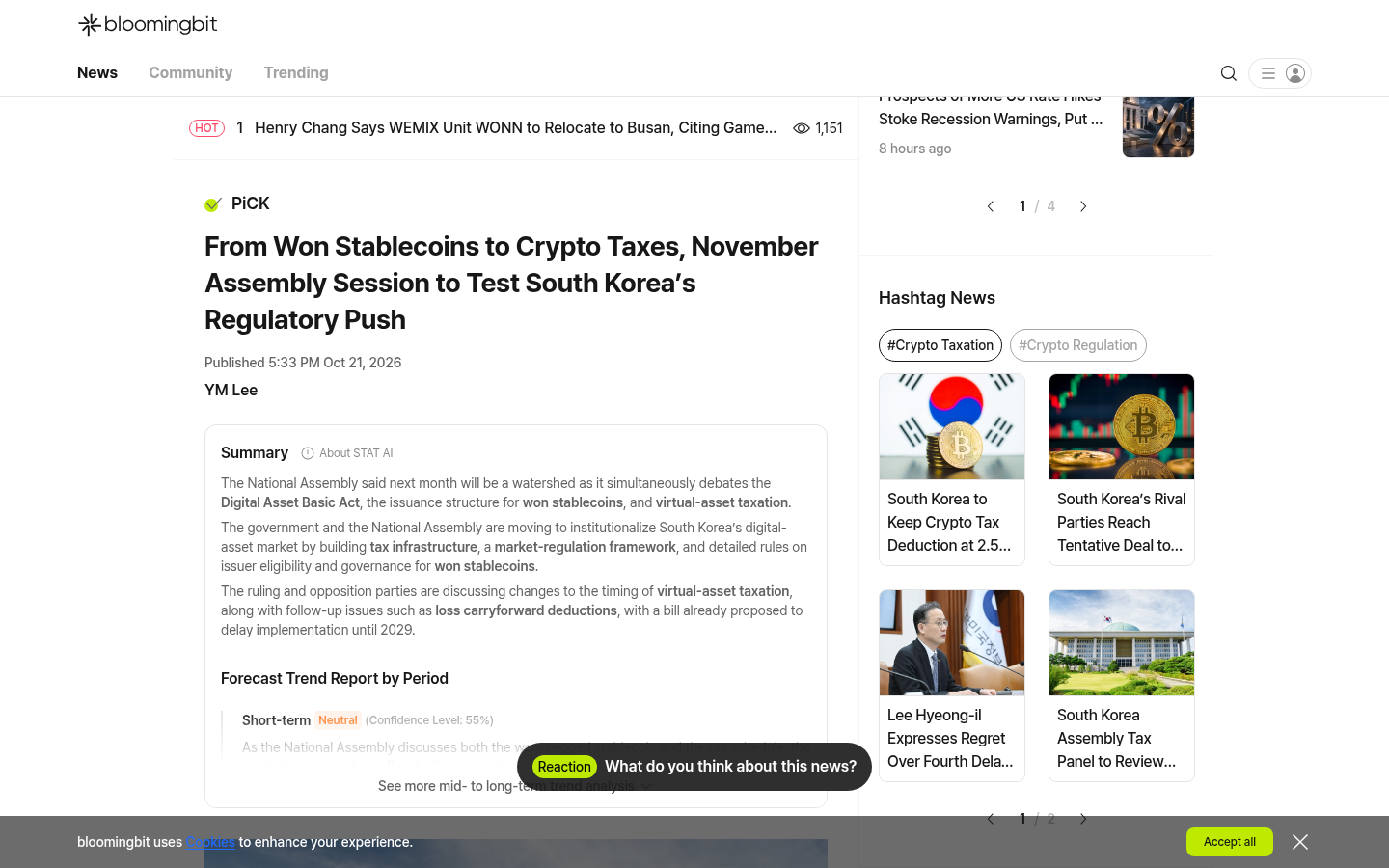
Key Takeaways
- Banks would need to own a minimum of 50% plus one share of any won stablecoin issuer.
- A technology firm can still hold the largest single stake.
- The Bank of Korea advocates for bank-led issuance to safeguard monetary control.
- The Digital Asset Basic Act is expected to be introduced in November 2026.
- Naver's $10.3 billion acquisition of Dunamu is a critical test of the proposed rule.
Motivations for a Won Stablecoin
Korean crypto users are already active traders, predominantly using dollar-pegged stablecoins from foreign sources. Evidence from recent reports indicates significant outflows of stablecoins from Korean exchanges to international platforms.
Policymakers view a won stablecoin as a means to retain these capital flows domestically and provide Korean fintechs with a local digital currency. Without it, the economy risks becoming an on-chain environment devoid of the won's influence.
Recent developments have intensified pressure for this initiative. A won-pegged token named KRWQ, which was launched in October 2025, is already in circulation outside Korea. On October 12, 2026, Bank of Korea Governor Shin Hyun-song expressed his support for private issuance.
Development of the Proposed Rule
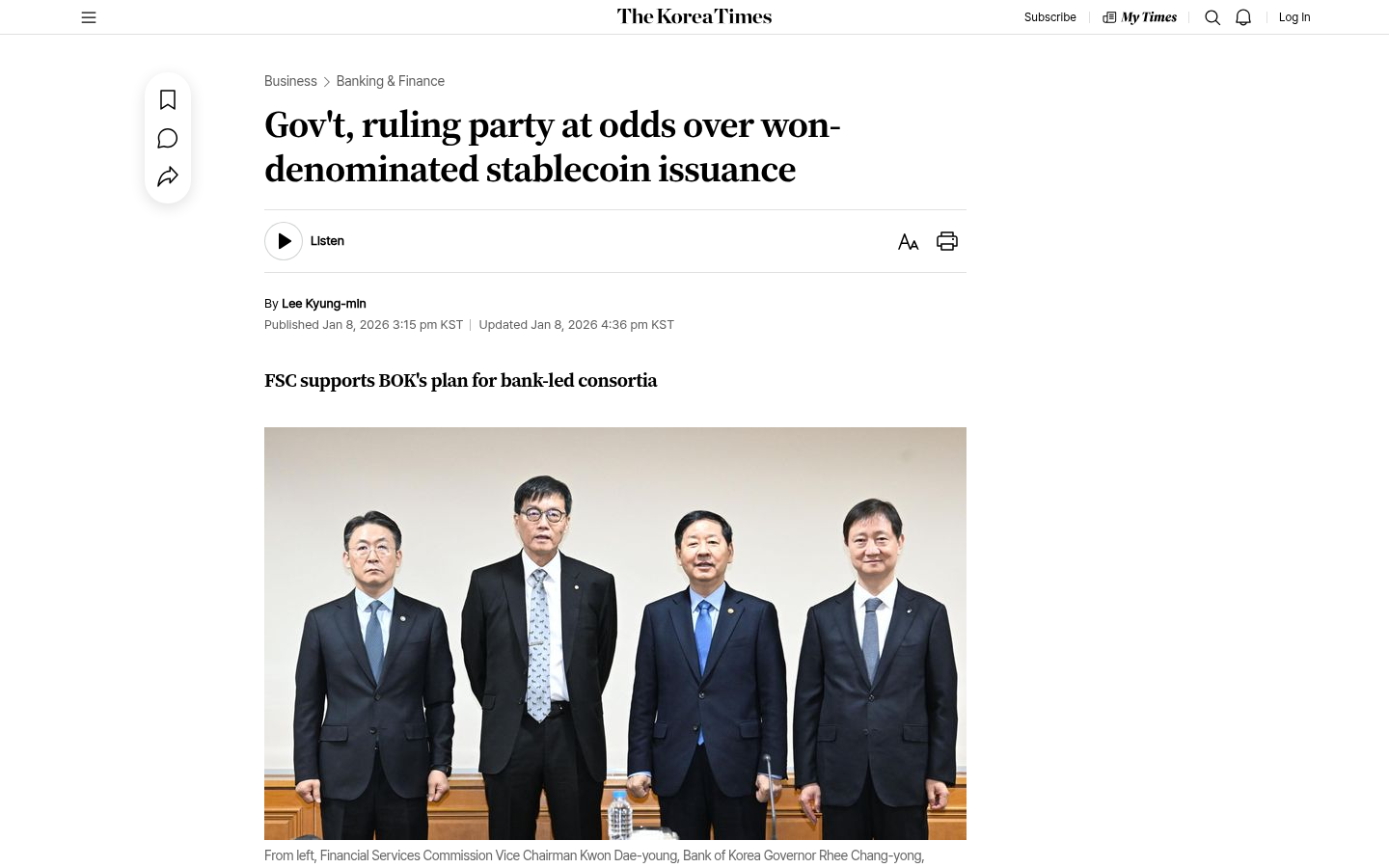
The concept of requiring a bank majority has emerged after extensive negotiations between regulators and lawmakers. In January 2026, the Financial Services Commission shifted away from its previous support for fintech-led issuance, aligning with the Bank of Korea's stance that banks should hold at least 50% plus one share in an issuing consortium.
| Date | Step |
|---|---|
| January 2026 | FSC backs bank majority |
| July 2026 | BOK reiterates bank-first preference |
| September 2026 | Government proposal: 50% plus one |
| October 2026 | Assembly initiates review |
| 12 November 2026 | FSC permits tech leadership |
| November 2026 | Bill anticipated in Assembly |
The proposal also establishes a minimum paid-in capital requirement of 5 billion won, approximately $3.7 million, and allocates the specifics of licensing and shareholder requirements to a presidential decree, allowing for future adjustments.
Details of the 50% Plus One Rule
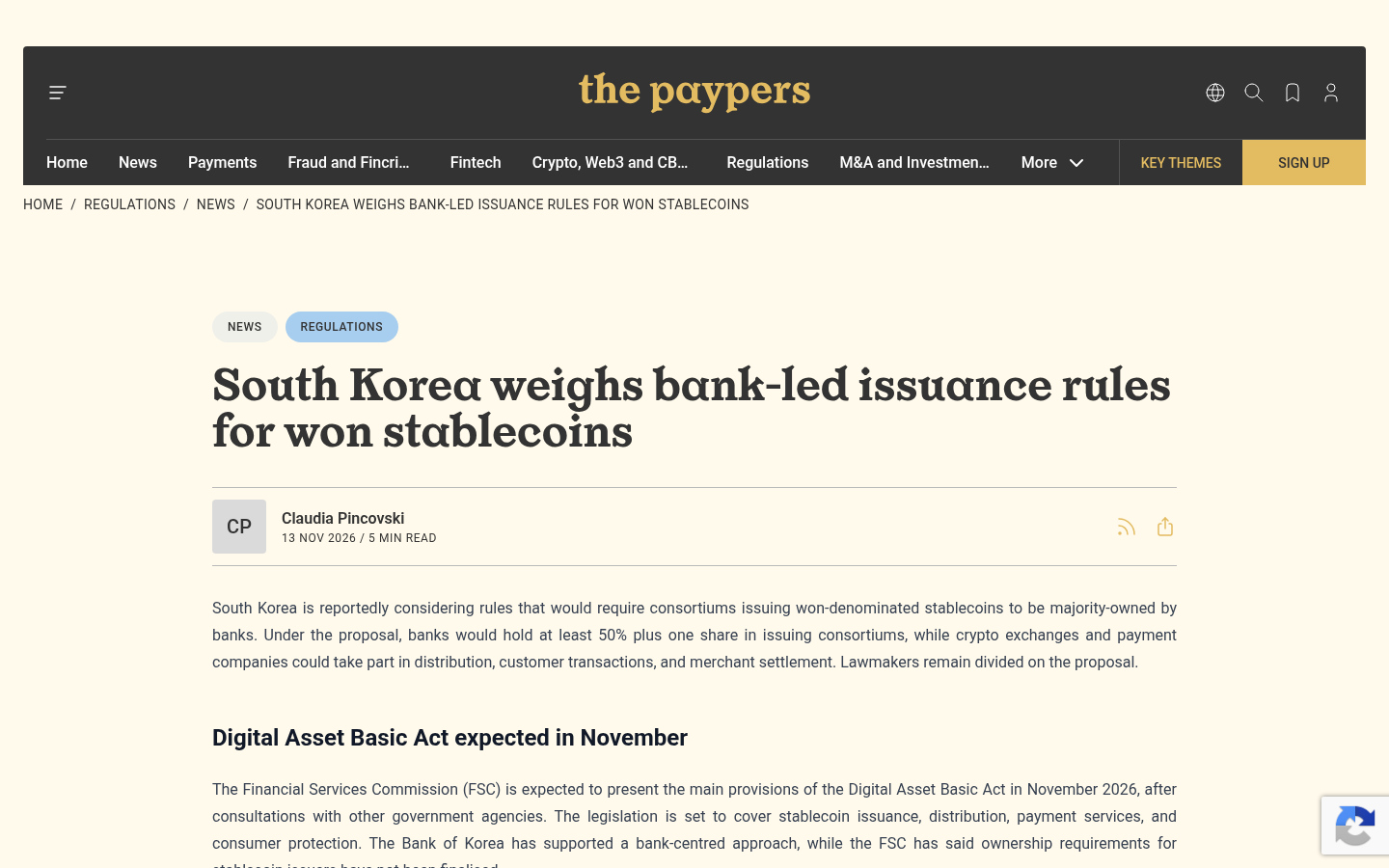
The most recent iteration of the rule is more accommodating than the initial January proposal. On November 12, 2026, FSC director general Yoo Young-joon stated that a technology company could be the largest single shareholder in a won stablecoin issuer, provided that banks collectively maintain the majority.
- Ownership: Banks must collectively hold at least 50% plus one share, while a single tech firm can possess the largest individual stake.
- Role of Banks: Although banks will not directly issue or manage the coin, they will be shareholders in a distinct entity, provide additional capital if necessary, and apply their anti-money-laundering protocols.
- Operational Control: The technology partner will oversee product development, distribution, and technological aspects.
- Phased Approach: Initial issuance rights will be granted to bank-majority consortia, but Yoo left the door open for a broader pool of issuers in the future.
This structure ensures that a regulated balance sheet supports every won stablecoin, while allowing user-centric platforms to operate the product.
Bank of Korea's Desire for Bank Control
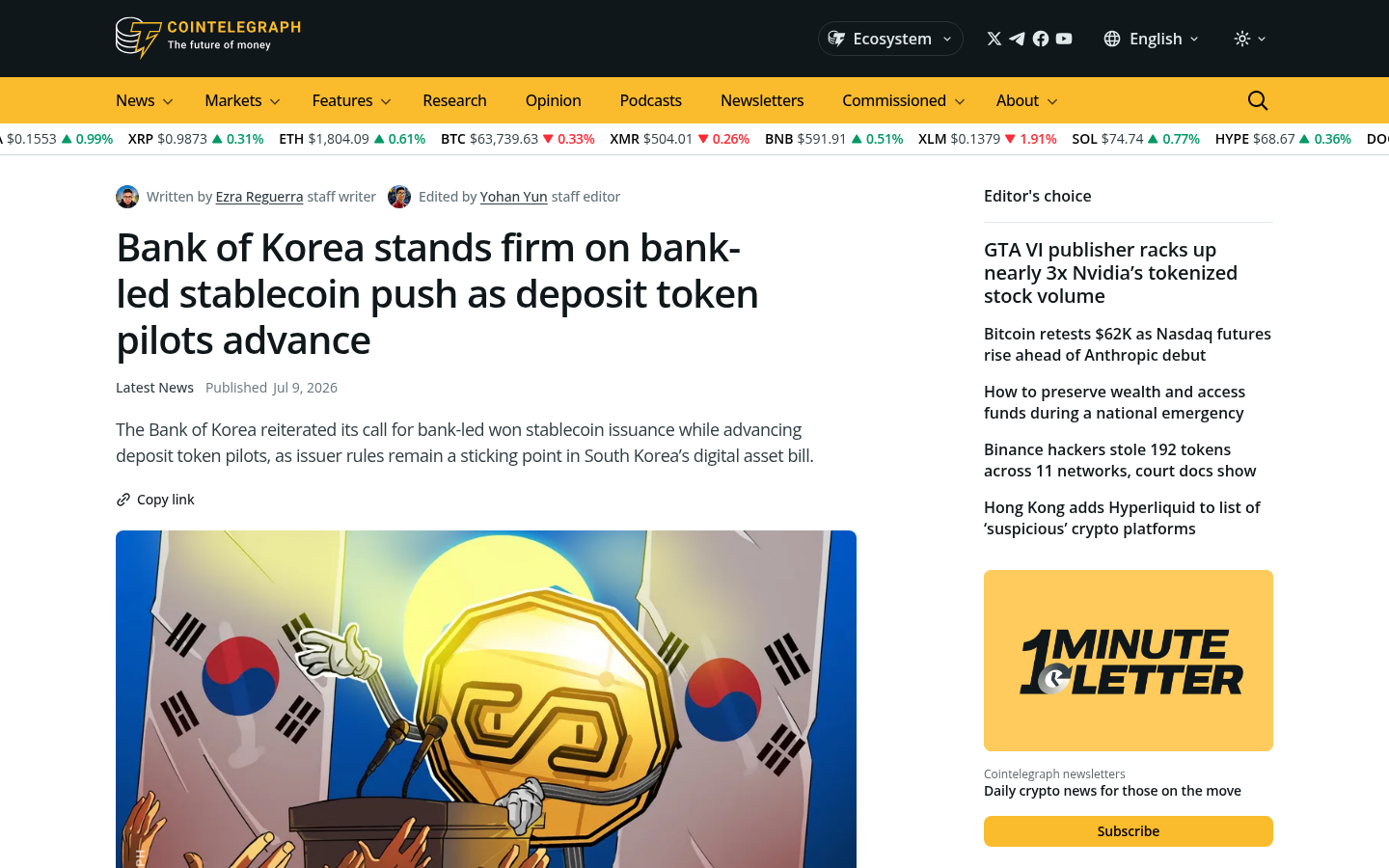
The Bank of Korea has been the most vocal proponent of this rule. In July 2026, it conveyed to the National Assembly's finance committee that won stablecoins should primarily be issued through bank-led consortia, emphasizing priority issuance for these groups and a statutory policy body involving relevant agencies.
- Monetary Oversight: A significant non-bank stablecoin could divert deposits from financial institutions, undermining the effectiveness of interest rate adjustments in the economy.
- Capital Flight Concerns: The Bank of Korea has cautioned that allowing non-bank issuers could exacerbate the outflow of funds from Korea.
- Redemption Risks: Banks, already subject to capital and liquidity oversight, would provide a safety net for a bank-majority issuer in the event of significant redemption requests.
- Alternative Initiatives: The central bank is also exploring deposit tokens for public transactions, which would help retain funds within banks.
Arguments Against Bank Control
- Innovation Concerns: Fintech companies argue that banks lack the motivation to develop rapid, cost-effective payment solutions that would compete with their own services.
- Accountability Issues: If multiple banks hold minor stakes, no single bank might feel responsible for addressing a capital call during a crisis.
- Political Dimensions: Members of the ruling Democratic Party raised strong objections when the FSC first suggested the bank-majority model, and internal divisions persist within the party.
Stakeholders Impacted
The largest Korean platforms are already adapting in anticipation of the new regulations.
| Company | Action | Status |
|---|---|---|
| Naver Financial | Acquisition of Dunamu (Upbit) | Under review by KFTC |
| Kakao Pay, KakaoBank | Agreement with Fireblocks | Signed September 2026 |
| Toss | QR payment pilot | Completed October 2026 |
| Banks | Majority shareholder status | Awaiting legislation |
Naver serves as a pivotal test case. In November 2025, Naver Financial agreed to acquire Dunamu, operator of Korea's largest exchange Upbit, in an all-stock deal valued at approximately $10.3 billion, with a won stablecoin being central to this strategy.
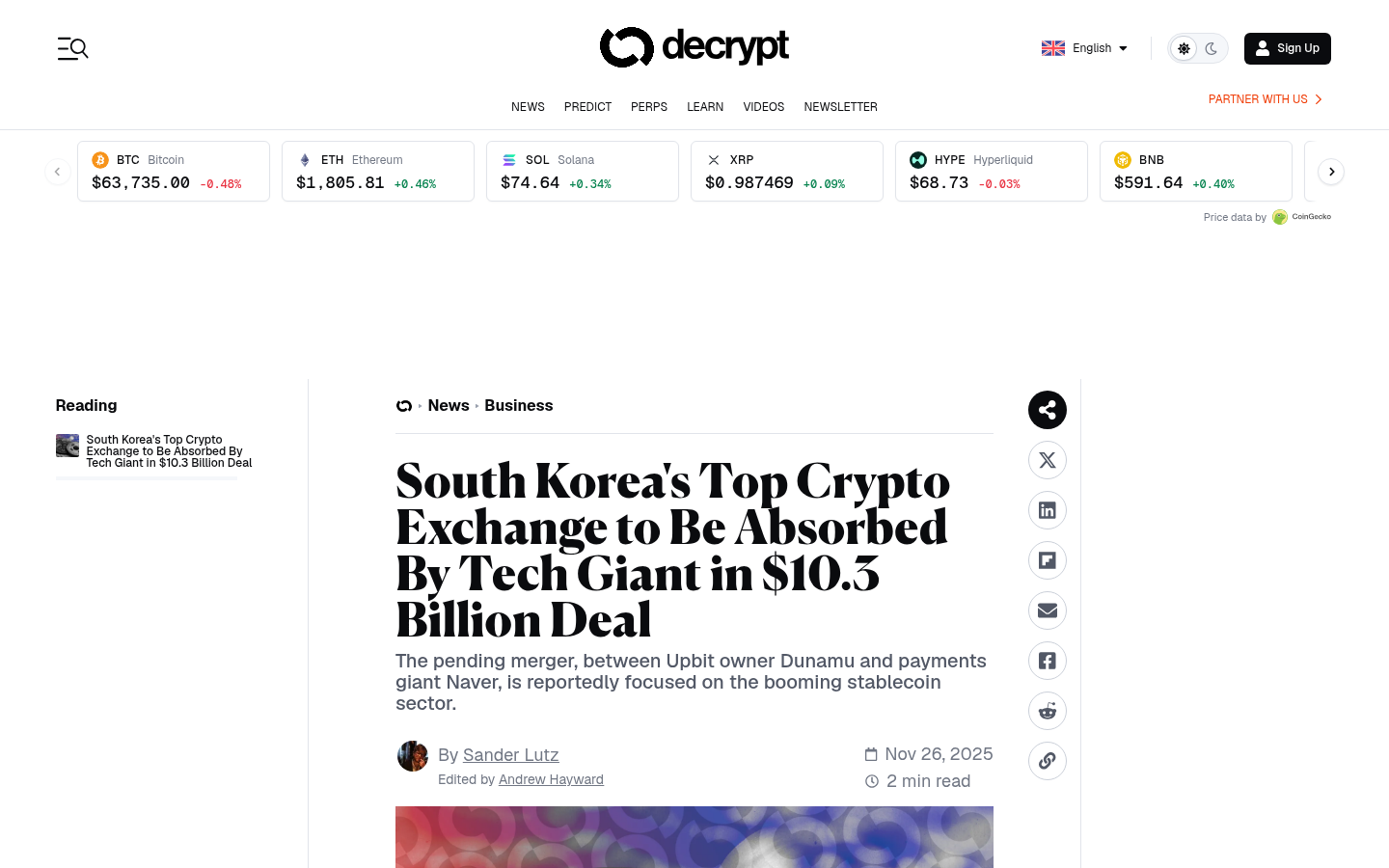
The Fair Trade Commission initiated formal discussions on November 10, 2026, identifying ten markets that will be affected, including the forthcoming won stablecoin sector. Under the proposed regulations, a Naver-led issuer could exist, but only with banks holding the majority stake.
Kakao benefits from having a bank within its group, facilitating the formation of a compliant consortium, as highlighted by the Kakao Pay and KakaoBank Fireblocks agreement. Toss is currently focused on integrating dollar stablecoins, as demonstrated by their Toss coin wallet.
Regional Comparisons
| Market | Issuance Leadership | Bank Requirement |
|---|---|---|
| South Korea | Bank-majority consortia | Banks 50% plus one |
| Taiwan (draft) | Bank-supported issuers | Banks over 50% |
| Hong Kong | Licensed issuers | No specific share |
| Japan | Banks, trusts, fintechs | No specific share |
| United States | Banks and nonbanks | No specific share |
Taiwan's draft regulation extends beyond Korea's, mandating that banks and financial holding companies must collectively own over 50% of a non-bank issuer, and a single entity must hold more than 25%, ensuring accountability from a financial stakeholder.
Additionally, the bank-centered model is increasingly taking hold in other regions. The first licenses in Hong Kong were awarded to bank-associated issuers, and Japan's major banks are moving toward collaborative issuance.
Our guide on APAC stablecoin regulations provides detailed insights into these frameworks, while the GENIUS Act overview illustrates the US approach, which allows direct licensing for nonbanks.
Next Steps Following the Bill
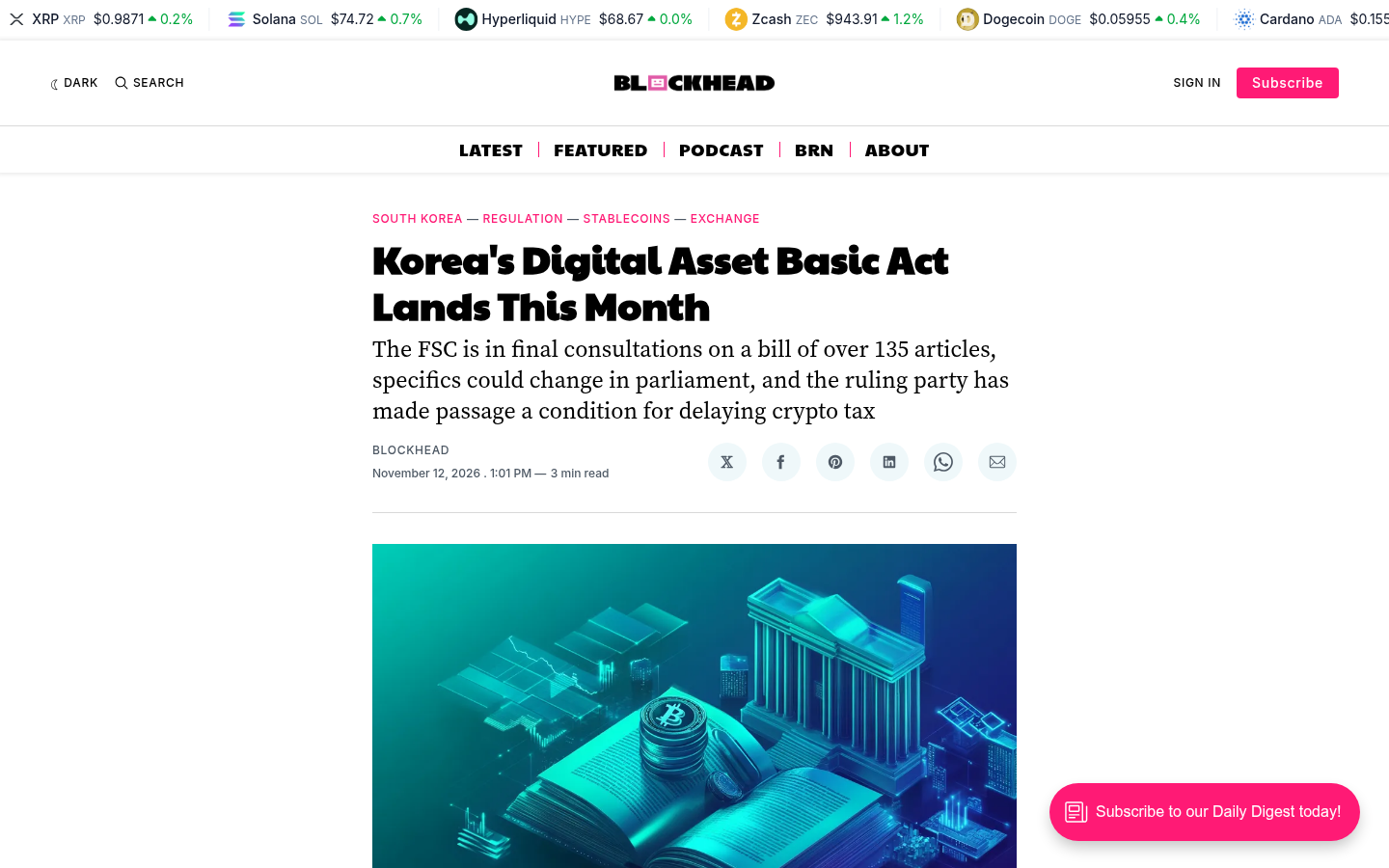
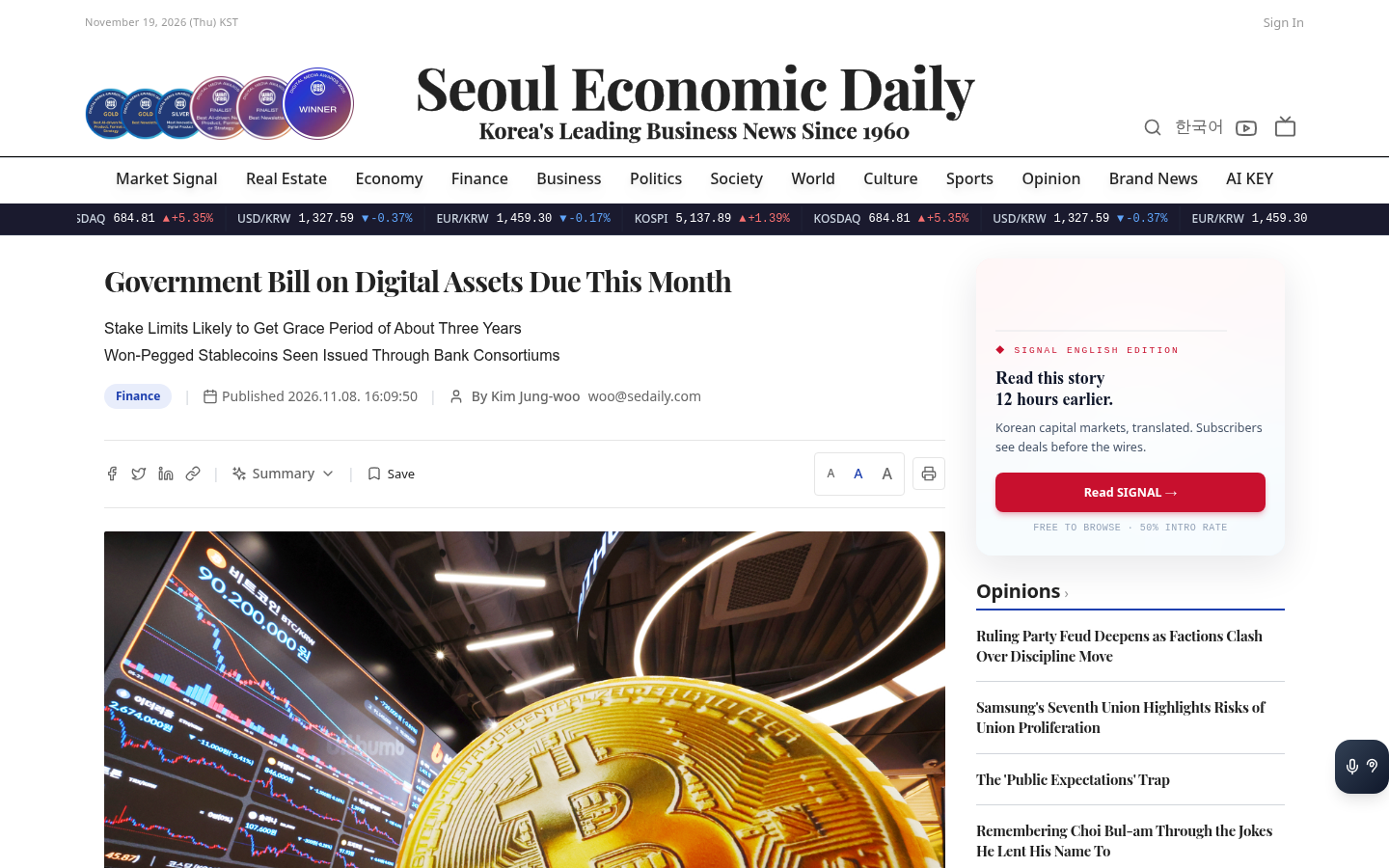
The Digital Asset Basic Act is anticipated to be presented in November 2026, comprising around 135 articles that will address stablecoin issuance, virtual asset service providers, and exchange regulations, though specifics may evolve in the legislative process.
- Payments Legislation: Amendments to the Electronic Financial Transactions Act and commercial laws will be required before won stablecoins can be utilized for typical transactions.
- Exchange Ownership: The forthcoming bill is expected to limit major shareholders of exchanges to 15% to 20%, with a grace period of approximately three years.
- Tax Considerations: The ruling party has connected the bill's approval to the postponement of the crypto tax, which is currently scheduled for 2029.
- Distribution Preparations: Partners are already gearing up for the launch, as highlighted by our report on MoonPay's won stablecoin channel.
What to Monitor
- The bill's text: Whether the 50% plus one threshold is codified in the act or left to presidential decree.
- Parliament: The likelihood of the National Assembly passing the act by the end of 2026, as targeted by the ruling party.
- The Naver decision: How the Fair Trade Commission evaluates the won stablecoin market in its ruling regarding Naver and Dunamu.
- Initial consortia: The partnerships formed between banks and Naver, Kakao, and Toss, and whether a single bank assumes clear accountability.
- An expanded issuer pool: Whether the FSC will permit non-bank majorities for issuance following the initial phase.
Frequently Asked Questions
1. What is South Korea's 50% plus one rule for stablecoins?
This rule stipulates that banks must collectively own a minimum of 50% plus one share of any entity issuing a won stablecoin. A technology firm may still be the largest individual shareholder and manage the product, but banks retain majority control.
2. Why does the Bank of Korea want banks to control stablecoins?
The Bank of Korea advocates for bank control over stablecoins due to concerns that non-bank issuers could siphon deposits from banks, undermine monetary policy effectiveness, and accelerate capital outflows. Bank-majority issuers are already subject to oversight regarding capital and liquidity, providing a safety net in case of spikes in redemption requests.
3. When will South Korea introduce its stablecoin legislation?
The Digital Asset Basic Act is scheduled for introduction in November 2026, with the ruling party aiming for its passage by the year's end. Amendments to payments legislation are also necessary before won stablecoins can be used for everyday purchases.
4. How does Korea's rule differ from Taiwan's?
Korea's framework differs from Taiwan's in its allocation of responsibilities. Korea mandates that banks collectively maintain a majority stake while allowing a technology firm to be the largest shareholder. In contrast, Taiwan's draft requires a single bank or financial holding company to own over 25%.