
As of November 2026, the leading alternatives to Premium Bonds include NS&I's Direct ISA, which offers a guaranteed, tax-free rate of 4.05% backed by the Treasury, the 1-year Guaranteed Growth Bond at 4.99% for locked funds, and the NS&I Direct Saver catering to larger balances beyond the Premium Bonds and ISA limits.
Interest in these alternatives surged following NS&I's announcement on 17 November 2026 regarding a technical glitch in May that resulted in duplicate prize payments totaling approximately £518,000 to around 3,500 Direct Saver accounts, most of which have since been reversed. Premium Bonds continue to offer no interest, and NS&I emphasizes that they are not intended for savers seeking guaranteed returns.
Last updated: 19 November 2026. Rates, prize draws, and limits have been verified against NS&I, Chip, Family Building Society, PrizeSaver, FSCS, Bank of England, and relevant pages from this date. All figures are represented in pounds sterling (£) for UK savers.
Key Takeaways
- The prize fund rate for Premium Bonds stands at 4.35%, with odds of 21,000 to 1 for each £1 Bond per month, both of which are variable, starting from the September 2026 draw.
- On 19 November 2026, NS&I raised its Direct ISA rate to 4.05% and the Direct Saver to 4.00%, up from 3.80% and 3.75%, respectively.
- In the November 2026 draw, 98.7% of the 6,575,175 prizes were worth £25, £50, or £100. For £10,000 invested, these smaller prizes yield an average of around £348 annually, which is lower than the guaranteed £405 to £499 available through NS&I's ISA and fixed bond options.
- All NS&I products are fully backed by HM Treasury. In contrast, other bank, building society, and credit union alternatives are protected by the FSCS up to £120,000 per individual per firm.
- Chip offers better historical odds than Premium Bonds but does not provide interest, with 14,400 out of its 15,021 November prizes being £5.
Comparison of Premium Bonds Alternatives
The following table compares Premium Bonds with six other options based on return, access, and protection. Each row is linked to the provider page where the information was obtained as of 19 November 2026.
| Option | Best for | Return as of 19 Nov 2026 | Limits and Access |
|---|---|---|---|
| Our pick:NS&I Direct ISA | Treasury backing with a guaranteed, tax-free rate | 4.05% tax-free/AER, variable (NS&I) | £1 to £20,000 in 2026/27; no notice or penalty (NS&I) |
| Reference: NS&I Premium Bonds | Tax-free prize draw with easy access | 4.35% prize fund rate, no interest; 21,000 to 1 per £1 Bond (NS&I) | £25 to £50,000; no notice or penalty (NS&I) |
| NS&I Guaranteed Growth Bond (1 year) | Lump sums you won’t access for a year | 4.99% gross/AER, fixed, taxable (NS&I) | £500 to £1 million per issue; no early access (NS&I) |
| NS&I Direct Saver | Large balances exceeding bond and ISA limits | 4.00% gross/AER, variable, taxable (NS&I) | £1 to £2 million; no notice or penalty (NS&I) |
| Chip Prize Savings Account | A prize draw with better historical odds | No interest; November prizes from £5 to £10,000 (Chip) | £10 to £85,000; app only; FSCS via ClearBank (Chip) |
| Family Building Society Windfall Bond | Interest plus a draw featuring a £50,000 top prize | 2.75% gross/AER, increasing to 3.00% from 1 Dec 2026, plus prizes (Family BS) | Exactly £10,000 per bond; requires 35 days' notice to close (Family BS) |
| PrizeSaver (credit unions) | Small savers seeking a £3,000 top prize | Prize draw: 45 prizes worth £5,700 monthly (PrizeSaver) | £1 to £200; membership in a credit union required (PrizeSaver) |
Two trends are evident. NS&I's guaranteed offerings now yield returns close to or exceeding the Premium Bonds prize fund rate. Consequently, the primary incentive for remaining in Premium Bonds is the possibility of winning large prizes. Furthermore, every prize-linked alternative trades Treasury backing for the FSCS's limit of £120,000 per firm.
Reasons for Seeking Premium Bonds Alternatives
The search for alternatives has intensified following the prize error, which brought NS&I into the spotlight just as its guaranteed rates were climbing. Reports confirmed on 17 November 2026 indicated that approximately £1,600 of the erroneous payments from May remained unresolved.
Another issue reported involved NS&I's difficulty in tracing accounts belonging to deceased customers. They estimated that roughly 30,300 estates, potentially totaling £181.9 million, might be impacted and stated that they had compensated over £3 million to 613 estates. NS&I expects to conclude its compensation scheme in the first half of 2027. Neither of these issues alters the Treasury backing associated with Premium Bonds.
Interest rates are another factor driving this trend. The Bank of England increased its Bank Rate to 4% on 5 November 2026, with the next review set for 17 December 2026. On 19 November, NS&I raised its variable rates for the Direct ISA, Direct Saver, and Income Bonds.
How Much Would £10,000 Earn in Premium Bonds Compared to Alternatives?
Investing £10,000 in Premium Bonds averages an annual return of £435, derived from the 4.35% prize fund rate. However, approximately £348 of this total is generated from smaller prizes, ranging from £25 to £100. The remaining earnings depend on the rare occurrence of winning a prize of £500 or above. This has been compared with guaranteed alternatives.
The assumptions include: £10,000 held for 12 months with no withdrawals, rates remaining constant as of 19 November 2026, and all 12 monthly draws being counted (new Premium Bonds and Windfall Bonds are excluded from their initial draws); all figures are before tax. The Windfall Bond utilizes the 3.00% rate effective from 1 December 2026, along with its average prize fund. Chip and PrizeSaver have been omitted as neither publishes entry numbers, making averages difficult to calculate.
| Option | Return on £10,000 | Certainty | Tax |
|---|---|---|---|
| NS&I 1-year Guaranteed Growth Bond | £499 | Fixed | Taxable above your allowance |
| Premium Bonds, average of all prizes | £435 | Average, not guaranteed | Tax-free |
| NS&I Direct ISA | £405 | Variable rate | Tax-free |
| NS&I Direct Saver | £400 | Variable rate | Taxable above your allowance |
| Windfall Bond, interest plus average prizes | £400 (£300 + £100) | Interest variable; prizes not guaranteed | Interest taxable |
| Premium Bonds, £25 to £100 prizes only | £348 | Average, not guaranteed | Tax-free |
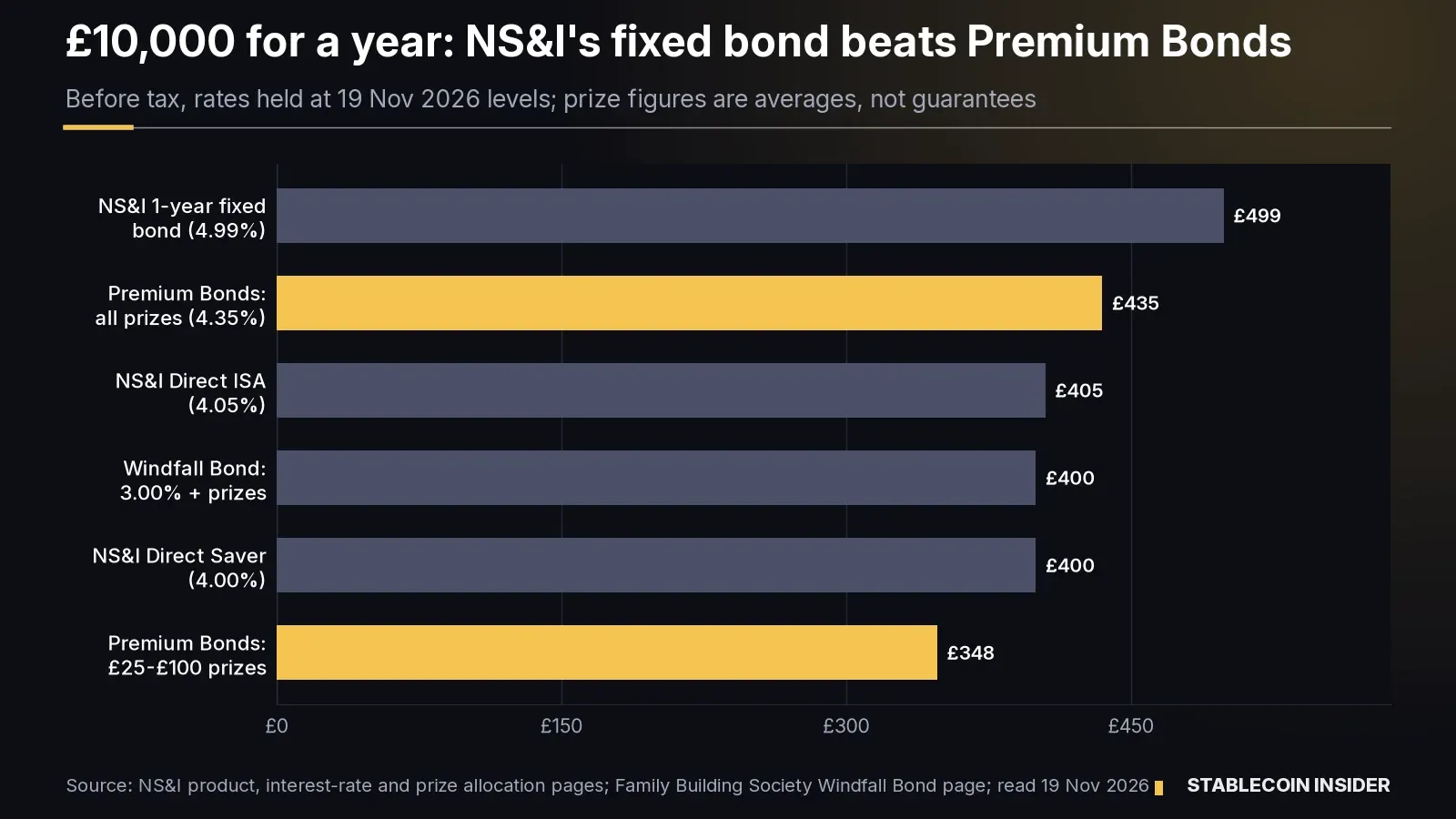
The mechanics of the Premium Bonds figures indicate that with odds of 21,000 to 1, an investment of £10,000 yields approximately 5.7 prizes annually on average. The £25, £50, and £100 prizes constitute 80% of the prize fund; therefore, they represent 80% of the 4.35% rate, equating to £348. The Windfall Bond's prize fund is 1% of annual deposits, distributed as one-twelfth each month, resulting in an average of £8.33 per £10,000 bond for each monthly draw.
Tax considerations narrow the differences for certain savers. Basic-rate taxpayers can earn £1,000 in interest annually without incurring tax, while higher-rate taxpayers are limited to £500, and additional-rate taxpayers are taxed on all bond interest but not on the ISA's interest.
The Probability of Winning Nothing in a Year
Your likelihood of winning nothing in a year is influenced by the amount you hold. The estimates below apply NS&I's odds of 21,000 to 1 across every £1 Bond in each of the 12 draws and the prize distribution from November 2026.
| Holding | Average Prizes a Year | Chance of No Prize in a Year | Average from £25-£100 Prizes |
|---|---|---|---|
| £1,000 | 0.6 | 56% | £35 |
| £5,000 | 2.9 | 6% | £174 |
| £10,000 | 5.7 | 0.3% | £348 |
| £50,000 (maximum) | 28.6 | Close to 0% | £1,740 |
Small investors experience the most significant disparity. With £1,000, the probability of not winning a prize at all in a year is approximately 56%, whereas NS&I's Direct ISA at 4.05% would yield £40.50.
Identifying the Best Premium Bonds Alternatives
Determining the best alternatives to Premium Bonds hinges on whether one prioritizes certainty, larger prizes, or the same government guarantee. Each option detailed below highlights whom it is best suited for, how it compares to Premium Bonds, and its drawbacks.
1. NS&I Direct ISA: Ideal for Preserving the Treasury Guarantee
The NS&I Direct ISA caters to savers who appreciate the safety and tax-free nature of Premium Bonds but desire a known return. It currently offers a variable rate of 4.05% tax-free/AER for amounts between £1 and £20,000 in the 2026/27 tax year, allowing for withdrawals online or via phone without notice or penalties. Like Premium Bonds, it is entirely backed by HM Treasury.
Advantages over Premium Bonds include a guaranteed rate and interest paid on every pound rather than merely on winning Bonds. Disadvantages include the 4.05% rate being lower than the 4.35% average prize rate, utilizing your ISA allowance, and NS&I's classification as a non-flexible ISA, meaning that withdrawn funds still count towards the £20,000 limit. The minimum age to open a cash ISA is now 18.
2. NS&I Guaranteed Growth Bonds: Best for a Fixed Return
For savers who can set aside a lump sum for a fixed duration, NS&I Guaranteed Growth Bonds are ideal. Issue 93 provides a fixed rate of 4.99% gross/AER for one year, while longer terms offer 5.07% (2 years), 5.10% (3 years), and 5.17% (5 years). Individuals can invest between £500 and £1 million per person in each Issue, including joint accounts.
Benefits compared to Premium Bonds include the highest guaranteed return from NS&I on this list, exceeding the average prize rate. However, funds cannot be accessed before the term concludes, and interest is taxable in the tax year the bond matures.
3. NS&I Direct Saver: Best for Large Balances
The NS&I Direct Saver is designed for savers with more than £50,000 who wish to maintain Treasury backing and easy access. It currently offers a variable rate of 4.00% gross/AER for sums between £1 and £2 million per individual, with interest credited annually on April 1st. For those seeking monthly income, Income Bonds yield 3.93% gross/4.00% AER from £500.
Advantages over Premium Bonds include the guaranteed rate and a considerably higher limit. On the downside, interest becomes taxable once it exceeds the Personal Savings Allowance, and account management is exclusively online or via phone.
4. Chip Prize Savings Account: Best for Retaining a Prize Draw
Chip's Prize Savings Account is suitable for savers who enjoy the thrill of a draw and are content with smaller prizes. This account does not offer interest. Each £10 of the average monthly balance earns one entry, applicable from £10 up to £85,000, and is available solely through the app for UK tax residents aged 18 and over. Deposits are held by ClearBank and are covered by the FSCS up to £120,000.
The November draw features one £10,000 prize, seven prizes of £500, 73 prizes of £100, 180 of £20, 360 of £10, and 14,400 of £5, totaling £100,000 across 15,021 prizes. Chip guarantees one £10,000 prize and 250 £10 prizes monthly but does not disclose current odds. Historically, its odds per £10 entry were 1 in 623 in September 2025 and averaged 1 in 964 from January to September 2025, compared to about 1 in 2,100 per £10 for Premium Bonds, based on NS&I's odds of 21,000 to 1 per £1.
Advantages include better historical odds of winning something, while drawbacks comprise the absence of £1 million or £100,000 prizes, lack of Treasury backing, and prizes being issued as bonuses that convert to cash only upon the complete withdrawal of the balance. Moreover, prizes are not FSCS protected until withdrawn and redeposited.
5. Family Building Society Windfall Bond: Best for Interest Plus a Draw
The Windfall Bond is suitable for savers with £10,000 blocks who desire both interest and a prize draw. Currently, it pays 2.75% gross/AER, set to increase to 3.00% from 1 December 2026, and each bond enters a monthly draw for prizes ranging from £100 to £50,000. The prize fund is 1% of total deposits, and each bond can win only one prize per month.
Compared to Premium Bonds, advantages include that part of the return is guaranteed interest, irrespective of winning, with the published prize formula averaging £8.33 per bond for each draw. However, each bond must be exactly £10,000, and there are no options for top-ups or partial withdrawals. Closing the account requires a 35-day notice period, interest is taxable, and new bonds miss their first draw until the second calendar month after opening.
6. PrizeSaver: Ideal for Small Savers
PrizeSaver is tailored for individuals saving smaller amounts who wish to participate in a prize draw. Each £1 held at the end of the month translates to one entry, capping at 200 entries and £200. The monthly draw distributes £5,700 across 45 prizes, including one for £3,000, ten for £100, and 34 for £50.
Advantages over Premium Bonds include the opportunity to start saving with £1 instead of £25 and participation is limited to members of 21 credit unions, with over 25,000 active accounts as of October 2026. Disadvantages include the £200 cap, the requirement to join a participating credit union, the restriction of holding only one PrizeSaver account, and FSCS protection limited to £120,000 across all savings with that credit union.
How to Withdraw Money from Premium Bonds
To withdraw funds from Premium Bonds, you can cash in all or a portion of your Bonds either online, by phone, or via post, with no notice or penalty. Payment typically takes 3 to 5 days to reach your bank.
- For those staying with NS&I: Each page for Direct ISA, Direct Saver, and Guaranteed Growth Bond includes a switching form for moving funds from another NS&I account.
- If you lack an online account: NS&I permits cashing in using your holder's number and bank details.
- Be mindful of your total per firm: outside of NS&I, ensure eligible deposits remain within £120,000 per banking license.
- Consider draw timing: Bonds purchased later must wait an entire calendar month before entering a draw, meaning that cashing in and repurchasing incurs a cost in lost draws.
For a comparison of Premium Bonds with cash ISAs, refer to our Premium Bonds vs cash ISA analysis. If changing your current account, check our guides to alternatives for TSB and Metro Bank. For long-term investments, our list of the best UK pension providers compares SIPP fees. Additionally, if you are curious about dollar stablecoin savings products and their lack of FSCS coverage, see our overview of stablecoin savings accounts.
This article is not part of a hub: our hubs cover stablecoin regulations, payments, yield, and AI agent payments, but none pertain to UK savings accounts.
Frequently Asked Questions
Are Premium Bonds still safe after the NS&I prize error?
Do I have to repay a Premium Bonds prize paid in error?
Is there a penalty for cashing in Premium Bonds?
Will Premium Bonds rates change?
Can I hold both Premium Bonds and a cash ISA simultaneously?
Conclusion: Which Premium Bonds Alternative Should You Choose?
Opt for the NS&I Direct ISA if you're seeking the safety and tax-free nature of Premium Bonds along with a guaranteed 4.05% return. Choose the 1-year Guaranteed Growth Bond at 4.99% for funds you won't require for a year, and the Direct Saver for larger balances. To maintain the excitement of a prize draw, consider Chip (offering better past odds and smaller prizes without interest), the Windfall Bond (providing interest plus a draw but with £10,000 units and a 35-day notice requirement), or PrizeSaver (allowing up to £200). Remain invested in Premium Bonds only if the possibility of winning a larger prize outweighs the appeal of a guaranteed return.