Mathematics is currently experiencing a significant transformation driven by the rapid progress of artificial intelligence. Despite this, a research team remains optimistic about the discipline's future.
AI's impact on mathematical discovery
If an AI were to resolve a problem you have dedicated years to, would you feel inclined to celebrate? This question has been at the forefront of my mind since July, following my reading of mathematician Kirwin Hampshire's article, “I hope the argument provides a glimpse towards the miracles that lie ahead, and shows us the joy and wonder we are about to find in the simplest things.” Hampshire depicted a vision of the future he was preparing for. With AI models beginning to uncover counterexamples to long-standing conjectures, he pondered whether he would ever have the opportunity to make his own discovery. "I am suffering a profound spiritual crisis," he expressed. "I have been screaming internally for days. It feels as though I am living inside of a nightmare."
This reflection came before the release of hundreds of mathematical manuscripts by OpenAI in October. Since then, members of the research community have voiced their astonishment, excitement, and confusion as they consider the implications of conducting mathematical research in an era increasingly dominated by AI.
Long-standing problems and AI solutions
Among the results released by OpenAI was a proof addressing a question that Cornell mathematician Justin Moore had revisited for 19 years. Back in 2010, Moore had purchased a bottle of XO cognac near Marseille to share with colleagues who had worked on the problem, whenever the solution would eventually surface. He still intended to open it, he told his colleague Steven Strogatz, once he and his peers comprehended the proof and concurred on its validity. However, the solution appeared alongside numerous others, "presented like severed rhino heads," as Strogatz described. Moore anticipated that the toast would feel "more like a wake than a celebration."
Researchers within our team are well aware of what it means to labor over a problem that an AI model could potentially solve. They extensively utilize AI across various fields such as cryptography, theoretical computer science, economics, and mathematics, probing into persistent issues, testing concepts, and formulating proofs. We convened them to share insights, and one question consistently arose: What happens when proofs arrive more quickly than we can comprehend them?
The challenge of verification
Dan Boneh, our senior research advisor and head of Stanford's applied cryptography group, presents a thought experiment: Imagine a model proves that P does not equal NP, a Millennium Prize problem viewed as one of the most significant in computer science. (If proven true, this would imply the existence of problems for which proposed solutions can be efficiently verified, yet no algorithm can solve every instance efficiently.) Now consider that the proof spans a billion pages. Could any individual ever hope to grasp it? How long would it take to absorb, explain, and teach, assuming that's even feasible?
Just two days after our discussion aired, mathematician Levent Alpöge announced that he believes he has proven the Riemann hypothesis with the assistance of AI. This conjecture, dating back to 1859, pertains to the distribution of prime numbers and is another Millennium Prize Problem, with countless results in number theory presuming its validity. Alpöge stated in his announcement, "It is natural to feel that this is an end. In my case, a loss of a principal guiding light, but what I observed throughout this process amazed me so much that I believe it marks the dawn of something far greater in science."
The challenge of verification—what it entails to validate others' work—is a topic we frequently contemplate. Alpöge released his proposed proof in Lean, a programming language that enables computers to verify each logical step. Yet, even if one could check every step of Dan's billion-page proof, the task of rendering it comprehensible remains, which he claims would necessitate an "army of mathematicians and computer scientists" over an extended period. (At least, this ensures job security.)
The social aspect of mathematics
Researcher and computer scientist Ittai Abraham, also known for the Decentralized Thoughts blog, views mathematics as possessing two frontiers: the extent of discovery and the level of human understanding regarding those discoveries. Abraham refers to a 1994 essay by mathematician William Thurston, arguing that mathematics is inherently a social endeavor, and its progress cannot solely be measured by the sheer number of theorems produced. "What we are producing is human understanding," Thurston writes. He believes that explaining ideas, challenging arguments, and aiding others in comprehension are fundamental to the pursuit of mathematics.
That was also Moore's condition for uncorking the cognac: achieving a shared understanding of the proof. A week after OpenAI's release, Sang-hyun Kim and Yash Lodha provided a simplified account of the same proof. Their paper made no new claims but offered fellow mathematicians a clearer explanation of why the result was valid and how its reasoning could be applied elsewhere.
Scott Duke Kominers, our research colleague and professor at Harvard Business School, deeply appreciates the joy Moore intended to celebrate with that cognac. Kominers shares that AI assisted him in resolving a problem he had been grappling with since around 2007. When he shared the result with mathematicians whose work he had long admired but never met, they responded with enthusiasm. According to Kominers, nobody's excitement diminished due to the tools used to achieve it. He envisions researchers harnessing AI to construct an entirely new body of mathematics. (He also wrote about this trend earlier last year.) As these tools grow increasingly powerful, he contends, our aspirations should expand accordingly.
Mathematician Frank Vallentin expresses the joy of collaboration in the AI disclosure section of a recent paper. For years, he has kept a tattered photocopy of a paper related to a cherished problem from his student days. Imagine a repeating pattern of points known as a lattice, with a ball of the same radius centered at each point. Vallentin sought to determine whether the balls cover the entire space or if there is a gap. Given the lattice and radius, he aimed to understand the computational difficulty of answering this question as the number of dimensions increased.
One Sunday in September, an AI model discovered an argument for a different problem concerning lattices. Vallentin speculated that this same argument might apply to his long-standing question. After some back-and-forth, he confirmed that it did. The resulting proof precisely delineated the difficulty of the covering problem. Vallentin refined the proof, found it beautiful, and took responsibility for its accuracy, even though he was uncertain about how to allocate credit. Nonetheless, he was pleased to be "the messenger of the proof," he remarked.
Future opportunities in mathematics
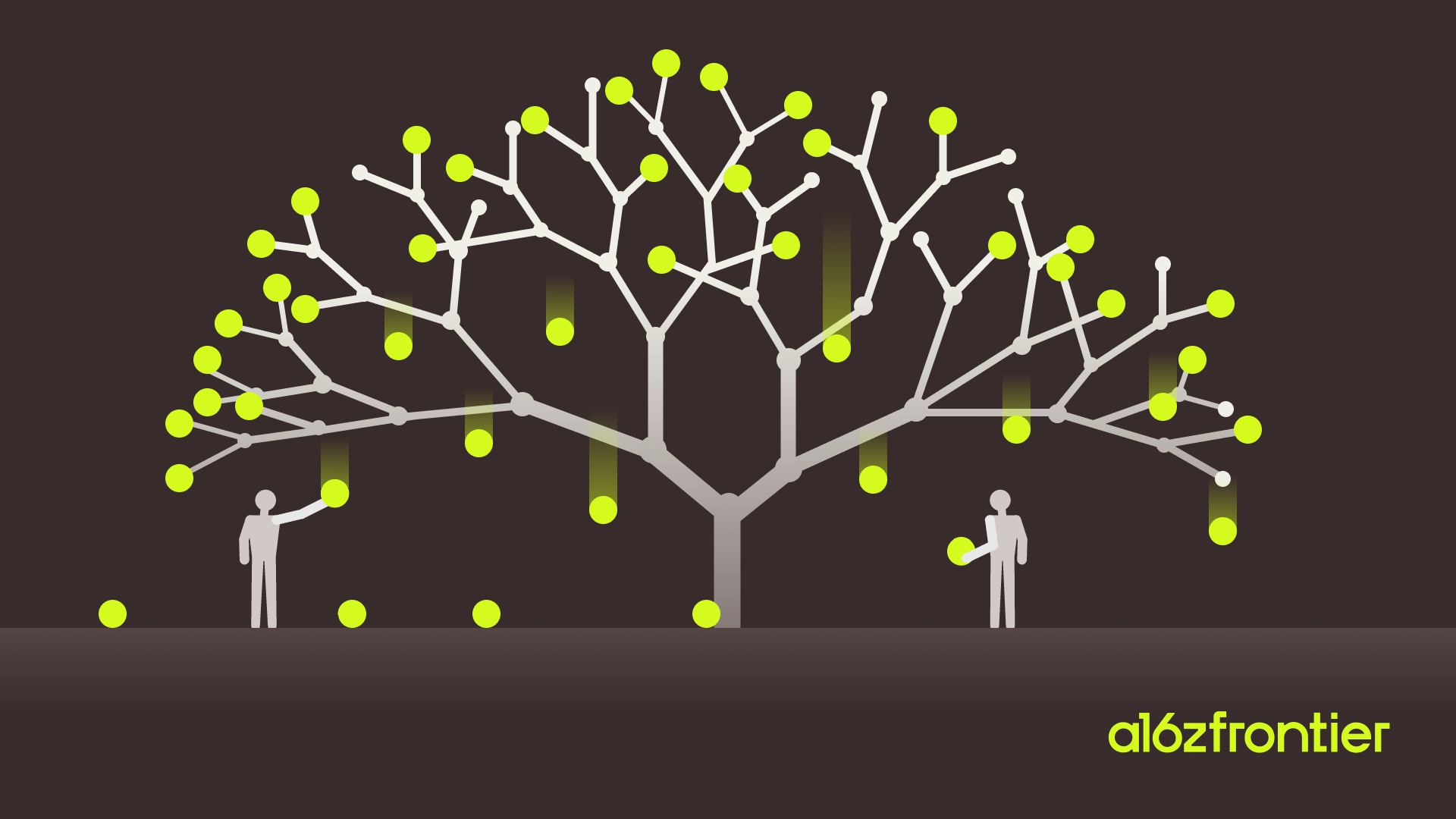
What does this signify for individuals aspiring to become mathematicians? Will there still be meaningful work left for them? Our researchers foresee ample opportunities ahead in digesting, refining, and expanding upon new findings, explaining these to others, and enhancing human comprehension. Boneh presents a delightful metaphor for this: he envisions AI as a vast tree, dropping delicious fruit for us to examine and relish.
For someone eager to make their own discoveries, this may seem like meager consolation. However, these tools also provide the chance to tackle work that once seemed unattainable—enabling the construction of entirely new realms of mathematics, as Kominers envisions. Or as Alpöge articulates, "I hope the argument offers a glimpse into the miracles that lie ahead and demonstrates the joy and wonder we are about to uncover in the simplest things."
Those currently working and studying will also face the task of determining which questions warrant their efforts. Justin Thaler, a research partner and associate professor in the Department of Computer Science at Georgetown University, emphasizes that people will still need to make their own judgments, regardless of how capable machines become. To make sound decisions, one must understand the mathematics and its implications, particularly when developing systems that others will trust. In the realm of cryptography, decisions regarding which problems will remain challenging to solve are already shaping strategies to protect the internet from quantum computers.
Mathematicians have long aimed for challenging goals. Now, they will encounter many more rapidly shifting targets at even greater distances. Let us embrace this enhanced precision.