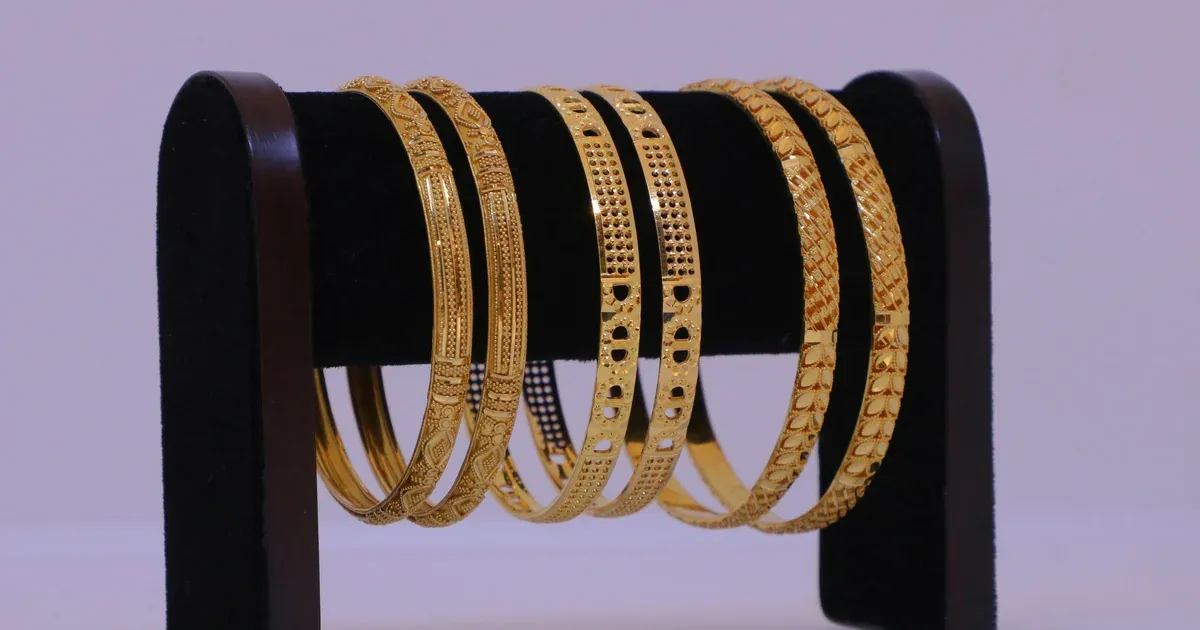
For practical uses, 22K gold is often the preferred choice, while 24K gold is ideal for those looking to invest. This recommendation is derived from an evaluation of pricing and regulations carried out on November 21, 2026. Jewelry made from 22K gold contains 91.6% gold, which ensures it is durable enough for regular wear. In contrast, 24K gold stands out as the purest form available, comprised of at least 99.5% gold in hallmarked items and 99.9% in bullion, which is typically found in coins and bars.
The difference in pricing between these two gold types is significant. Data reported on November 20, 2026, by the India Bullion and Jewellers Association (IBJA) indicated that the benchmark price for 10 grams of 999 gold was ₹1,23,584, whereas 916 gold was priced at ₹1,13,203. This pricing reflects 91.6% of the 999 rate, not accounting for the 3% GST and making charges. It is essential to recognize that the making charges associated with jewelry are generally irrecoverable upon resale.
Rates, hallmarking standards, GST, and tax details were confirmed on November 21, 2026, through the IBJA, the Bureau of Indian Standards (BIS), the Central Board of Indirect Taxes and Customs (CBIC), and documentation from the Income Tax Department. All figures cited are in Indian rupees (₹) aimed at consumers in India. Moreover, it is important to highlight that IBJA does not release rates on weekends, with the most recent price available from Friday, November 20, 2026.
Key considerations
Several important factors must be taken into account when comparing 22K and 24K gold. The BIS hallmarks gold jewelry in seven distinct grades; 22K indicates a minimum of 916 parts per thousand, while the highest grade, 24KS, requires at least 995. Additionally, gold prices set by IBJA are determined by purity; as of November 20, 2026, 916 gold is priced at 91.6% of the 999 rate. The applicable GST stands at 3% for both gold bars and jewelry (1.5% central and 1.5% state), as outlined in Notification 9/2025-Central Tax (Rate). For a budget of ₹1 lakh, assuming a hypothetical making charge of 12%, a 22K piece would be valued about ₹10,400 less in gold content compared to a 24K item at the benchmark rate. It is also noteworthy that capital gains tax does not vary by purity; long-term gains on transfers after July 23, 2024, are taxed at 12.5%.
Comparison between 22K and 24K gold
The table below outlines the differences between these two gold purities based on criteria that affect pricing and resale value. Each entry includes information as of November 21, 2026.
| Criterion | 22K Gold | 24K Gold |
|---|---|---|
| Recommended for: | Jewelry intended for wearing | Coins and bars aimed at investment |
| Minimum gold content | 916 ppt (91.6%) when hallmarked as 22K (BIS) | 995 ppt for 24KS hallmarked articles; IBJA also acknowledges 999 (BIS; IBJA) |
| IBJA rate, November 20, 2026 (AM, per 10 g, ex-GST) | ₹1,13,203 (IBJA) | ₹1,23,584 for 999; ₹1,23,089 for 995 (IBJA) |
| GST | 3% on jewelry, heading 7113 (CBIC) | 3% on gold bars, heading 7108, and on coins, 7118 (CBIC) |
| Hallmarking rule | Mandatory for jewelry in 392 districts; HUID code can be verified through BIS Care (BIS) | Gold bullion is exempt from mandatory hallmarking; BIS licenses refineries and mints that mark bars and coins (BIS) |
| Wearability | Alloyed for enhanced durability; BIS asserts that pure gold is too soft for daily wear (BIS) | Considered too soft for daily wear, according to BIS, making it more suitable for coins and bars rather than jewelry (BIS) |
| Primary hidden cost | Making charges, determined by each jeweler | Coin or bar premiums above the benchmark, set by individual sellers |
Two critical points warrant attention. The intrinsic value of the metal shows a relatively small difference between the two grades, suggesting that the per-gram variance is not a decisive factor. Additionally, costs that may influence the final purchase decision, such as making charges and dealer premiums, are not transparent from regulatory bodies, necessitating inquiries during the buying process.
Understanding purity: what 916 and 995 guarantee
22K hallmarked gold guarantees a minimum of 916 parts gold out of every thousand, while items designated as 24K ensure at least 995. The current BIS certification scheme includes seven grades for jewelry and artifacts: 9K, 14K, 18K, 20K, 22K, 23K, and 24KS, with minimum fineness levels of 375, 585, 750, 833, 916, 958, and 995.
Starting from July 1, 2021, a hallmark consists of three elements: the BIS logo, the carat purity, and the fineness (for example, 22K916), along with a six-character HUID code that can be verified via the BIS Care portal.