Sending USDT to an incorrect network is a frequent and frustrating challenge in the cryptocurrency space. While the transaction might seem successful, the funds could fail to arrive at the desired destination.
In many cases, the USDT remains on a different blockchain, and retrieving it largely depends on who controls the receiving address and the networks involved.
This guide outlines a thorough method for determining where your USDT has gone, details on how to recover it from your own wallet, and an overview of the fees associated with assistance from Binance, Kraken, and Coinbase when the funds are sent to an exchange.
If you have access to the receiving wallet, it is typically possible to recover USDT sent to the wrong network within just a few minutes. However, if the funds were sent to an exchange, the recovery process can be lengthy, costly, and not guaranteed.
Key Takeaways
- Tether cannot reverse a confirmed USDT transaction.
- Issues involving EVM networks with the same address are usually easy to resolve independently.
- Binance charges a recovery fee of 20 USDT for transactions involving unsupported EVM networks.
- For complex cases, Kraken's recovery fees can reach up to 500 dollars.
- Correcting a missing memo generally incurs lower costs than recovering from an incorrect network.
Reasons USDT Is Sent to the Wrong Network
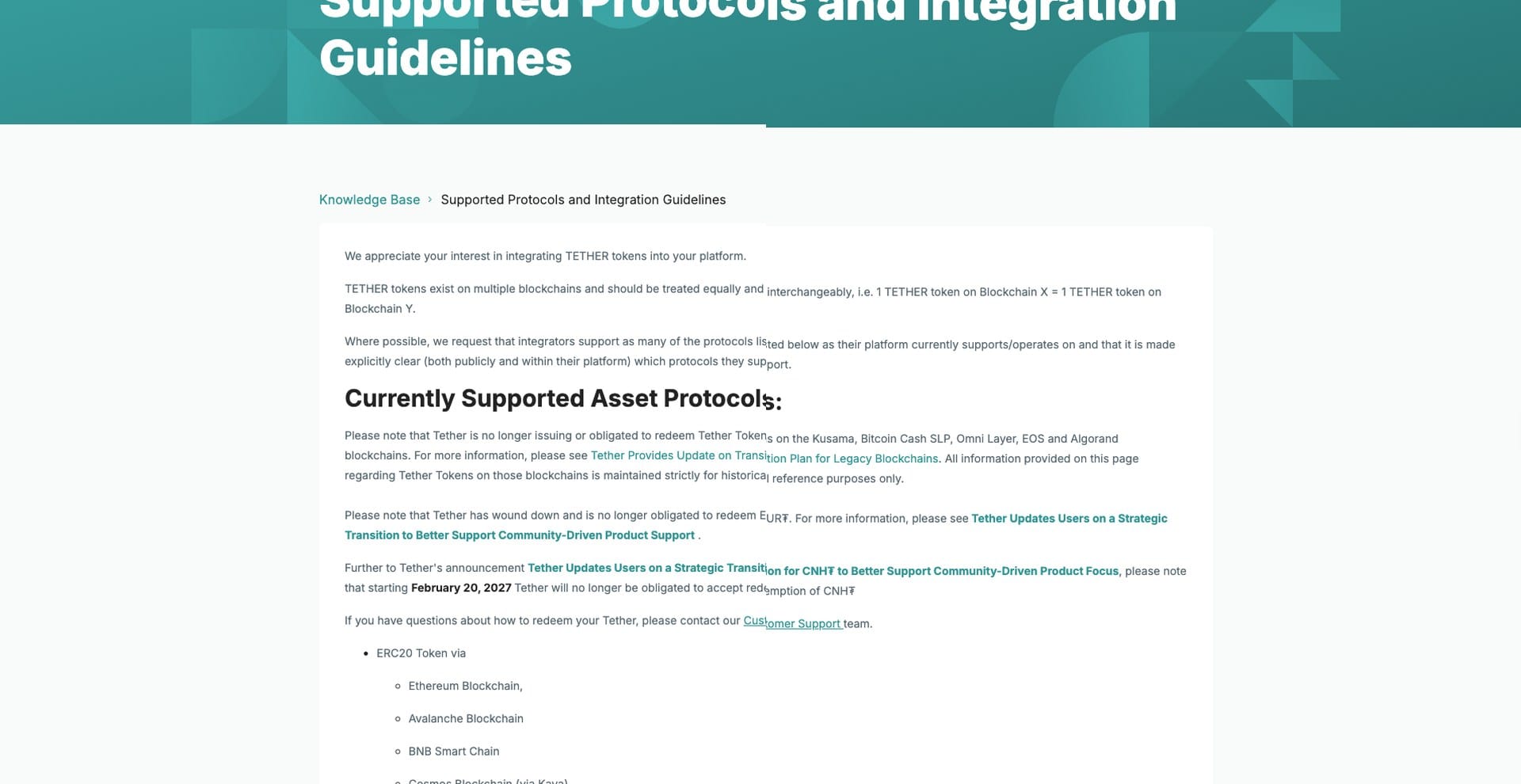
USDT is not confined to a single token on one blockchain. Tether issues it across multiple blockchains, including Ethereum, Tron, Solana, TON, Avalanche, and Aptos, asserting that one USDT on any chain is equivalent to one USDT on another.
Nevertheless, these tokens are not automatically interchangeable. For instance, USDT sent via Tron will stay on the Tron network, even if the recipient expected it on Ethereum, as the receiving application only recognizes the networks it supports.
Tether advises platforms to clearly specify the networks they accept. Mistakes often occur when the sender selects one network while the recipient is configured for another.
It is essential to understand that Tether lists BNB Smart Chain solely for its gold token, meaning that USDT on BNB Chain is a version issued by Binance, not Tether.
Step 1: Determine Where Your USDT Landed
Begin by locating the transaction hash, or TxID, which can be found in the withdrawal history of your wallet or the sending exchange.
Input the hash into the explorer for each relevant blockchain, such as Etherscan, Tronscan, BscScan, or Tonviewer. The explorer that identifies it will show the network, amount, and the precise receiving address.
Make sure the status is confirmed or successful. If it shows failure or remains pending, the USDT has not been sent, and no recovery action is necessary.
Remember to record the network, receiving address, amount, and timestamp, as this information will be required for every recovery form.
Step 2: If You Own the Receiving Wallet
This situation is the most favorable. If you directed USDT to your self-custody wallet, like MetaMask, Trust Wallet, or a hardware wallet, you have the keys for all chains that utilize the same address format.
Networks such as Ethereum, BNB Chain, Arbitrum, Base, and Avalanche all use the same 0x address. If you sent USDT on BNB Chain to your Ethereum address, switch your wallet to BNB Chain, add the USDT token, and your balance will be visible.
At this point, you can swap or bridge the funds to the desired network. This principle also applies to USDC, which is elaborated further in our guide on recovering USDC sent to the wrong network.
What you should keep in mind: maintain a small amount of that chain's gas token, like BNB or ETH, to facilitate the transfer of the recovered USDT.
Step 3: If It Went to an Exchange
Exchange deposit addresses are managed by the exchange, meaning only their team can move the funds. Most large exchanges have a recovery process, but it is often manual, slow, and incurs a fee only if successful.
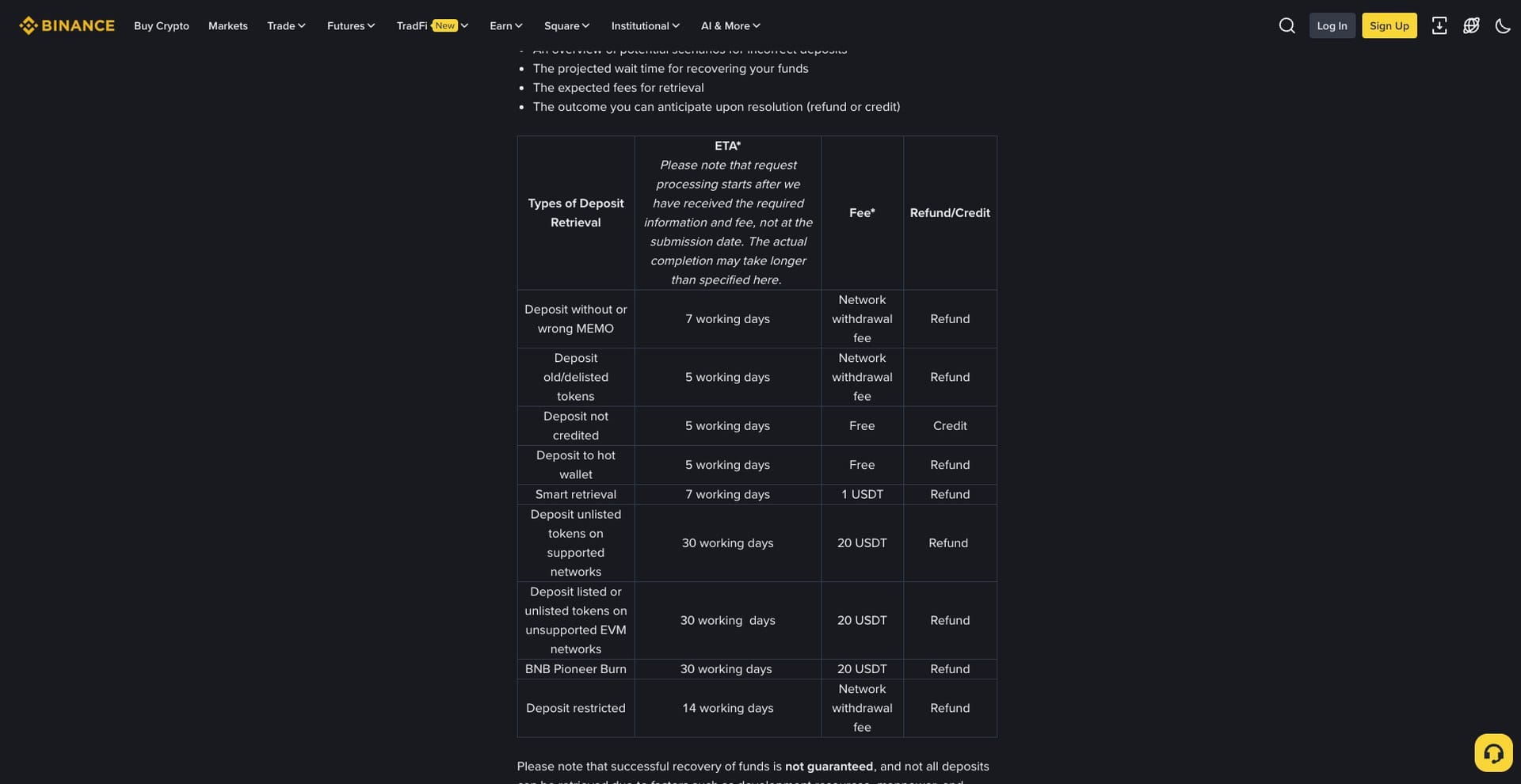
Binance provides self-service recovery for deposits made into your account that are confirmed on the blockchain. They charge a fee of 20 USDT and estimate a processing time of approximately 30 working days for tokens sent on unsupported EVM networks.
They cannot assist with withdrawals sent to an incorrect address or deposits made into someone else's account. Their fee schedule indicates that wrong-network recovery applies solely to EVM networks, so issues involving chains like Tron or TON might not qualify.
Remember to submit your recovery request from the account that holds the deposit address, as Binance will reject requests submitted on behalf of others.
Charges by Kraken and Coinbase
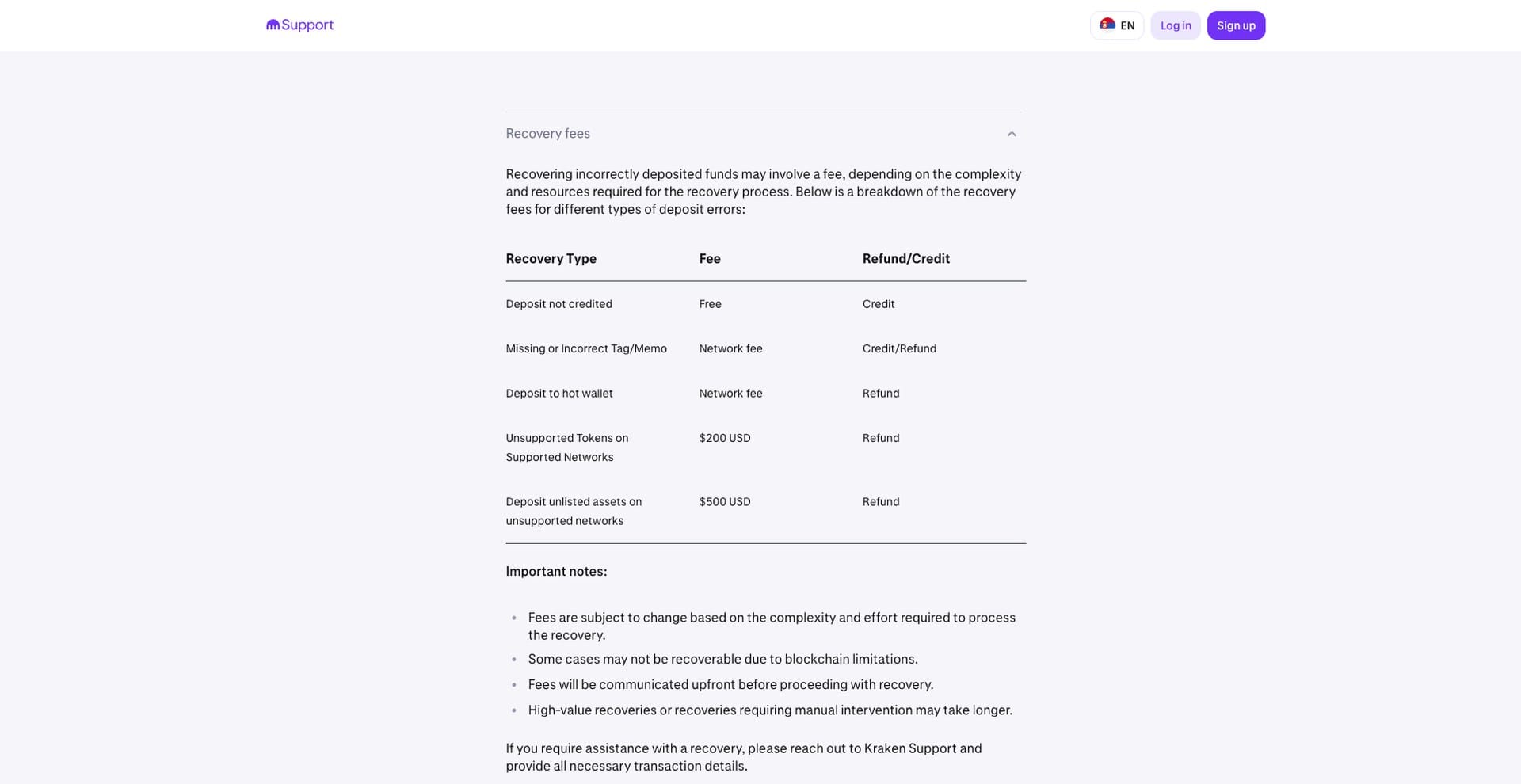
Kraken has its own publicly available fee schedule. A deposit that simply was not credited incurs no charge, but recovering tokens on unsupported networks costs 500 dollars, which Kraken considers to be among the most challenging cases.
| Situation | Binance | Kraken |
|---|---|---|
| Deposit not credited | Free | Free |
| Missing or wrong memo | Network withdrawal fee | Network fee |
| Unsupported token, supported network | 20 USDT | 200 dollars |
| Unsupported network | 20 USDT, EVM networks only | 500 dollars |
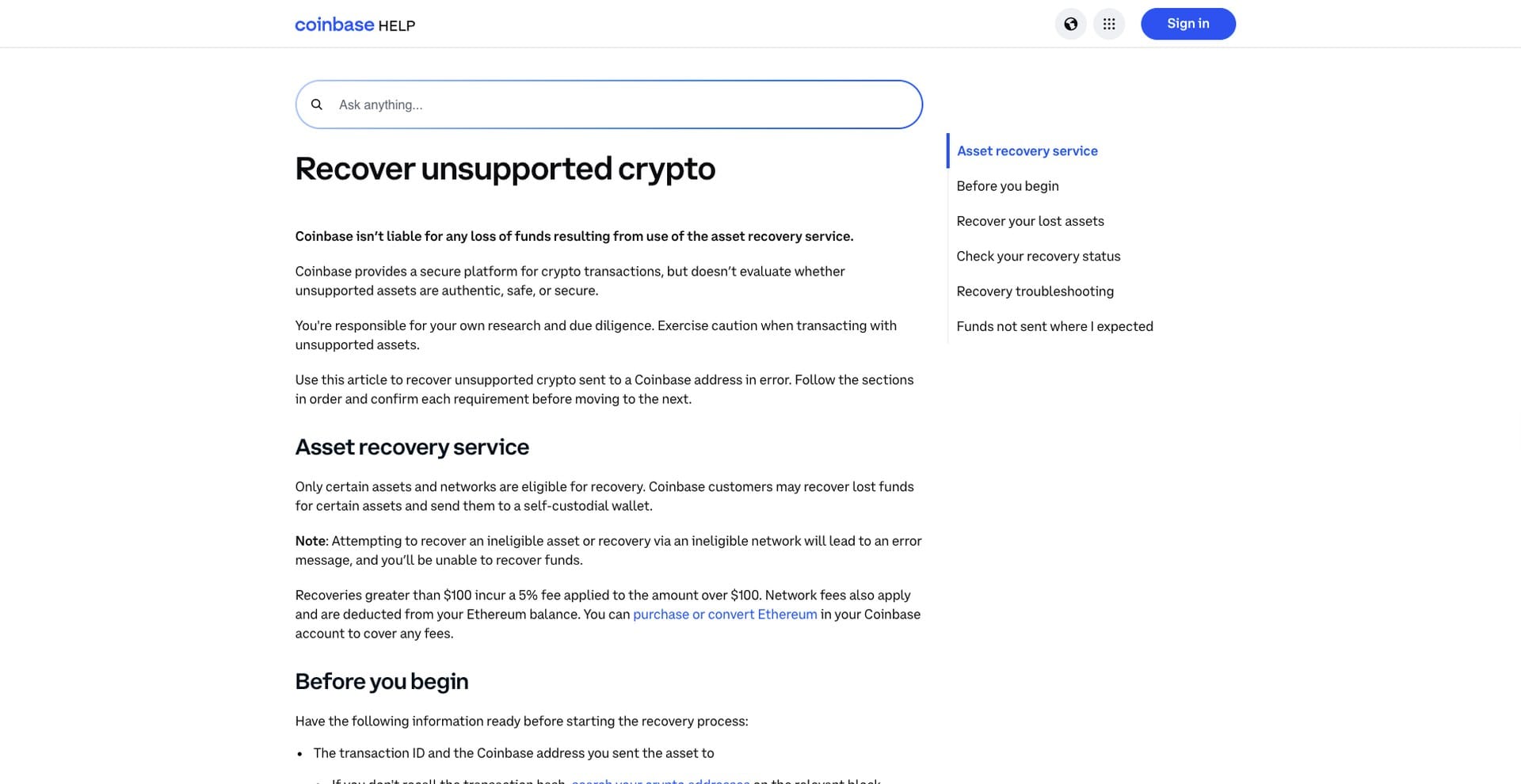
Coinbase only recovers specific assets and networks. They charge 5% on amounts exceeding 100 dollars, plus network fees, and any recovered funds are sent to a self-custody wallet.
Consider this: on a 300 dollar error, a 500 dollar fee from Kraken makes recovery impractical, so always check the fee before proceeding.
The Memo Issue on TON and Other Networks
Occasionally, deposits arrive on the correct network but still go missing. Exchanges frequently use a shared address on TON and similar chains, with a memo or tag indicating which account the funds belong to.
If you send USDT on TON to Binance without including the memo, it will end up in Binance's wallet instead of your own. Binance treats this as a separate recovery case, which incurs a network withdrawal fee, significantly lower than recovering from a wrong network.
Our guide on stablecoin memos and tags clarifies which networks require them and how to locate the necessary information.
Keep in mind: if a deposit screen indicates that a memo is required, it is indeed necessary, even if your wallet suggests it is optional.
When USDT Is Truly Irretrievable
- Incorrect address on the correct network: if the address belongs to someone else, only that individual can return the funds.
- Sent to a token contract: funds sent directly to the USDT contract are typically irretrievable.
- Withdrawal from an exchange to an incorrect address: Binance states it cannot assist once the funds have been withdrawn.
- Legacy chains: Tether no longer issues or redeems USDT on Omni, Kusama, Bitcoin Cash SLP, EOS, or Algorand.
Be wary of recovery scams that may arise after a mistake. Anyone who contacts you offering to retrieve funds for an upfront fee or your seed phrase is likely a scammer.
What to remember: legitimate exchange recovery can only be conducted through the exchange's official support pages, never through direct messages.
Avoiding Future Errors
- Ensure the networks match on both ends: both the deposit and withdrawal screens must display the same network name.
- Verify the address format: Tron addresses begin with T, EVM addresses start with 0x, and TON addresses typically begin with UQ or EQ.
- Consider sending a test amount first: transfer a small sum to verify it arrives before sending the full amount.
- Remember to copy the memo: include it every time the deposit page prompts for one.
The choice of the correct network also influences costs. Our comparison of TRC20, ERC20, and Solana outlines the associated trade-offs.
Keep in mind: most exchanges allow you to save trusted withdrawal addresses by network, which helps reduce the likelihood of errors.
How This Guide Was Created
The information provided is derived from Tether's supported protocols page and the recovery resources from Binance, Kraken, and Coinbase, reviewed on November 21, 2026. No transactions were executed specifically for this guide.
Recovery fees and timelines are set by each exchange and may vary. Each exchange emphasizes that recovery is not guaranteed.
What to remember: review your exchange's current recovery page before submitting a request, as fees are confirmed during the process.
Risks and Limitations
- Recovery by exchanges is manual and can take several weeks.
- Fees may surpass the value of minor mistakes.
- Errors involving non-EVM networks are often irrecoverable by exchanges.
- Fraudulent recovery services target individuals after a loss.
- Tether does not reverse or refund erroneous transfers.
Final Thoughts
USDT sent over the wrong network is often recoverable. If it was directed to your own EVM wallet, switching networks in the wallet typically restores access within minutes.
If it was sent to an exchange, utilize their official recovery tool with your TxID, and assess the fee against the amount before proceeding.
The best solution is prevention: ensure the network matches on both ends, include the memo when prompted, and send a small test transaction first.
- How to Recover USDC Sent to the Wrong Network (2026)
- Stablecoin Memo or Destination Tag: When You Need One and How to Send
- TRC20 vs ERC20 vs Solana: Rails Compared 2026
FAQs
1. Can I recover USDT sent on the wrong network?
In many instances, yes. If you control the receiving wallet, you can typically access it by switching networks. If it went to an exchange, their recovery team may retrieve it for a fee, but no guarantee exists.
2. Can Tether reverse a mistaken USDT transfer?
No. Tether does not reverse confirmed transfers. Recovery relies on who controls the receiving address.
3. What are Binance's charges for recovering USDT?
Binance charges 20 USDT for tokens sent on unsupported EVM networks, with an estimated recovery time of around 30 working days. A missing memo incurs a network withdrawal fee, and charges apply only if recovery is successful.
4. What if I send USDT on BNB Chain to an Ethereum address?
If it is your own wallet, the same 0x address works on BNB Chain, so switch networks and add the token. If it is an exchange address that does not support BNB Chain, you will need to follow the exchange's recovery process.
5. Is USDT sent without a memo considered lost?
Not necessarily. It will arrive in the exchange's shared wallet, and platforms like Binance and Kraken will recover memo errors for a network fee.