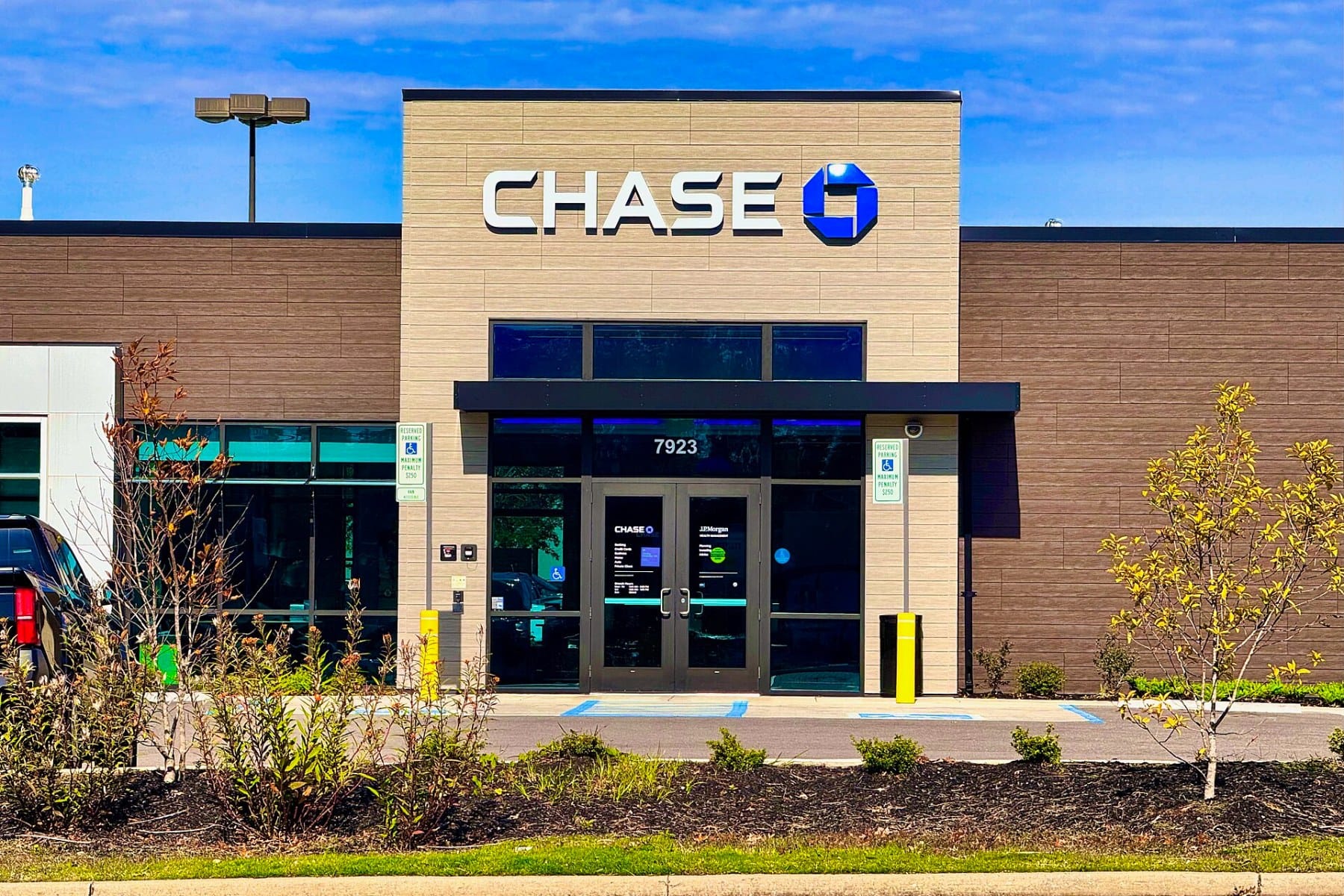
Only 23% of US consumers trust generative AI to handle payment transactions on their behalf, even though 72% have already used an AI assistant.
This advancement brings forth a payment framework tailored specifically for AI agents, incorporating dedicated bank accounts created for the agents themselves.
Historically, AI agents relied on card numbers or wallets provided by users, a practice that numerous leading banks are now moving away from.
In November 2026, both Wirex and Rain rolled out solutions that offer individual accounts, cards, and stablecoin reserves for each agent, distinctly separating these resources from the owner's funds.
This article delves into the concept of agentic banking, its timely emergence, the functionalities of prominent products, and the viewpoints of regulatory entities and card networks concerning stablecoins.
Key Takeaways
- Agentic banking allows an AI agent to possess its own account, card, and wallet.
- Wirex Navoka provides each agent with an IBAN, debit card, and USDC wallet.
- Rain Agent Vaults offer a scoped card for each transaction conducted by the agent.
- In October, four major US banks implemented measures to limit credential-based AI agents.
- Liability regarding agent errors remains ambiguous in both the US and UK.
Understanding Agentic Banking
Agentic payments refer to any transaction executed by an AI agent. In contrast, agentic banking specifically pertains to the notion of an agent having its own financial account, funded by the owner and governed by rules that the agent cannot modify.
Fintech firms have identified three primary methods to provide agents with spending capabilities: dedicated spending accounts and wallets, agent-specific virtual cards, and delegated payment authorization via card network tokens.
| Model | Example | Main Rail |
|---|---|---|
| Own Account | Wirex Navoka | IBAN and Card |
| Funded Vault | Rain Agent Vaults | Scoped Cards |
| Agent Wallet | Circle Agent Stack | USDC |
| Network Token | Mastercard Agent Pay | Existing Card |
The first three models prevent agents from accessing the owner's primary account. The fourth allows agents to utilize the owner’s card through a token that imposes restrictions. For a more detailed examination of the card network perspective, see the comparison of Visa Intelligent Commerce and Mastercard Agent Pay.
Reasons Banks Are Excluding Agents
This transition is not merely coincidental. Between October 13 and 20, 2026, JPMorgan Chase, Charles Schwab, Citigroup, and Wells Fargo each implemented actions to block or mitigate the risks associated with third-party AI agents accessing customer credentials.
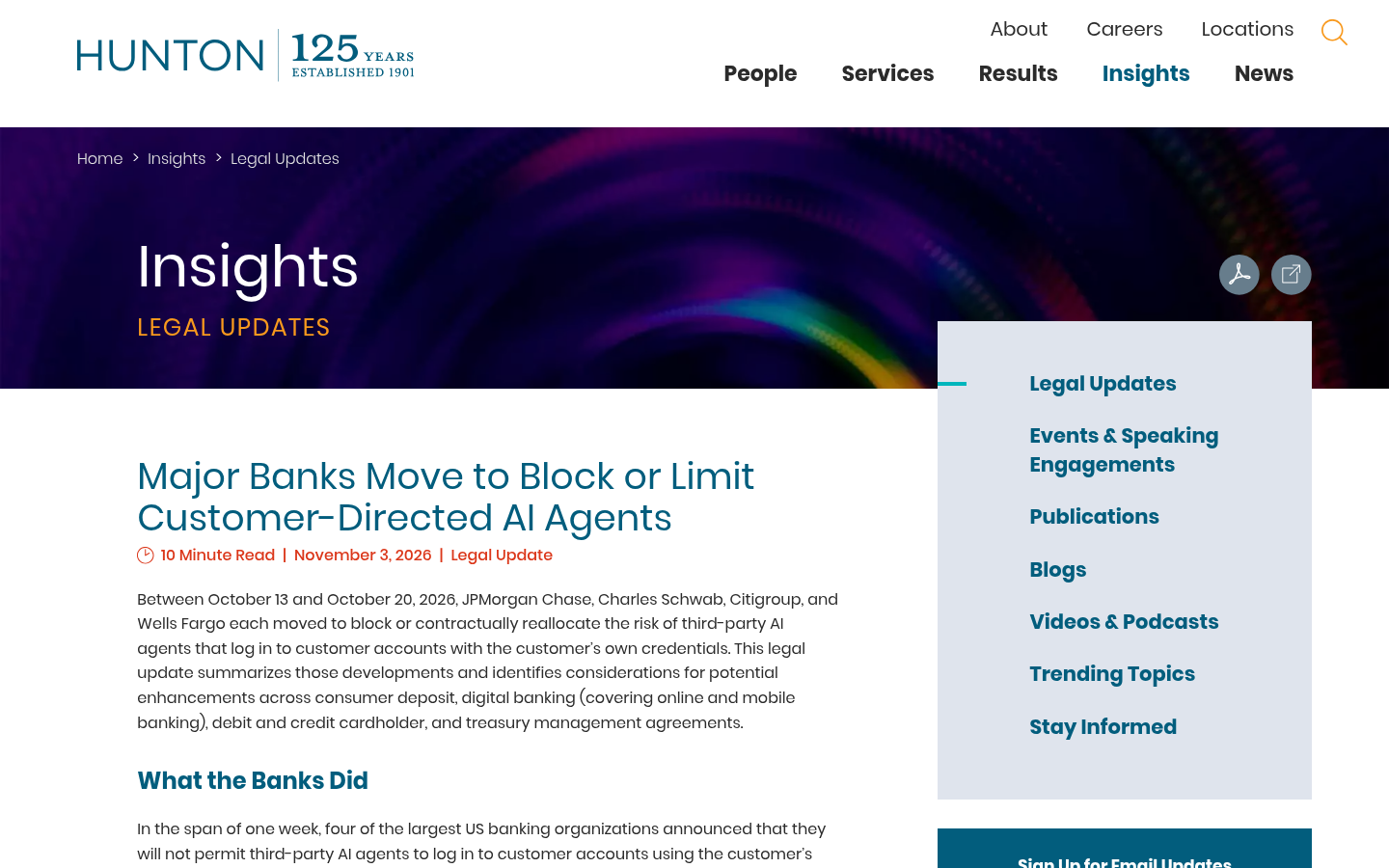
- JPMorgan Chase: Prohibits external agents from accessing customer accounts, although read-only data remains accessible through providers like Plaid.
- Charles Schwab: Limits agents from transferring client funds more than 10 to 20 times per week.
- Citigroup: Bans third-party agents from logging into or conducting transactions on its digital platforms.
- Wells Fargo: Permits agents, but new terms effective November 24, 2026, shift the risk onto customers.
These banks are primarily concerned with security, fraud prevention, and the risk of deposit losses. An agent using a customer’s credentials appears identical to the customer, lacking independent limits or an audit trail. This analysis suggests that agents transferring idle balances into higher-yield products could cost banks approximately $47 billion annually.
This scenario creates a dilemma. If agents cannot access the owner's credentials, they will require their own funds. This development is intricately linked to the ongoing US open banking discourse, where regulations regarding third-party access are still evolving.
On November 12, 2026, Wirex launched Navoka, an AI agent that processes payments from a designated bank account and card. Each agent is assigned its own IBAN, debit card, and USDC and EURC wallet, separate from the user’s personal accounts.
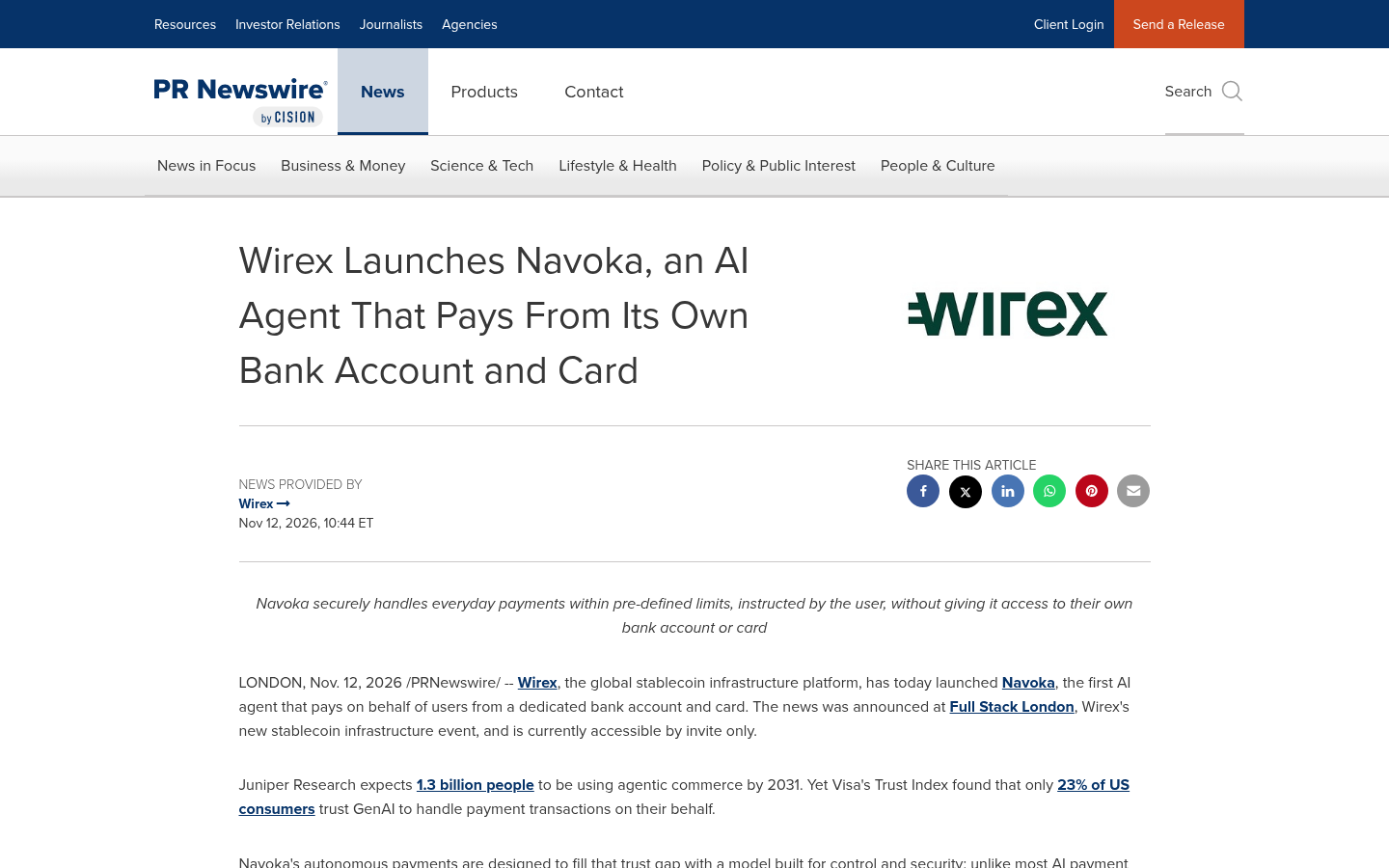
- Separate Account: Users can transfer funds into the agent's account while keeping the rest secure.
- Multi-Currency: The agent can hold various currencies, including dollars, euros, and pounds, alongside USDC, EURC, BTC, ETH, and SOL.
- Spending Rules: Approved merchants, limits, daily caps, and country lists are verified with each card use, with the agent unable to change them.
- Kill Switch and Audit Trail: Users have the ability to freeze the card, and every transaction records the applied rules.
- Accessibility: The service operates through Telegram, with plans for future integration into WhatsApp and iMessage, along with connections to ChatGPT, Claude, or Grok.
Currently, Navoka is available by invitation only. Its straightforward offering is to manage payments without the necessity of sharing bank details. The IBAN feature operates within the same infrastructure described in the guide to virtual IBAN providers for stablecoins.
Exploring Rain Agent Vaults: Funded Balances and Scoped Cards
Rain adopted a distinct approach just two days prior. Its Agent Vaults, introduced on November 10, 2026, allow companies to embed a funded balance within their own agent, which includes a Rain-issued scoped card for each transaction. These cards are accepted at 175 million merchant locations, and agents can transfer funds to local bank accounts in over 80 countries.
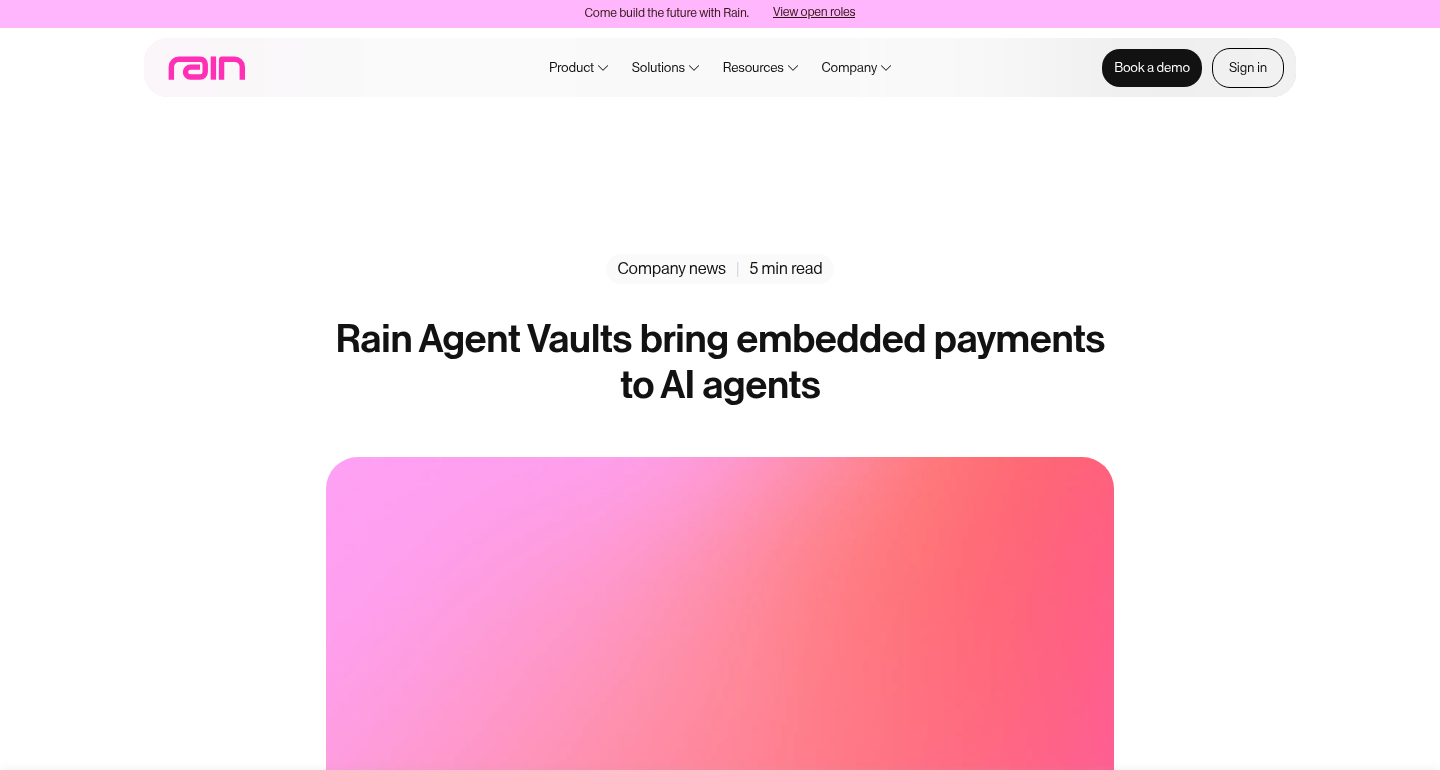
- Funding: Users can utilize bank transfers, cards, or stablecoins, with the funds held as stablecoins.
- Scoped Cards: Each virtual Visa or Mastercard card has a defined amount, merchant, and expiration, becoming inactive after one approved purchase.
- Approvals: Transactions that go beyond the owner's guidelines require human approval, even if funds are available in the vault.
- Branding: The vault operates within the partner’s application under its branding, making Rain invisible to the user.
The key distinction from Navoka lies in customer ownership. Wirex presents a comprehensive agent to users, while Rain supplies the infrastructure for companies to develop their own agents.
Circle Agent Stack: USDC Wallets for Agents
Circle embraces a stablecoin-focused strategy. The Agent Stack, launched in May 2026, features Agent Wallets that allow agents to hold and transfer USDC under rules defined by humans, such as time-bound spending limits and address allowlists.
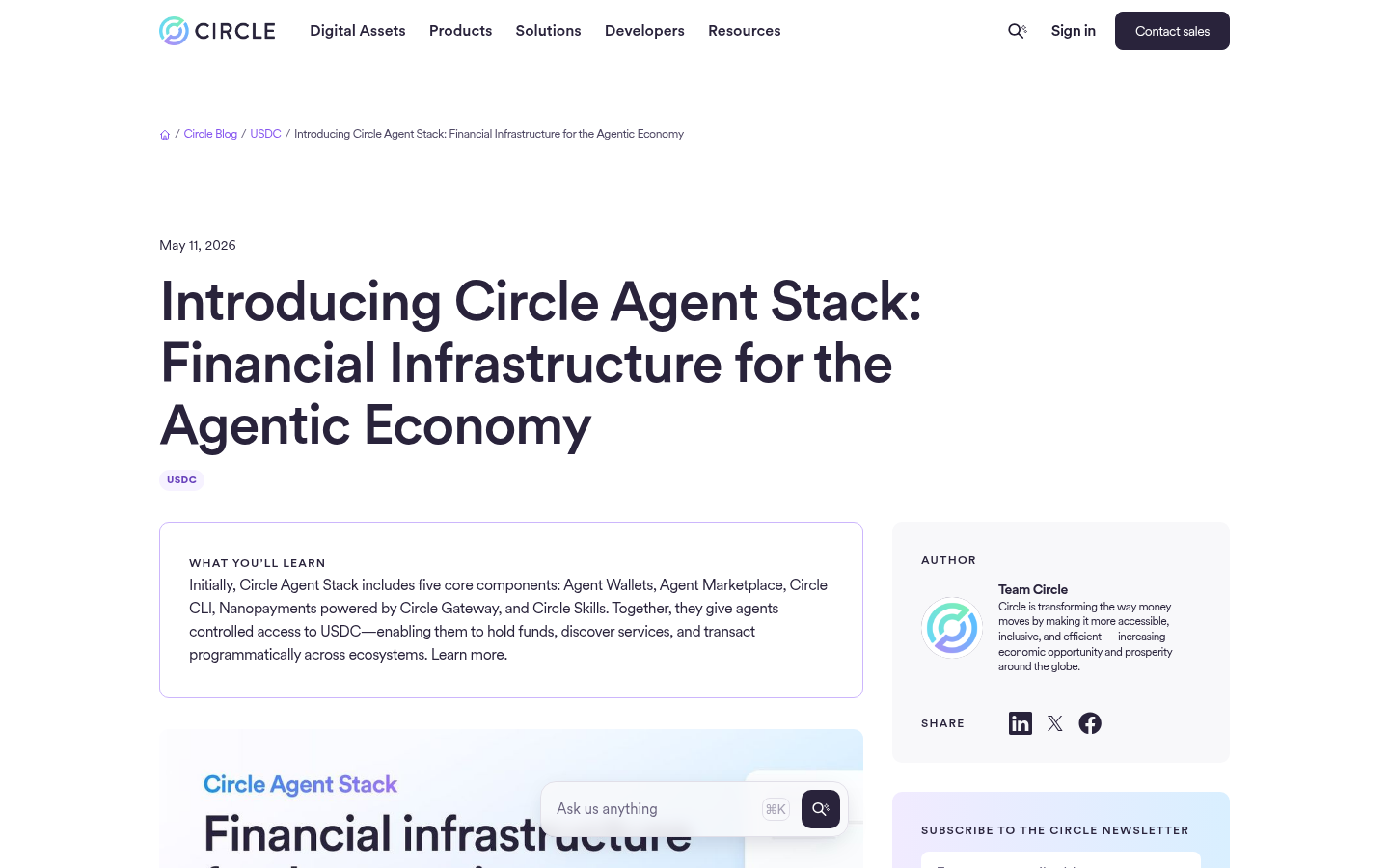
This model is especially beneficial for agents that manage payments to other software, such as APIs and data services, rather than conventional retail outlets. Circle asserts that USDC constitutes 99.8% of x402 transaction value, the pay-per-request standard utilized by many agents.
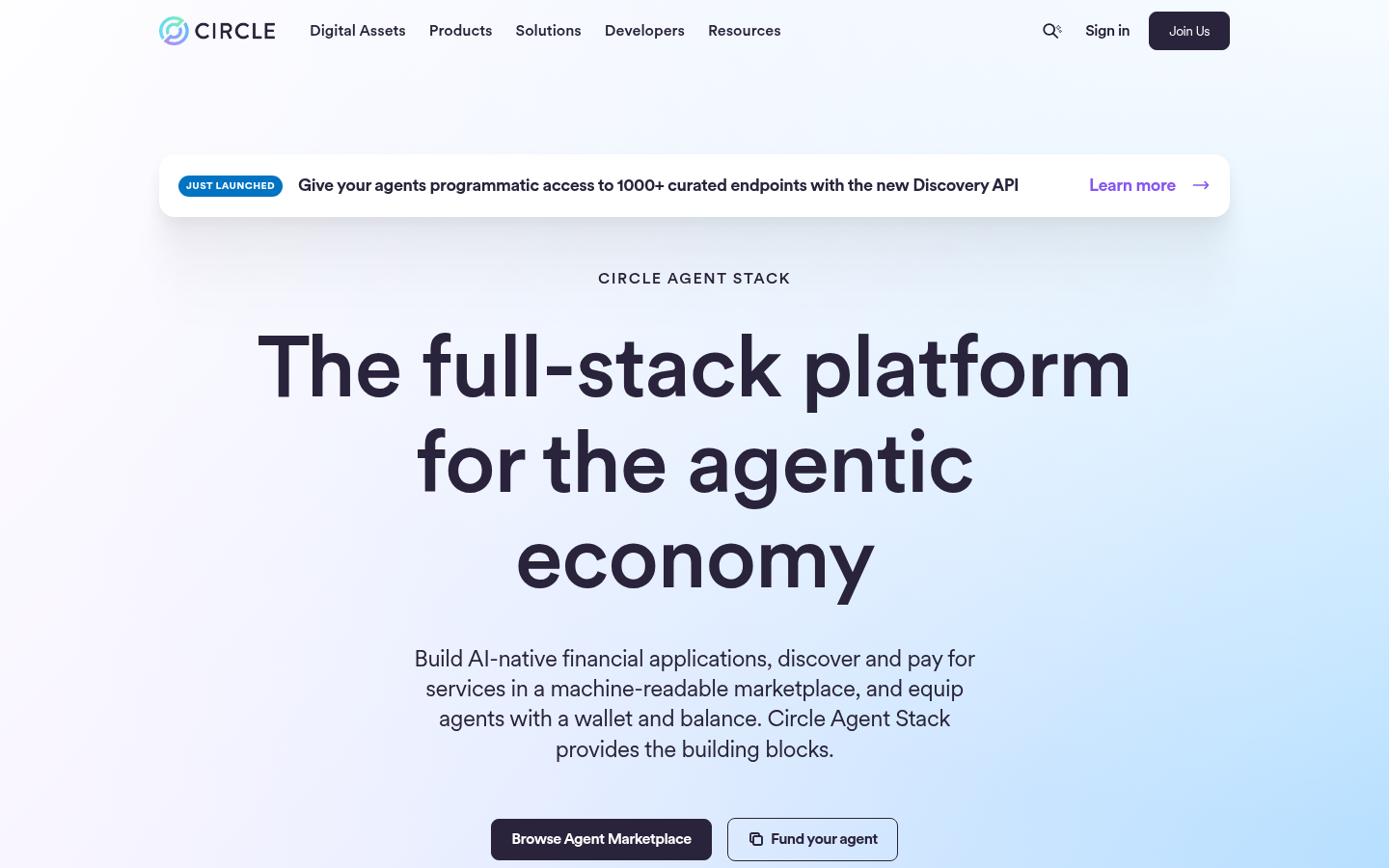
A comparison of Coinbase AgentKit and Circle Agent Stack looks into the development side, while our ranking of agent wallet platforms features various alternatives.
Card Networks Favor Tokens Over One-Off Cards
There is no universal agreement on the necessity for agents to have their own accounts. During Mastercard's third-quarter earnings call, CEO Michael Miebach stated that one-time virtual cards between agents and merchants are not a sustainable solution. Visa, Mastercard, and American Express have contended that tokenization is the most effective method for capturing consumer intent.
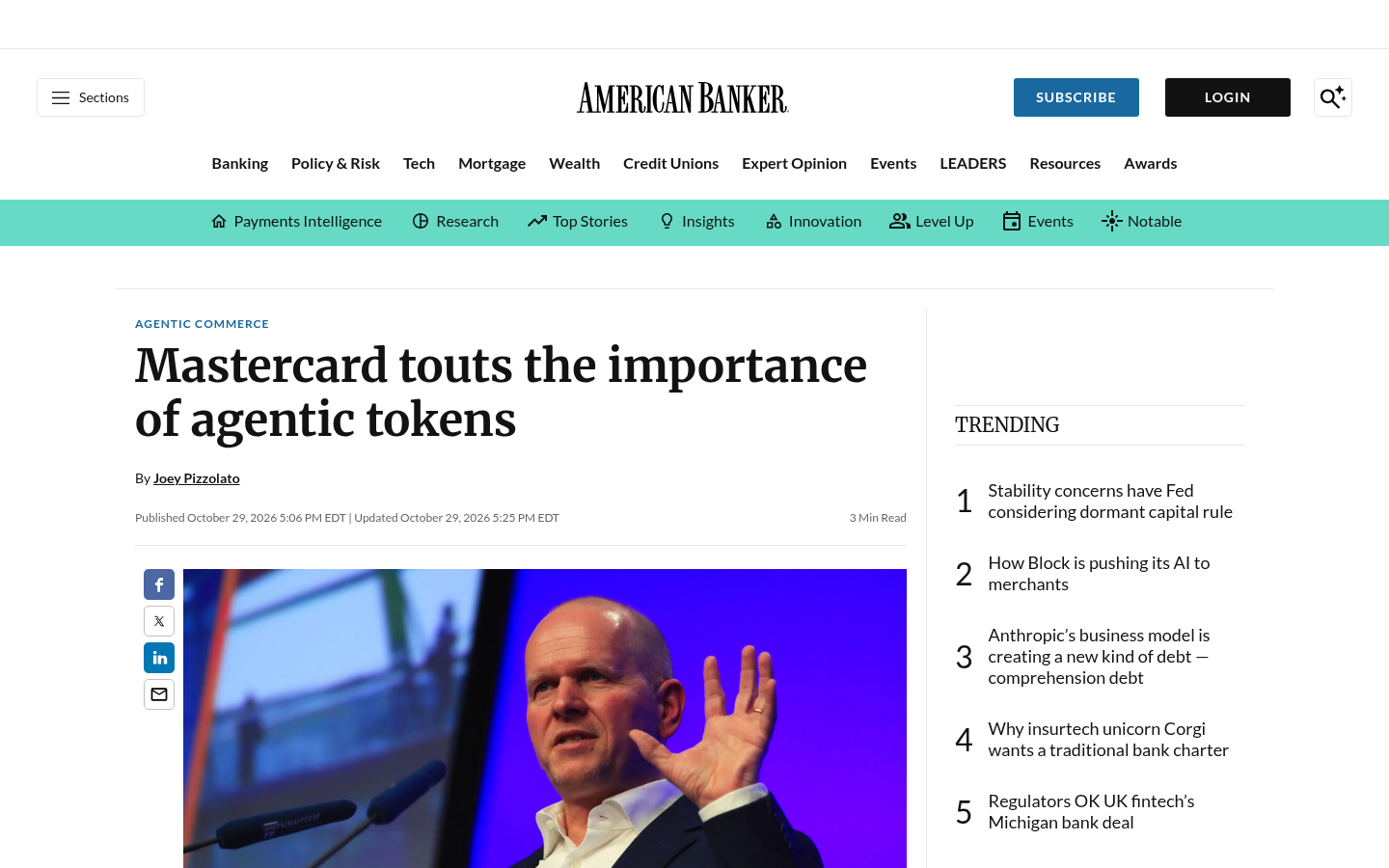
From the network's standpoint, an agent should utilize the owner’s existing card through a token that enforces spending limits and verifies consent. This is how OpenAI’s checkout system operates, as detailed in our explainer on ChatGPT Wallet.
The two models are beginning to converge in practice. Rain has announced that its scoped cards will support the credentials of Visa Intelligent Commerce and Mastercard Agent Pay, allowing a vault card to signal consent in accordance with network preferences.
Determining Liability When Agents Make Payments
Liability remains an open question. In the UK, payment regulations were established for transactions that a human authorizes individually, resulting in uncertainty about whether losses lie with the user, the AI developer, the payment provider, or the merchant when an agent overspends its monthly budget.
- Authorization: A budget of £100 a month does not validate any single transaction, leading to ambiguity regarding unauthorized transactions.
- Authentication: Strong customer authentication presupposes a human presence with a phone, passcode, or fingerprint, which an agent cannot provide.
- Fraud: Prompt injection and misleading listings can deceive an agent into making payments to incorrect parties.
In the US, banks like Wells Fargo and JPMorgan have opted for contract terms that categorize every action taken by an agent as authorized by the customer. Our guide on liability elaborates on the various scenarios surrounding who bears the cost when an AI agent overspends.
Having a separate agent account minimizes potential damage in all three scenarios. If the agent is limited to the balance within its own account, any erroneous decision will only impact that balance rather than the owner’s savings.
Implications for Stablecoins
- Stablecoins are essential: Rain retains vault funds in stablecoins and settles card transactions with networks in stablecoins, while each Navoka agent contains its own USDC and EURC wallet.
- Users maintain separation: The owner can fund from a bank account or card, while the agent incurs expenses through card or bank transfer.
- Machine payments occur on-chain: Pay-per-call API expenditures operate on USDC via x402, circumventing the need for a card.
- Treasury tools are evolving: Stripe enables agents to distribute funds from a financial account capable of holding USDC, as discussed in our article on Stripe Treasury for Agents.
For stablecoin issuers, this signifies a new source of float. Each agent account that maintains a buffer for future expenditures represents a modest, consistent stablecoin balance.
Future Developments to Monitor
- Broader launch of Navoka: Watch for when Wirex expands access beyond invitations and specifies the involved countries.
- Bank-developed agents: Schwab and other financial institutions are crafting their own agent solutions rather than allowing external agents.
- Network credentials: Observe how quickly issuers activate Visa Intelligent Commerce and Mastercard Agent Pay tokens.
- Regulatory changes: Monitor UK payment reforms and any US guidelines regarding authorization and liability for agent payments.
- US open banking: The revised Section 1033 regulation could dictate whether agents gain an approved means of accessing bank accounts.
Conclusion
This development tracks the flow of funds among individuals, applications, and now AI agents, with agentic banking representing a significant move towards agents becoming independent account holders.
Major US banks have restricted access for agents that utilize customer passwords, prompting fintech companies to respond by providing agents with their own IBANs, cards, and stablecoin accounts.
Wirex Navoka positions itself as a comprehensive solution, while Rain offers infrastructure, and Circle presents a USDC-centric model for machine payments, with card networks promoting tokenization on existing cards.
This framework alleviates the potential costs associated with poor agent decisions, yet the regulations governing liability for errors continue to evolve.
These three guides explore agent payments, card network tokens, and the stablecoin wallets that support them.
- Best Apps to Buy Anthropic Shares in India (2026): 4 Platforms Compared on Fees and FX
- How to Convert USDT to TRY in Turkey (2026): 5 Ways Compared
- How to Convert USDT to PKR in Pakistan (2026): 4 Ways Compared
FAQs
1. What is agentic banking?
Agentic banking is a framework where an AI agent is assigned its own financial account, such as an IBAN, a debit card, or a stablecoin wallet, funded by its owner. The agent can only make payments from that balance and strictly within rules established by the owner.
2. Can an AI agent have its own bank account?
In practice, an AI agent can have its own bank account; however, the legal account holder remains the individual or entity behind it. For instance, Wirex Navoka assigns each agent a distinct IBAN and card funded and controlled by the user, kept separate from the user's personal accounts.
3. Why are banks blocking AI agents?
Banks are preventing AI agents that log in using customer passwords because such agents operate identically to customers and lack their own limitations or audit trails. In October 2026, JPMorgan, Schwab, and Citi implemented blocks, while Wells Fargo transferred the risk to customers.
4. How do AI agents utilize stablecoins for payments?
AI agents can pay with stablecoins either directly through a USDC wallet and standards like x402 for pay-per-call services or indirectly via cards and accounts that maintain the balance as stablecoins. Rain employs the latter method, while Wirex Navoka offers agents both a card and a USDC and EURC wallet.
5. Who is liable if an AI agent executes an erroneous payment?
The question of liability for erroneous payments made by an AI agent remains unresolved. Some US banks now classify every action by an agent as authorized by the customer, while UK regulators are assessing how payment rules should allocate losses among users, providers, and AI developers.