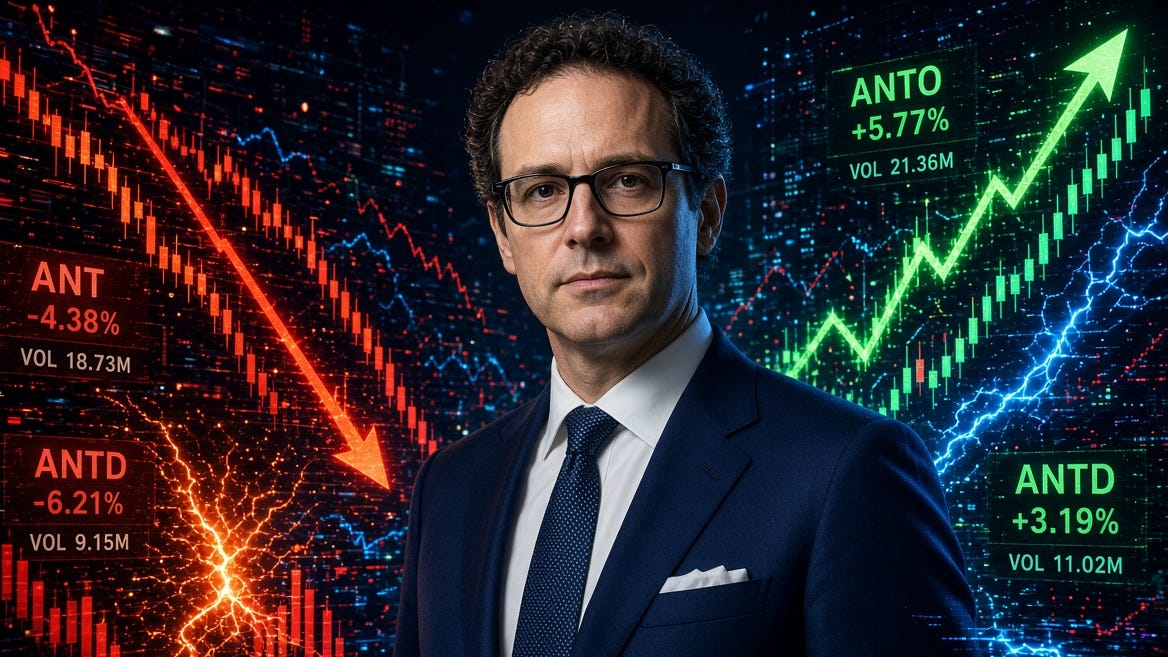
Over the past few years, leveraged and inverse ETFs have gained remarkable traction, amassing over $150 billion across more than 700 funds from various issuers. A significant factor behind this surge has been the introduction of single-stock leveraged and inverse ETFs, which made their debut in the United States in 2022.
In fact, these single-stock ETFs experienced an astounding increase in assets under management (AUM), soaring by over 300% in 2025 alone. This spike in investor interest primarily stems from retail traders, with estimates indicating that around 90% of trading volume in these funds is generated by individual investors.
The momentum shows no signs of abating, as more than 200 leveraged ETFs have already launched this year. Many of these new funds focus on single stocks associated with volatile sectors, particularly in technology, artificial intelligence, and semiconductors.
This trend has led to a concentration of assets and flows in high-profile, high-volatility sectors, particularly products linked to Nvidia, semiconductors, Tesla, and other companies involved in AI, which have drawn billions in investments and sparked intense trading activity.
Advantages of Leveraged ETFs
What accounts for the substantial influx of capital from individual investors into these funds? Here are five widely recognized advantages:
- Enhanced short-term directional bets: A 2x or 3x fund can yield approximately twice or three times the daily movement of the underlying asset, enabling traders to express strong opinions with less capital. Inverse funds offer a straightforward means to profit from or hedge against declines without the need for shorting or options.
- Accessibility and convenience: These funds are available through standard brokerage accounts without requiring options approval or margin, which has driven significant retail adoption—nearly 90% of trading in leveraged single-stock ETFs comes from individual traders.
- High liquidity for popular products: Leading funds like TQQQ, SOXL, or SOXS frequently rank among the most actively traded ETFs by volume, facilitating low spreads and quick entry or exit opportunities.
- Potential for significant gains during strong trends: In periods of sustained, low-volatility directional movement, daily compounding can benefit investors, sometimes yielding returns that exceed the simple multiple of the underlying's cumulative performance.
- Strategic and speculative usefulness: These funds are advantageous for short-term positioning around market events, earnings releases, or thematic trends (such as semiconductors or AI), allowing for efficient capital expression that would otherwise necessitate derivatives.
Risks Associated with Leveraged ETFs
However, these advantages come with inherent risks. Critics of leveraged and inverse ETFs argue that there are substantial issues that many users may not fully comprehend. The main critiques include:
- Volatility decay and path dependency: Because leverage resets every day, returns over multiple days are path-dependent. In volatile or sideways markets, fluctuations can compound against the holder, even when the underlying asset ends flat or higher. For instance, if an underlying asset rises by 10% and then falls by 10%, it ends down about 1%, while a 2x fund may end down approximately 4%. Higher volatility and extended holding periods exacerbate this effect; inverse funds can suffer even more during volatile periods.
- Unsuitability for buy-and-hold strategies: Regulatory bodies (like FINRA and the SEC) and most issuers explicitly advise that these funds are designed for one-day or very short-term use. Holding them for weeks or longer often results in outcomes that diverge significantly from the advertised multiple, leading many investors to incur large losses. Data from Morningstar indicates that the median single-stock ETF has lost around 38% while generating considerable fee revenue for issuers.
- Magnified and asymmetric losses: A sharp decline in the underlying asset is amplified within these products. Single-stock offerings carry extreme concentration risk—company-specific news (such as an earnings miss or lawsuit) impacts the fund directly and with leveraged intensity. A significant drop in a single day can wipe out most or all of an investor's position.
- High costs and fees: Expense ratios for these funds are typically much higher than those for standard index ETFs (often ranging from 0.75% to 1.5% or more), alongside financing and trading costs due to daily rebalancing, which further erodes returns.
- High product turnover and liquidation risk: A considerable proportion of leveraged and inverse products eventually shut down or liquidate, far exceeding the closure rate for standard ETFs. Many single-stock funds have brief lifespans and poor outcomes for remaining investors.
- Regulatory and structural limitations: The SEC has restricted single-stock leverage to 2x under derivatives regulations. Counterparty risk exists as many funds utilize swaps or other derivatives, and tracking error can arise during periods of extreme volatility.
Market Developments and Future Outlook
I am writing about this topic because I recently had the opportunity to engage with the executive teams of some of the largest players in this arena, including the two dominant firms controlling over 80% of market share (Direxion and ProShares). A host of fast-emerging challengers, such as GraniteShares, Tradr, Defiance, and Leverage Shares, are also vying for recognition in this competitive landscape.
Today marks a pivotal moment in the leveraged and inverse ETF sector. Various firms are introducing their leveraged and inverse ETFs linked to Anthropic, a leading AI company that recently conducted the largest IPO in history.
For instance, the Direxion Daily Anthropic Bull 2X ETF (ANTO) aims for 200% daily leveraged investment results, while the Direxion Daily Anthropic Bear 2X ETF (ANTD) seeks 200% daily inverse investment results. Competitors are offering similar products, including GraniteShares' 2x long (AIL) and 2x Short Anthropic Daily ETFs (ANS).
What fascinates me about these funds is the minimal differentiation among the various issuers, yet billions of dollars in AUM are expected to flow to whichever entity can attract the most investment within the first 48 hours. This is a classic race for capital, prompting firms to quickly enhance their marketing and distribution strategies (for example, Direxion and GraniteShares have formed a partnership, while others are exploring collaborations).
However, just because capital is flowing into these 2x funds at launch does not ensure that it will remain stable. Bloomberg’s Eric Balchunas notes, “the money that went into the ETFs with pre-IPO Anthropic is starting to leave now, [which we] can see in the 1-day outflow leaders. Once the hedge funds get what they want, they bolt. Although all of these ETFs are still posting solid year-to-date flows. How much remains, we’ll see.”

The surge in leveraged and inverse ETFs has transformed the investment landscape. I foresee a future where these funds will dominate as a category in the coming years. There is a clear appetite for volatility among investors. Those willing to create instruments that deliver volatility will consistently find demand, particularly in a social media-driven environment where major IPOs like Anthropic capture public attention.
I will be closely monitoring the unfolding marketing competition in the days ahead. The successful firms will reap substantial rewards, while those that falter may see their funds fade into obscurity.
Wishing you a productive start to your week. I will connect with you again tomorrow.