We initiated a tradition of sharing our reading lists to reflect the company's commitment to both reading and the exchange of ideas. Books serve as vessels for concepts, inspiring and educating us on various subjects. Since 2022, the Frontier team has maintained this custom by surveying current and former staff about their recent reads and recommendations for others.
This season, instead of our usual gear guides, we present a curated collection of more than 300 books perfect for gifting to others or for self-enrichment. This compilation features selections from team members, past and present, and includes titles chosen for the builder libraries showcased at our Founders Summit events (2022, 2023, 2025) and CSX startup accelerator program (2024), along with some additional suggestions from founders.
Recurring themes have emerged from these recommendations over the years. Notably, there is a shared enthusiasm for learning about the creative processes behind various pursuits, whether it's Adrian Newey discussing the intricacies of designing a Formula 1 car or Phil Knight detailing how to build a successful business like Nike. Our team also enjoyed reading Andy Weir’s Project Hail Mary long before its film adaptation. Additionally, timeless science fiction novels like Ender’s Game or This Is How You Lose the Time War have proven to be compelling reads that transport us to distant worlds and futures.
Explore our book roundup below. Whether you're looking for tales of adventure, mysteries, or historical accounts, there is something for everyone.
Adventure, sport, and memoir
This section includes a selection of books that delve into thrilling adventures, sports achievements, and personal memoirs. Each title offers unique insights into the human experience, showcasing resilience and the spirit of exploration.
- Expeditions 10
- Nature writing 3
- Memoirs and firsthand accounts 5
Expeditions
In this subsection, we highlight remarkable expeditions that have shaped our understanding of the world. These narratives capture the essence of adventure and the challenges faced by explorers.
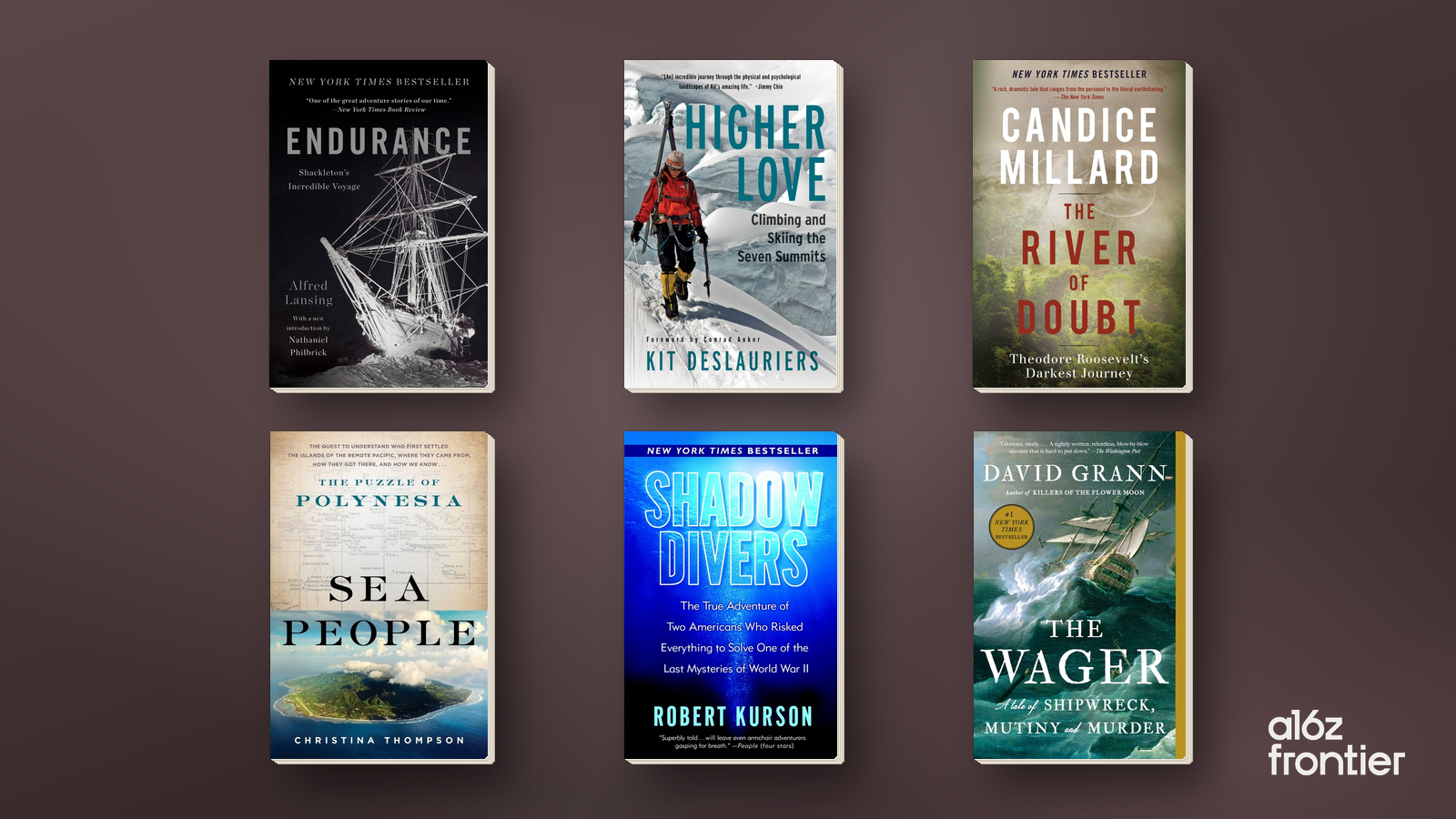
- Endurance: Shackleton’s Incredible Voyage by Alfred Lansing Founders Summit 2023
- The Explorer’s Gene: Why We Seek Big Challenges, New Flavors, and the Blank Spots on the Map by Alex Hutchinson
“Alex Hutchinson’s Endure and his new follow-up The Explorer’s Gene blend science, storytelling, and history to explore what drives us. Endure unpacks how mindset shapes resilience and physical limits, while The Explorer’s Gene dives into our inner drive to chase challenge and novelty. Together, they offer a fascinating look at what propels us in work, life, and play.”
- Higher Love: Climbing and Skiing the Seven Summits by Kit DesLauriers
“Inspiring firsthand account of a fearless skier and mountaineer conquering a massive feat — climbing and skiing the highest peak on each continent. It gives a peek into what drives her to complete this impressive feat but also the very real fears and circumstances she has to overcome. The book also introduces you to a colorful cast of characters that make up the climbing community around the world, who band together to help Kit reach her dream.”
- Over the Edge of the World: Magellan’s Terrifying Circumnavigation of the Globe by Laurence Bergreen
“A gripping narrative of the first circumnavigation of the globe. It illuminates the hazards, allure, and rewards of exploration beyond the frontier of humanity’s knowledge and the unique type of leader required to get there.”
- The River of Doubt by Candice Millard
“Shortly after losing his run for a third presidential term, Theodore Roosevelt and his son, Kermit, mount an expedition to explore an uncharted river in the Amazon. The challenges, perils, and near-death experiences they face along the way are almost unimaginable from today’s perspective. Founders enmeshed in the challenges of building their company can take comfort and find perspective in the story of what the Roosevelts attempted and endured.”
- Sea People: The Puzzle of Polynesia by Christina Thompson
“Two themes to this book will resonate. First, human ingenuity and courage. The book is about the astonishing history of the settlement of Polynesia, which required sailing vast distances without modern technology. And second, the scientific process and its steady development. The book chronicles the whole sequence of theories — most of which were deeply flawed — that people came up with to explain how people had traveled to these remote Pacific islands. Over time, often pushed forward by Polynesian researchers themselves, and aided by developments like genetics and radiocarbon dating, we’ve been able to learn more and more about the origins of these fascinating islands.”
- Seven Years in Tibet by Heinrich Harrer
“A firsthand account of one of the first Europeans to enter Tibet in the 1940s. Heinrich Harrer, a climber, lived there until the Chinese invasion in 1950 and tutored the young Dalai Lama. Harrer describes life in Lhasa with amazing attention to detail and humor. It’s a fascinating journey of a human that strives to make a positive impact on the world around him.”
- Shadow Divers: The True Adventure of Two Americans Who Risked Everything to Solve One of the Last Mysteries of World War II by Robert Kurson
“I’m a little late to this book, but it’s a great story about a daredevil subculture I knew nothing about. A true story, human drama, and adventure all at once.”
- A Voyage for Madmen by Peter Nichols
“It’s a super captivating (true!) story — I recommend not reading the back cover (or anything about the book in advance) as it’s much more fun to have the mystery unfold to you at the same time it unfolds to the characters.”
- The Wager: A Tale of Shipwreck, Mutiny and Murder by David Grann
“An older bestseller. Deep-water divers discover a sunken German U-boat off the coast of New Jersey. A story about danger, discipline, and persistence.”
Nature writing
This section features books that celebrate the beauty of nature and the environment. The authors share their experiences and observations, inviting readers to appreciate the natural world.
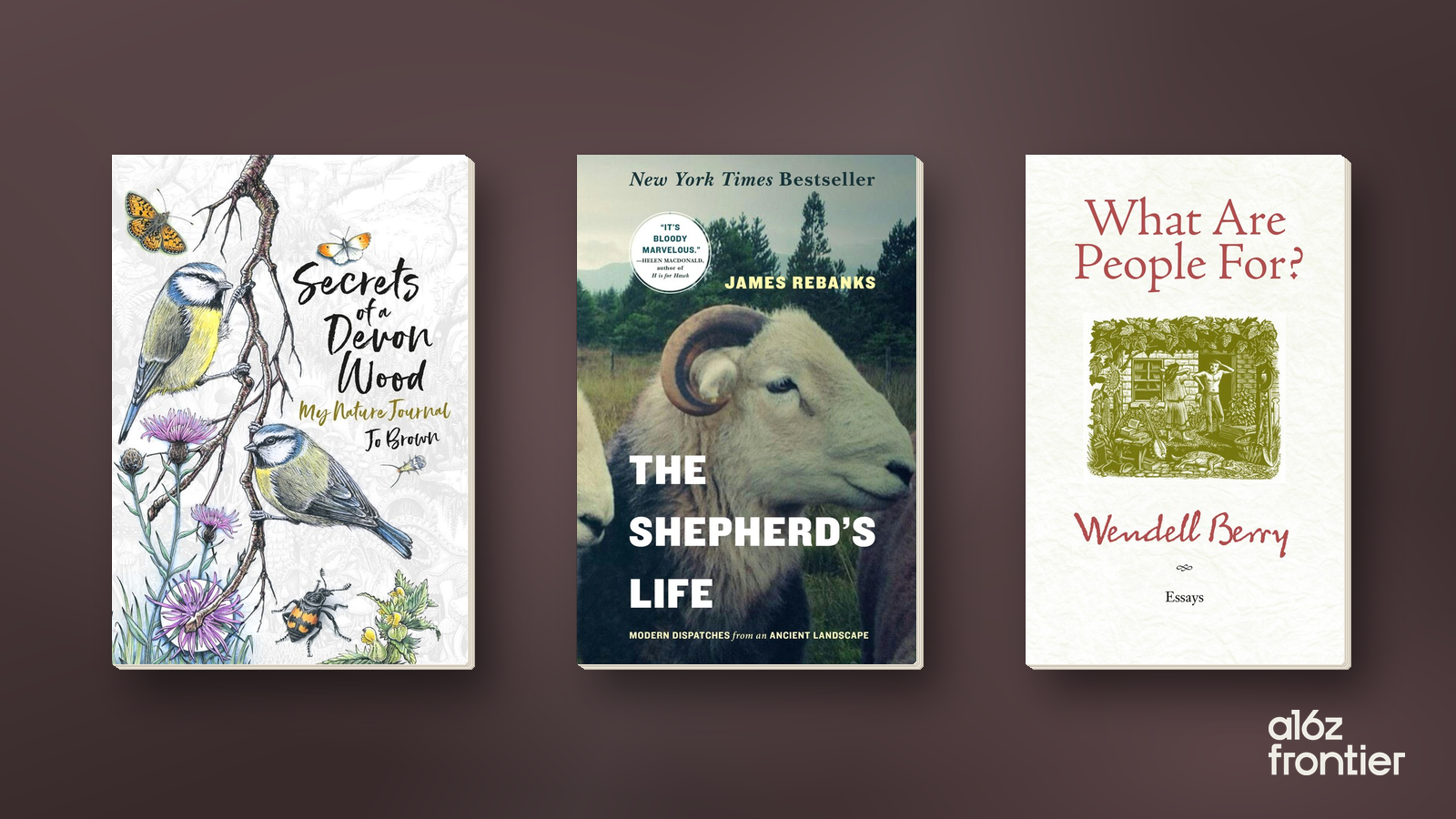
- Secrets of a Devon Wood: My Nature Journal by Jo Brown
“An amazing account of the first round-the-world race, solo sailors going non-stop! Held in 1968–1969, with participation widely open to anybody — the reason why most of the racers did not have much prior experience. The winner finished the journey in 312 days (current record for solo is 42 days). I think there are a lot of parallels to startup founders: most did not know what the journey entailed, they had to fix major issues with the boats under sail, and the journey itself felt for some so much more important than the prize money and honor awaiting them at the end.”
- The Shepherd’s Life by James Rebanks
“The author (also of Killers of the Flower Moon fame) draws on detailed diaries to provide an engaging account of the last voyage of The Wager, part of a small British squadron chasing Spanish galleons round the world’s oceans in the middle of the 18th century. This book captures the human spirit’s incredible ability to survive, against all odds, through shipwrecks, scurvy, mutiny, and ferocious storms. Reading this book makes you grateful for the things that make us human — the good and the bad.”
- What Are People For? by Wendell Berry
“The Wager is a gripping true tale of survival and humanity on the high seas during the age of exploration.”
Memoirs and firsthand accounts
This section includes personal narratives that provide insight into the lives of individuals who have faced unique challenges and experiences. These memoirs offer powerful reflections on life.
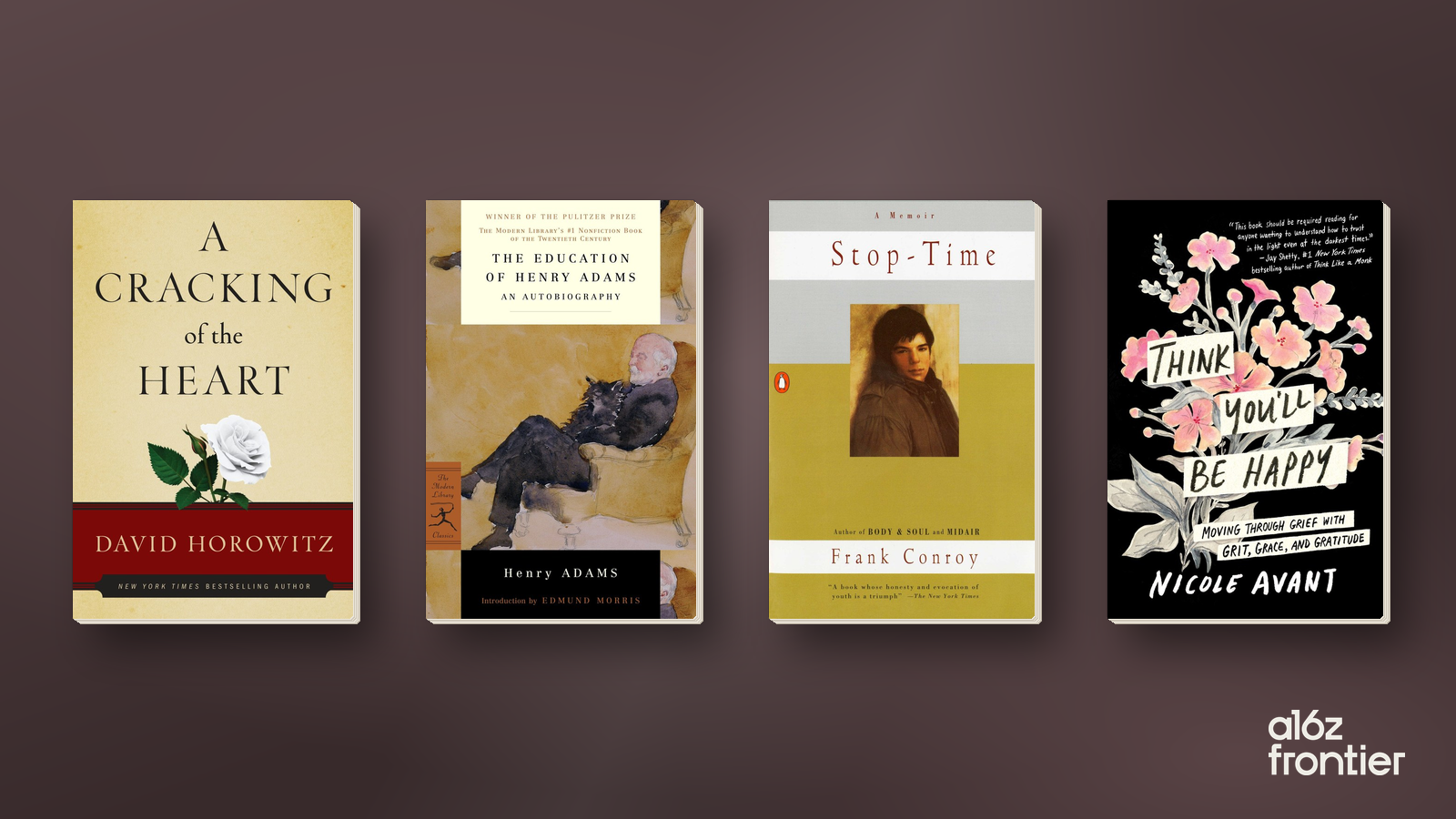
- A Cracking of the Heart by David Horowitz
“This is less a book to read and more a book to absorb visually, as it’s the artist’s journal — a nature diary in beautiful modern botanical-illustration style of the things she physically saw and zoomed in on from her ‘backyard’… For me, it evokes the feels of the first years of the pandemic, where so many of us were confined to local zones and traveling familiar paths, zooming in on the things we saw through new eyes. On her site, the artist quotes the ‘North Pond Hermit,’ who lived in isolation for years, on how ‘solitude bestows an increase in something valuable — my perception.’”
- The Education of Henry Adams by Henry Adams
“Rebanks tells the story of the English Lake District through his own story as a modern-day shepherd with roots that go back hundreds, if not thousands, of years. It’s lyrical, honest, and moving.”
- Stop-Time: A Memoir by Frank Conroy
“While my mind is typically focused on the future and its possibilities, What Are People For? is a collection of essays creating a deliberate pause to contemplate our place, and our limits, in this world. I like to read Berry’s essays in small increments and sit with his wisdom after closing the book.”
- Think You’ll Be Happy: Moving Through Grief with Grit, Grace, and Gratitude by Nicole Avant
“This is one of the most profound books I have read in a long time, and feels like it came along at just the right time (even though it was published over 15 years ago, a year and a half after the author’s daughter passed). On the surface, it is a book about grieving, reckoning with regrets, ‘the cords of family’ pulling together, and stitching stories and truths told by and about a loved one after they are gone. But it is also a book about living on one’s own terms, making meaning and finding purpose in one’s life, and connecting with each other despite differences — whether parents and children or siblings, friends and lovers or even spiritual guides. One of the biggest messages in the book is to pay attention to the ways in which your relationship continues even after death. And yet the biggest lessons the book really offers are on how to maintain relationships in life. Defending partisan positions or taking a combative, uncompromising stance on ideology may work for debating abstract ideas, but it blocks understanding the ‘full-bodied’ complexity of the person we’re talking to (or about). While many complain about narcissism and the death of nuance in our current times, it’s actually our very self-regard — and ability to give up control/our fear — which creates a bridge to others, Horowitz (who passed away in 2025) shares.”
- Voices from the Italian Renaissance: A Sourcebook edited by Lisa Kaborycha
“An extraordinary reflection on living through a period of intense technological change. Adams reflects on how the educational system failed to anticipate the radical transformation he experienced, and describes where he learned life’s true lessons. A classic and timeless book that’s perfect for today’s moment.”
Arts and culture
This section explores the intersection of creativity and culture, featuring books that delve into various artistic disciplines and the processes behind them. Readers will find insights into the creative journey and the impact of art on society.
- Designing games and puzzles 4
- The process of creativity 12
- How ideas spread and shape culture 7
- The craft of writing and editing 12
- Musicians onstage and off 5
Designing games and puzzles
This subsection highlights the art and science behind game design and puzzles. The selected titles provide a glimpse into the creative minds that shape interactive experiences.
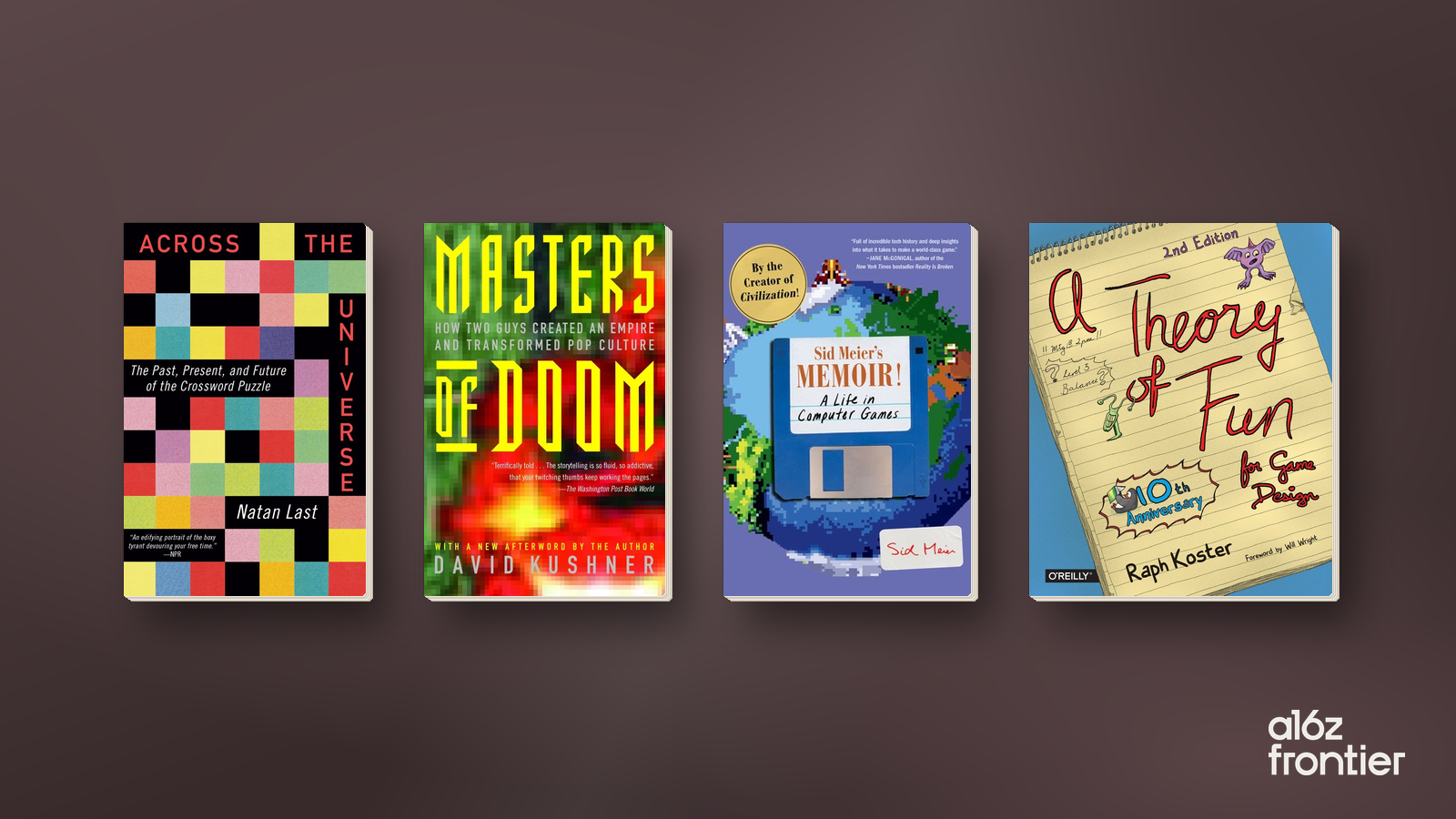
- Across the Universe: The Past, Present, and Future of the Crossword Puzzle by Natan Last
“This is a coming-of-age story and a recounting of rebellious teenage years that, despite being true, was more fascinating to me than J.D. Salinger’s fiction. The writing is impeccable.”
- Masters of Doom by David Kushner Founders Summit 2022
- Sid Meier’s Memoir!: A Life in Computer Games by Sid Meier
“A book about grief, purpose, and the legacy a mother leaves behind — woven with stories from music, culture, and politics.”
- A Theory of Fun for Game Design by Raph Koster Founders Summit 2023, CSX 2024
The process of creativity
This section examines the creative process, offering insights into how ideas are generated and developed. The featured books encourage readers to embrace their own creativity.
- Ametora: How Japan Saved American Style by W. David Marx
“I am obsessed with this masterfully curated anthology of letters, poetry, publications, and various writings and other primary sources from the Italian Renaissance. The book is organized by theme, like the papacy, marriage, patronage, humanism, and others — each with an illuminating little introduction. Highlights are verses by performer and probable courtesan Gaspara Stampa as she imagines the end of a love affair (‘restore now / my life to me as it was, happy and joyous’ 😭). And two accounts of a young Leonardo da Vinci being an ambitious weirdo. First by frankensteining a bunch of animals (in a painting) to scare his father. Then by pitching his skills in a letter to Ludovico Sforza, the Duke of Milan, by offering to demonstrate his trebuchet designs in a city park. A classic example of a young builder seeking funding for his ideas. Note that this book is a companion piece to Kaborycha’s A Short History of Renaissance Italy. I also recommend her anthology of letters, A Corresponding Renaissance: Letters Written by Italian Women, 1375–1650.”
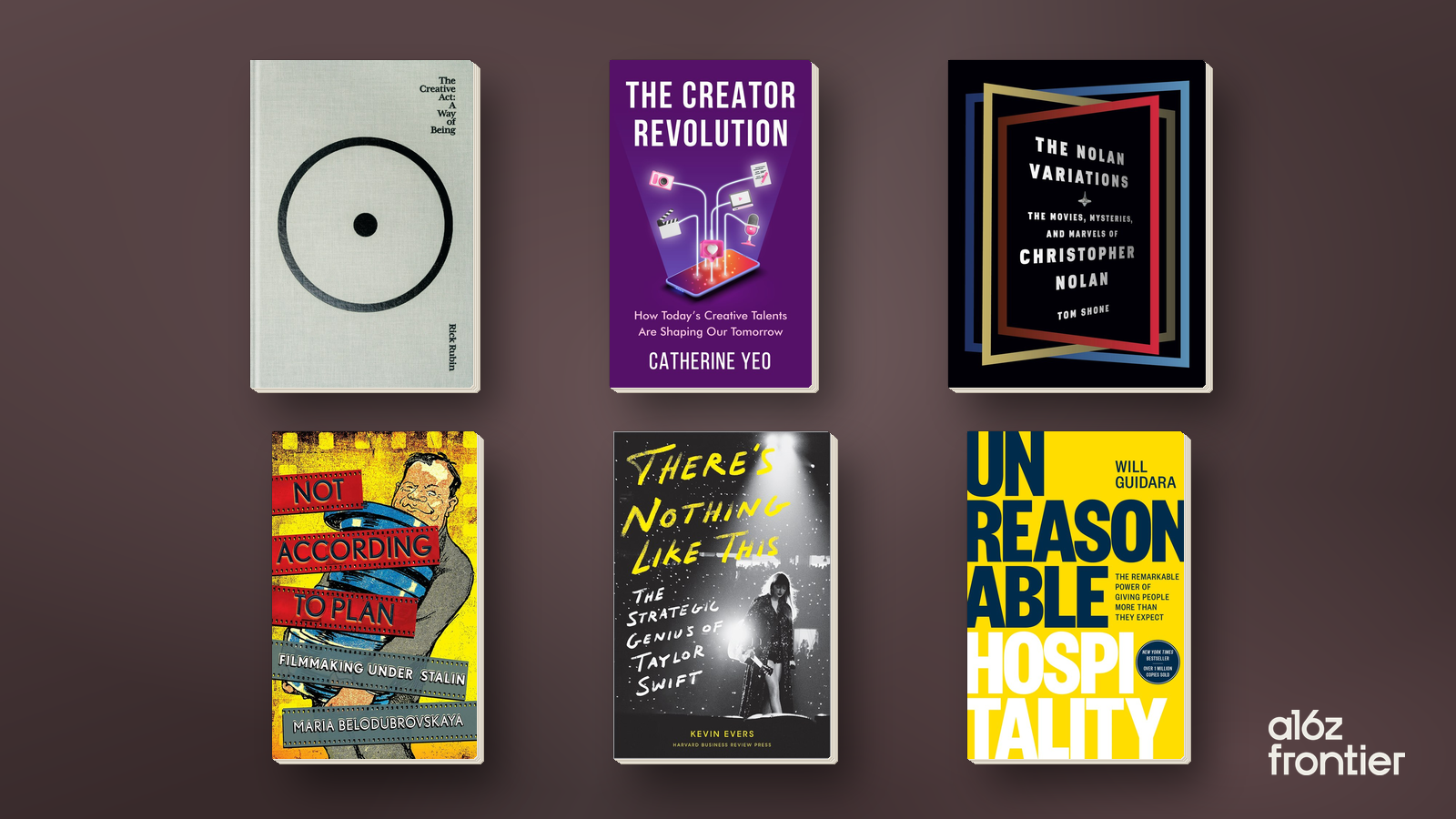
- The Creative Act: A Way of Being by Rick Rubin
“A book for wordplay enthusiasts and technologists (or for traveling in a spaceship?), especially for one down to rethink the grid.”
- The Creator Revolution: How Today’s Creative Talents Are Shaping Our Tomorrow by Catherine Yeo
“The creator of Civilization — as well as dozens of other computer games — recounts how he and his collaborators built what became one of the greatest game franchises in the history of, well, civilization. In addition to tracing the history of computer hardware, graphics, AI, and game design, Meier’s memoir is full of top-notch advice for aspiring entrepreneurs and creators. It’s also laugh-out-loud hilarious.”
- Michelangelo: The Artist, the Man, and His Times by William E. Wallace
“If you’ve spent anywhere near as many hours as I have playing the many incarnations of ‘Civilization’ and other Sid Meier games, I’d highly recommend their creator’s memoir: part nostalgic tour of computer gaming, part tutorial on game design, part business primer, all fun.”
- The Nolan Variations: The Movies, Mysteries, and Marvels of Christopher Nolan by Tom Shone Founders Summit 2023
- Not According to Plan: Filmmaking Under Stalin by Maria Belodubrovskaya
“I’ve come to really enjoy menswear, most of which happens to be made in Japan. I was fascinated to understand why the highest-quality American-style clothing all happened to be made in Japan, and this book opened a whole new world I never knew about.”
- Stairway by Markobi
“Yes, many people are talking about this book — and there’s a reason why: it’s for anyone and everyone. Most books on creativity treat it like some rarefied act; reduce the hard work into clever little hacks; or read like overly self-indulgent little self-help treatises that belong on The White Lotus or something! But I like this book of the self-help/inspiration genre because it opens with the premise that everyone is a creator; that creativity isn’t some calling, but a ‘fundamental aspect of being human’; and that ‘we are all living as artists’ — whether or not you’re formally making art. The book shares mindsets for anyone bringing something into existence, big or small; and while some of it may feel obvious, in practice, it’s really not. Rubin’s musings on the abundance (vs. scarcity) mindset, on sincerity as a goal, and on the realities of popularity are especially fitting ones for our times. But honestly there’s so much in this easy-to-read book about just navigating life!”
- Strange Tools: Art and Human Nature by Alva Noë
“A masterclass in making the creative process a way of life. The lessons apply whether you’re making music (like Rubin), writing, painting, coding, or investing in tech: be open to new ideas, willing to experiment, and ready to move past failure. Crisp, accessible, thought-provoking.”
- There’s Nothing Like This: The Strategic Genius of Taylor Swift by Kevin Evers
“Drawing upon her own experiences as a creator, as well as a range of interviews and other sources, my (undergraduate!) student Catherine Yeo documents the rise of the creator economy and the extraordinary opportunities it creates, as well as challenges around labor, community, and burnout. Yeo provides hands-on tips and — especially exciting for the crypto audience — surveys a number of different ways in which web3 offers the potential for a more inclusive and rewarding creator future.”
- This Is Not a T-Shirt: A Brand, a Culture, a Community — a Life by Bobby Hundreds
“I will occasionally trot out anecdotes from this biography at a party or an otherwise fun gathering of friends. While I’ve seen a lot of eyes glaze over, I’m convinced there is an audience somewhere out there for my niche preoccupations, so here we go: Around 1506 — a few years before he began work on the ceiling of the Sistine Chapel — Michelangelo Buonarroti traveled to Bologna. When he got there, he was recognized by attendants of Pope Julius II and promptly brought before His Holiness, whom Michelangelo had essentially left on read. Bold! Pope Julius then commissioned a bronze sculpture of himself with a giant sword to show everyone who was boss. Michelangelo — who wasn’t used to working in bronze, or in Bologna — complained prolifically in letters to his family. He bemoaned his ‘terrible room’ and the heat ‘such that one cannot believe it is worse anywhere in the world,’ but he did not write much about the plague raging in the city at the time, or about the unruly mob that sacked and burned an entire palace to the ground. He was simply that locked in. If you find this delightful, read the whole biography. Michelangelo was, in fact, not a party dude. He was a charming (in my opinion) curmudgeon with near-delusional ambition.”
- Unreasonable Hospitality: The Remarkable Power of Giving People More Than They Expect by Will Guidara
“An amazing deep-dive on the folly of Stalin’s efforts to create a top-down cultural apparatus for cinema.”
- A Woven Year by Jessie Mordine Young
“My friend Markobi — the reigning world champion of card magic — just published his magnum opus Stairway, exploring the mechanics and philosophy behind his winning routine. While the technical details are aimed at magicians, his meditations on the creative process, the art of performance, and the champion’s mindset can be useful to anyone. (Fun fact: he signed my copy ‘Don’t open this book,’ so you know it must be good!)”
How ideas spread and shape culture
This section explores the dynamics of cultural exchange and the dissemination of ideas. The selected titles examine how creativity influences society and vice versa.
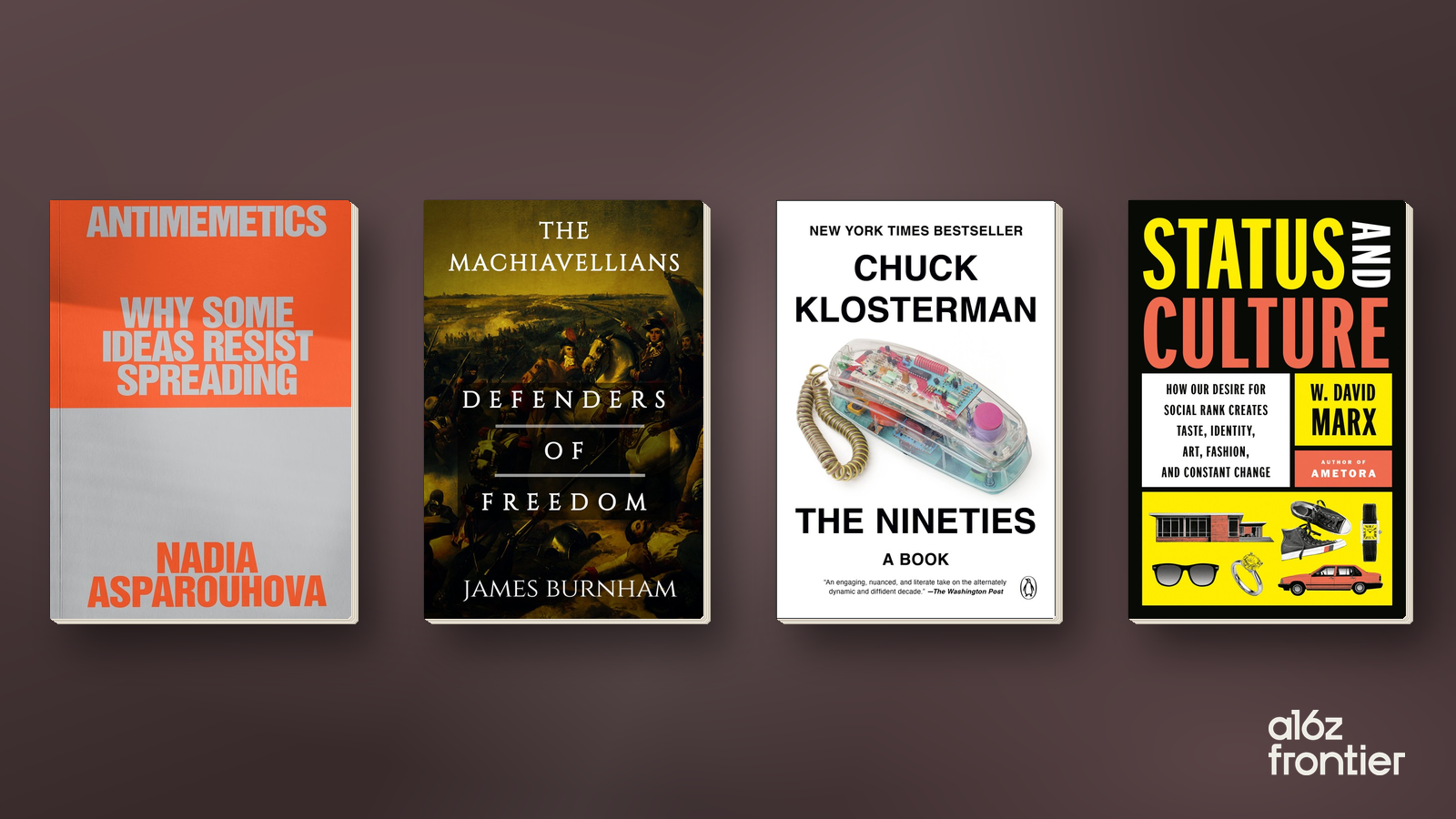
- Antimemetics: Why Some Ideas Resist Spreading by Nadia Asparouhova
“I adore the premise of this book, which is that art makes us, not the other way around. After writing the book, Noë added that ‘Artists don’t make things because what they make is special. They make things because making is special…’ I’m obsessed with not just the process behind the outcomes of art, and the production of art, but also the interaction between art (the ‘strange tools’) and viewer, which is arguably as important. So this philosopher’s musings on art and evolution, and how we are designers by nature (drawing > writing, images > words), resonated with me… The insights may also reflect some of our response right now to AI art and excitement for generative art on the blockchain (my favorite!).”
- The Condition of Postmodernity by David Harvey
“While a lot of books about Taylor Swift focus on the gossip, feuds, and pop-culture aspects of her work and creative projects, this book homes in on the business of being one of the most successful artists working today. A great read with real case studies that can apply across all businesses.”
- Humankind by Rutger Bregman
“Hundreds’s memoir is a visionary work about brand as community — a core tenet of building in web3, which Hundreds has been exploring since the early days of the Internet. It’s also an extraordinary (and often laugh-out-loud hilarious) tale of entrepreneurship against some pretty surreal odds. [Disclosure note: I hold a few NFTs from The Hundreds’s NFT projects, and way too many The Hundreds beanie hats.]”
- I See Satan Fall Like Lightning by René Girard
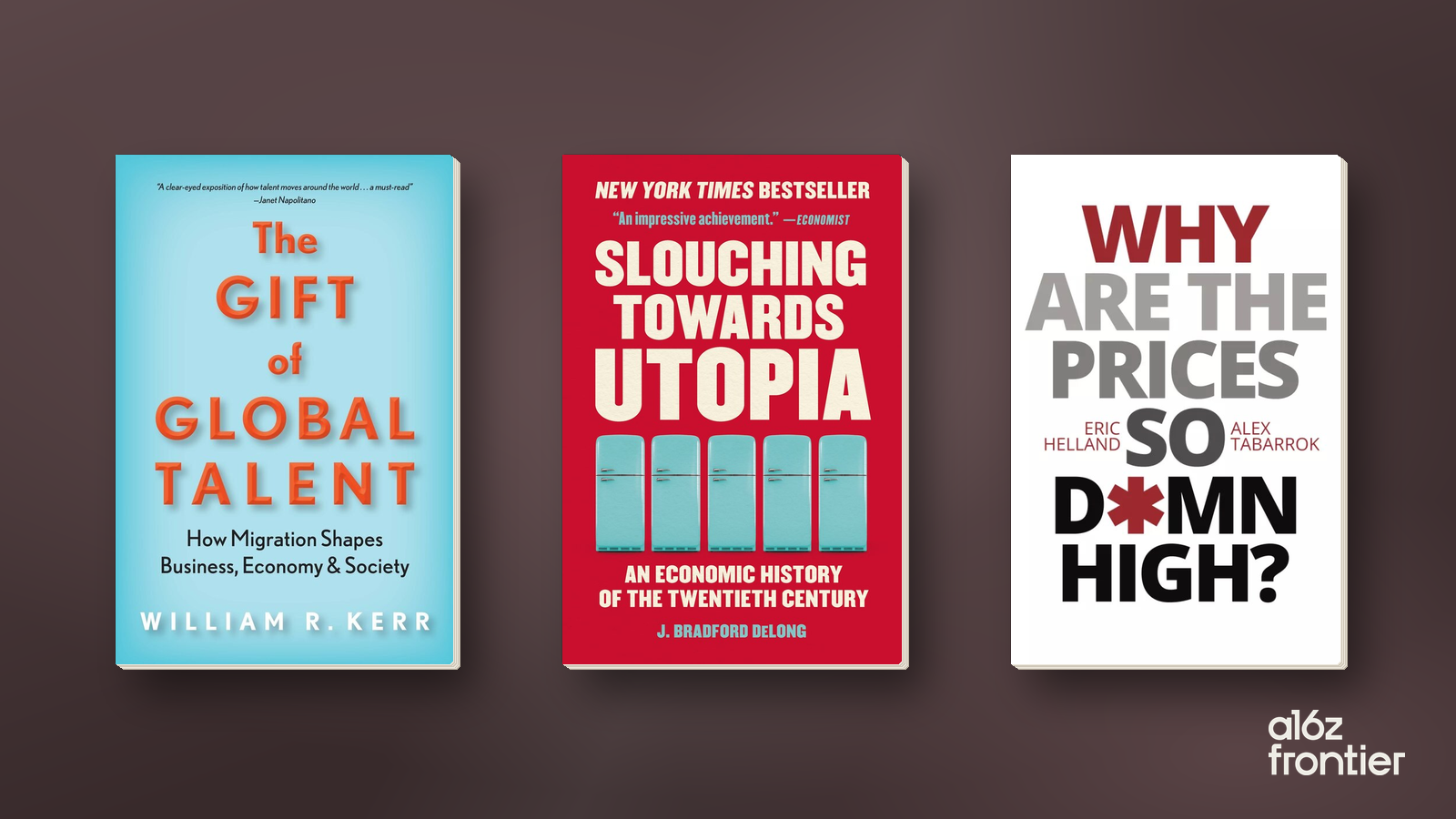
“What I loved about this book was the ‘behind the scenes’ insights with a very driven and charismatic leader. With the relentless focus on customers at the center of the experience, it’s fascinating to see outcomes based on who is leading. Great read with fun personal examples.”
- The Machiavellians: Defenders of Freedom by James Burnham – Michael Blau, crypto product and protocol design, Royal Winter 2025
- The Nineties: A Book by Chuck Klosterman
“In 2023, Young undertook a project of daily weaving, creating 365 ‘tactile sketches’ from handspun fibers and found objects. The whole series has been beautifully photographed and woven together into this volume, perfect for quiet contemplation or as a coffee table book.”
- Status and Culture: How Our Desire for Social Rank Creates Taste, Identity, Art, Fashion, and Constant Change by W. David Marx
“This is the only nonfiction book (besides David Horowitz’s memoir) that I’m recommending this year because I find most nonfiction books to be: too anecdotal (stuffed with stupid anecdotes or gratuitous non-illustrative examples when I just want the argument); too long for too little payoff (the argument shoulda been conveyed in a single article or podcast, not worth a book-length treatment); too discursive (and not in a cool journey way); too derivative (like every book before it and not in a comforting, familiar way but in an ‘oh god not this again’ way); or too dry (meant to only be scanned or parsed modularly for specific sections). I want the information, but don’t want it to come to me too dry either — I might as well read a textbook to learn a topic at that point (and I often do). But Nadia’s new book does none of the above, and is fresh and different: It is well argued, well written, flows well chapter to chapter (so belongs together as a book), and most importantly, makes the reader think and think differently. The topic — covering memetics, antimemetics, packaging messaging, focusing attention — has relevance for all kinds of builders and marketers, including crypto ones, as it applies not just to group chats but any self-organizing groups and communities communicating about ideas, persuading others, and moving from idea to reality.”
The craft of writing and editing
This section focuses on the art of writing and the intricacies of editing. The selected books provide valuable insights for aspiring writers and editors alike.
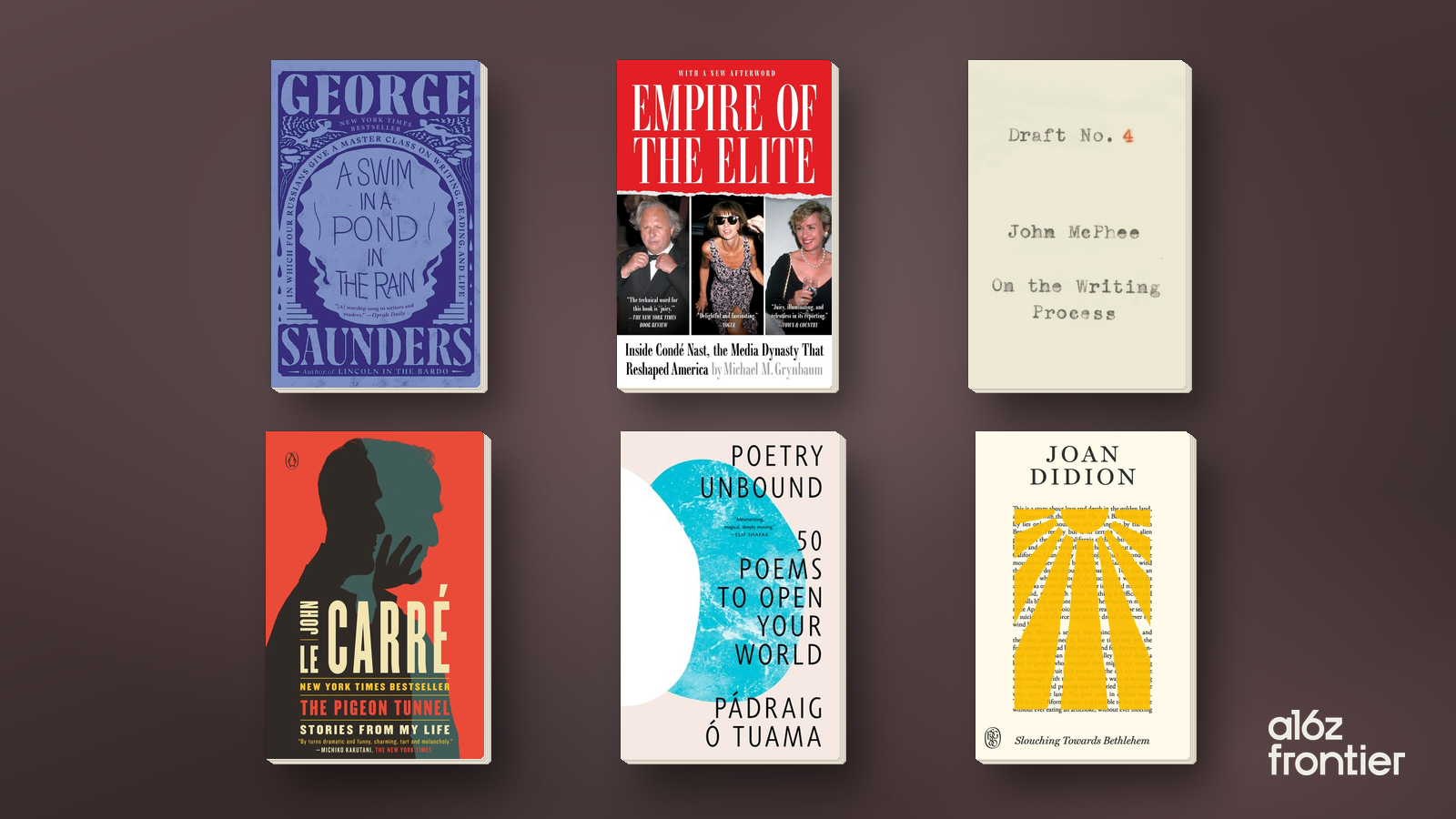
- The Carrier Bag Theory of Fiction by Ursula K. Le Guin
“This is an epic work of artistic, cultural, economic, social, and political history that examines the period of roughly 1920 to the 1980s, charting the emergence of ‘postmodernism’ along the way. [Harvey’s] key argument — that new technologies compress space and time, and reshape human experience in tandem — feels very relevant to crypto. Nothing about Harvey’s writing feels forced or heavy-handed, and despite being published in 1989, the book still rings true today.”
- Draft No. 4: On the Writing Process by John McPhee
“I tend to have a cynical view of human nature, and a friend gave me this book in an attempt to argue the other side. Reading it left me more hopeful about our society. It has also helped me better answer my toddler’s latest question of ‘How does someone become a bad guy or a good guy?’”
- Empire of the Elite: Inside Condé Nast, the Media Dynasty That Reshaped America by Michael M. Grynbaum
“One of the most thought-provoking frameworks that reveal why we desire the things we desire and what this implies for how society is organized. If you love philosophy, anthropology, history, and theology — great read.”
- Index, A History of the: A Bookish Adventure from Medieval Manuscripts to the Digital Age by Dennis Duncan
“This book is so so so good I can’t stop recommending it to people! Not only is it relevant to so many things across art and commerce — how culture is made, how nostalgia inspires, how generations reference past ones and create new futures — but as an editor, I could not stop wondering about the process behind the outcomes: exactly how did Klosterman do his research, writing, editing, and re-editing?!! Because this is a masterpiece, somehow distilling an entire generation into a single, very readable book, with a clear structure and strong curated point of view… yet still having a sense of comprehensiveness at the same time. I am in awe of this work!”
- Mark Twain by Ron Chernow
“Probably the single most important lens to examine and understand so much in the modern (and for that matter, ancient!) world, from culture to technological production, is status: Who has it, what makes it, what changes, how. Of course, nothing tops my friend Eugene Wei’s post on ‘Status as a Service,’ which is essential reading for anyone in tech — it famously coined the phrase ‘status-seeking monkeys.’ [We also briefly discussed it in a podcast we did together a couple years ago.] But this book, while a bit dry, is a nice survey overview of the topic as a whole, across several fields. The insights feel almost obvious yet are important to focus on, as this book does. The chapters on signaling and social value; taste, authenticity, and identity; subcultures and countercultures; and yes, fashion cycles, seem especially relevant to industry folks!”
- The Pigeon Tunnel by John le Carré
“The Carrier Bag Theory (coined by Elizabeth Fisher) centers the container, or bag, as the original human technology — a tool for gatherers to carry food and other items — in contrast to the prevailing narrative that centers the weapon (rock used as bludgeon). In Le Guin’s essay, she applies this lens to narrative fiction, framing the novel as a container of characters and stories. Shape rotator that I am, I instead found parallels in math and software: The foundational object underlying all mathematics is the set, and what is a set if not a container, a bag of elements? And in software — beyond the obvious syntactic parallels (see, e.g., Docker) — it is the nesting-doll containment (also known as ‘abstraction’) of complexity that makes this whole enterprise possible. There are bags everywhere for those with the eyes to see.”
- Poetry Unbound: 50 Poems to Open Your World by Pádraig Ó Tuama
“Two extraordinary and highly complementary collections of essays about the philosophy and process of writing. In Working, Robert Caro teaches us how he researches and composes ultra-detailed histories over decades. Draft No. 4, meanwhile, presents John McPhee’s strategies for crafting creative nonfiction and overcoming writer’s block.”
- Slouching Towards Bethlehem by Joan Didion
“I immediately followed Graydon Carter’s memoir When the Going Was Good with this book, where the author compellingly reads the intro — but then is followed by a buttery-flat audio narrator that sounded like AI and that I found off-putting at first (guys, voice in audiobooks and technology for reading really matters!!). But the stories in this book, especially for a magazine lover, are very compellingly told through the real-life characters of Condé Nast founders and owners and stewards and editors and other makers. Of course my favorite parts were about Vanity Fair, which in many ways was like a startup that was rebooted, pivoted, and eventually found its product-market fit in its high-low mix under Tina Brown. This book is really about the ‘inclusive exclusivity’ that Condé Nast magazines provided in an age of aspiration and a growing middle class; and of course, the key role not just of media funders, but of editors as curators (and sometimes creators) of culture. I know it’s popular to talk about the end of gatekeeping, which I think is a very good thing; but not so the end of curating, which we now need more than ever in an age of media slop.”
- A Swim in a Pond in the Rain: In Which Four Russians Give a Master Class on Writing, Reading, and Life by George Saunders
“Duncan, a professor of English at University College London, traces the path of the index — the always-useful compendium of words and ideas buried at the back of a book — from its proto-origins at the Library of Alexandria through modern search engines. Along the way, you’ll learn the history of alphabetization, how accused heretics used the index to defend themselves, how political opponents used the index to take potshots at one another, and more. It’s delightful, even if you’re not a word nerd.”
- When the Going Was Good: An Editor’s Adventures During the Last Golden Age of Magazines by Graydon Carter with James Fox
“Look, I haven’t read Chernow’s biography of Mark Twain yet, okay. (The book is 1,200 pages, published in May, and I have a day job — all of which would make Chernow wince to hear me say.) No matter. I will use this opportunity to recommend Chernow’s latest work anyway, or at least his talks and interviews about it. In particular, check out his recent conversation with another great humorist of our age, Conan O’Brien (who happens to be the recipient of this year’s Mark Twain Prize for American Humor). It’s full of wit and soul, like the erstwhile riverboat pilot himself.”
- Working by Robert A. Caro
“A fun and revealing memoir showcasing the real people and places that inspired so many of le Carré’s spy novels.”
- Writing to Learn by William Zinsser
“I had an early interest in poetry beaten out of me by my formal schooling, which made it mandatory and therefore boring. But I started reading poetry on the regular when I found a daily poetry account on Twitter that I liked. As I’ve migrated at least some of my reading offscreen, I’ve picked up poetry collections to read in the morning. This one features a personal introduction by the editor (‘Here’s why this poem resonated with me.’) followed by a deeper analysis of the poem itself. I didn’t think I’d read the analyses, but I often find them as engaging as the poems.”
Musicians onstage and off
This section features memoirs and narratives from musicians, providing a glimpse into their lives both on and off the stage. Readers will find stories that resonate with the passion and challenges of the music industry.

- Every Good Boy Does Fine: A Love Story, in Music Lessons by Jeremy Denk
“The chapter ‘Goodbye to All That’ is deeply introspective, about seizing the moment and enjoying where you are.”
- Fahrenheit-182: A Memoir by Mark Hoppus with Dan Ozzi
“Keep the reader hooked from line to line; subvert expectation; achieve eternality through specificity… These are just some of the lessons Saunders imparts in his MFA ‘workbook’ covering classics from four Russian writing masters. Saunders’s (and his teachers’) analytical wit and wisdom will heighten anyone’s appreciation or application of the art of storytelling.”
Business and economics
This section covers essential readings on business practices, economic theories, and the dynamics of industries. The selected titles provide valuable insights for entrepreneurs and business enthusiasts.
- Building better work habits 8
- Company, industry, and founder histories 10
- Economics for beginners and beyond 5
- How auctions, markets, and incentives work 7
- How to build competitive advantage 6
- Understanding financial systems 8
- Growing and scaling companies 5
- Communication and negotiation 4
- What does (& doesn’t) drive economic growth 3
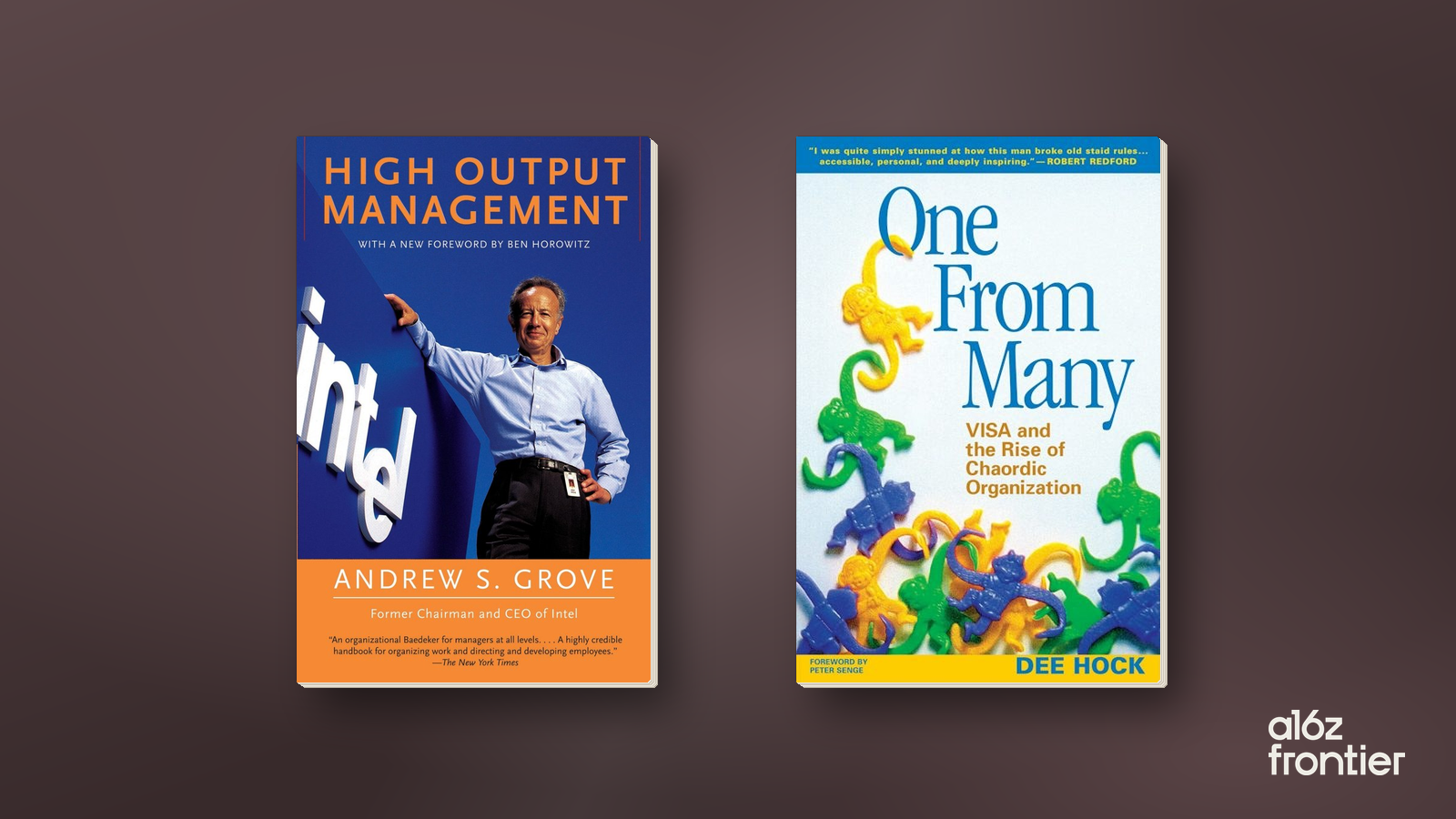
Building better work habits
This subsection focuses on developing effective work habits that can enhance productivity and success. The featured books offer practical advice and strategies for personal and professional growth.
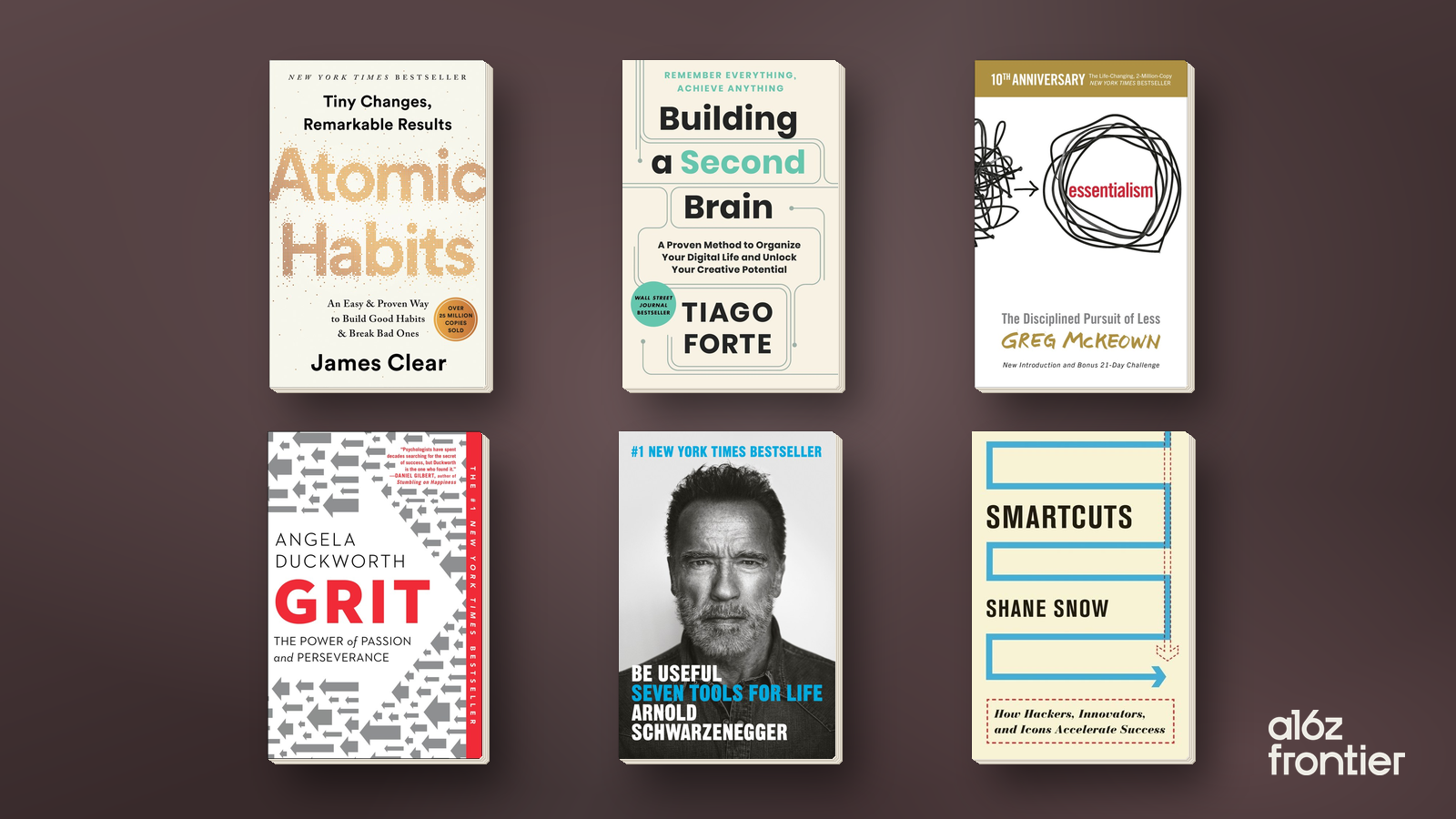
- Atomic Habits: An Easy & Proven Way to Build Good Habits & Break Bad Ones by James Clear
“I deeply miss the Golden Age of magazines, and Vanity Fair was my favorite of this genre — along with Lucky, which thanks to Substack I finally feel like I’ve found again, since I follow all the editors I used to love now thankfully on there! (I followed Air Mail, too, until Carter left.) So I am a superfan of Carter’s, although I did find his personally narrating this book a bit tough to follow initially; I know authors should read their own memoirs, but voice cadence, articulation, and inflection really matter these days. Carter’s memoir was most interesting in the parts where he talked about his philosophies and approaches in magazines, and when he shared some fun inside details on Condé Nast (where I also once worked when at Wired). I especially devoured the details on topics like publishing cadence, specific articles and authors, and how big iconic events like the annual VF Oscar Party came about. When the book ended — and it ends with a delightful list of Carter’s ‘rules for living,’ spanning everything from how to do table place cards to choosing friends who are FISK (funny, interesting, smart, and kind) — I actually cried. I was sad to lose the parasocial ‘friend’ I’d followed for decades and across these pages, and was deeply sad about the end of an era for a medium that shaped our culture… and more inspired than ever to make my own.”
- Be Useful: Seven Tools for Life by Arnold Schwarzenegger
“Pulitzer Prize-winning biographer Robert Caro describes his famous writing and research process, giving insights into how he wrote in such depth on his subjects — including Robert Moses and Lyndon B. Johnson.”
- Building a Second Brain: A Proven Method to Organize Your Digital Life and Unlock Your Creative Potential by Tiago Forte
“I recently learned that the author of On Writing Well, one of the craft’s bibles, has another book on writing. If you’re going to read just one, read On Writing Well, but if you’re a Zinsser superfan, as I count myself, go for both. This sequel is full of clean, clear, vigorous writing samples from masters like Albert Einstein, Charles Darwin, and many others. His thesis is that anyone can learn any subject — no matter how complex — by writing about it in plain, simple language. It’s a beautiful conviction, and all the more so for being true.”
- Essentialism: The Disciplined Pursuit of Less by Greg McKeown
“A memoir for anyone who tries very hard (and also for music nerds). Renowned classical pianist Jeremy Denk writes simply put lessons on the power of music, practice, and messing up (repeatedly) in service of something inchoate (possibly magical?) you have to offer the world.”
- Grit: The Power of Passion and Perseverance by Angela Duckworth
“Punk rejects mass culture. Pop is mass culture. So how does a pop-punk band like Blink happen? In his memoir, bassist and only constant member Mark Hoppus recounts playing a show in Bologna where the crowd hurled rocks and bottles at them. A year earlier, Blink had released a viral video mocking boy bands, and had become so successful that some audiences — a contingent of hostile Italian metalheads, in this case — could not tell the parody from the thing being parodied. (Or didn’t care to.) As Hoppus puts it: ‘They didn’t want some bullshit American pop act fucking up their heavy show.’ I love this anecdote — not just because it’s darkly comic (guitarist Tom DeLonge reportedly swore off pasta bolognese afterward) and boy bands are dumb, but because it illuminates one of modernity’s supreme ironies: What happens when countercultures go mainstream. A similar arc can be traced across jazz, abstract art, hip-hop, skateboarding, streetwear, open source software, and, relevantly for this audience, crypto. Fahrenheit-182 is also a founder story. Hoppus and DeLonge are a volatile creative duo — like Lennon and McCartney with fart jokes. The same forces that allowed them to pump out hits eventually tore them apart. Fortunately, unlike most founder breakups, this one had a reunion tour. I caught them at Madison Square Garden a few years ago and it was a glorious, stupid, perfect blast of nostalgia. So is the book.”
Company, industry, and founder histories
This section provides insights into the histories of companies and industries, highlighting the journeys of notable founders. Readers will gain a deeper understanding of the business landscape.
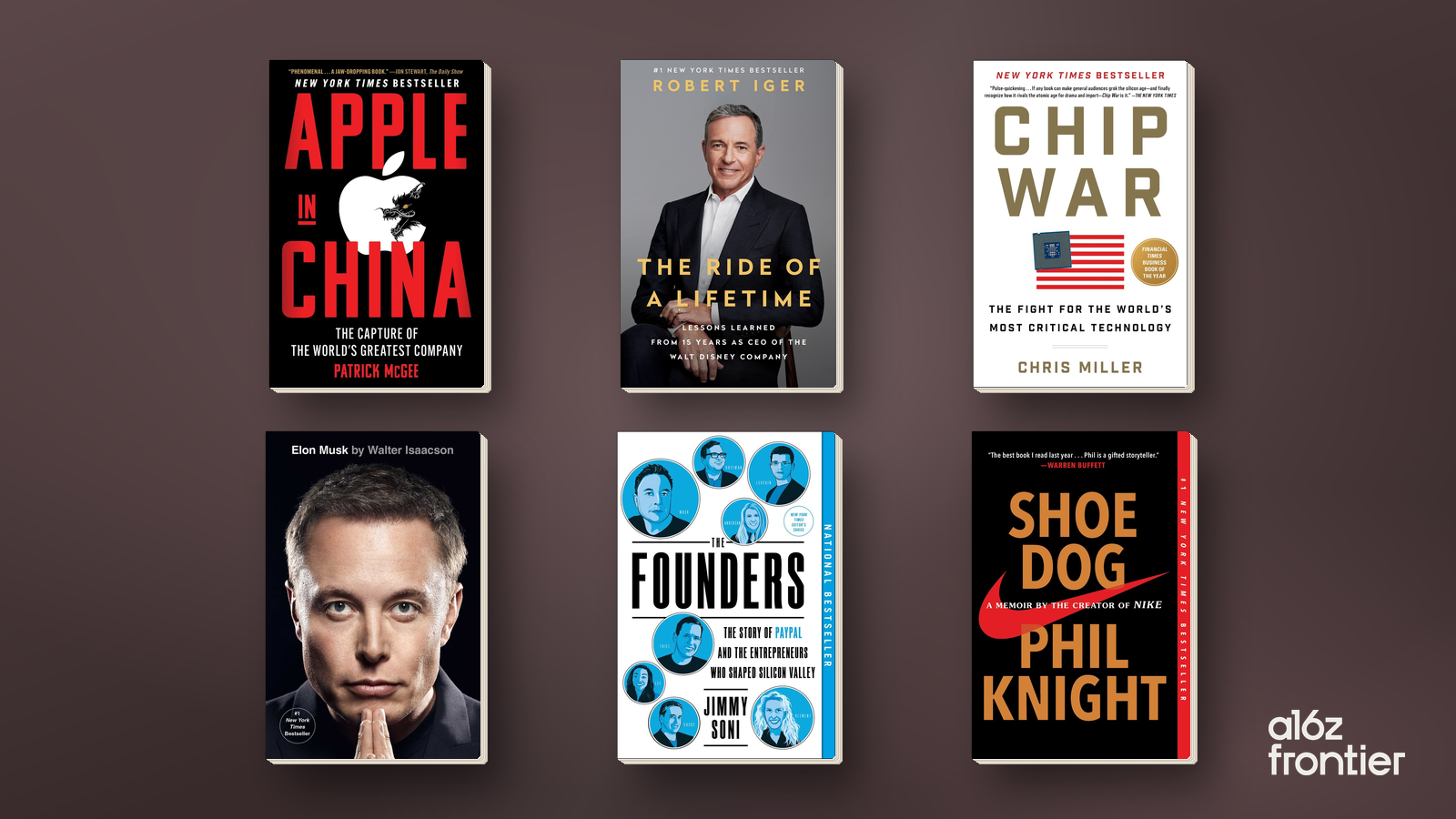
- Apple in China by Patrick McGee
“The story of musical band The KLF, told through the powerful ideas that drove them and that had to be brought into existence.”
Economics for beginners and beyond
This subsection introduces fundamental economic principles and theories. The selected titles are suitable for readers at various levels of understanding.
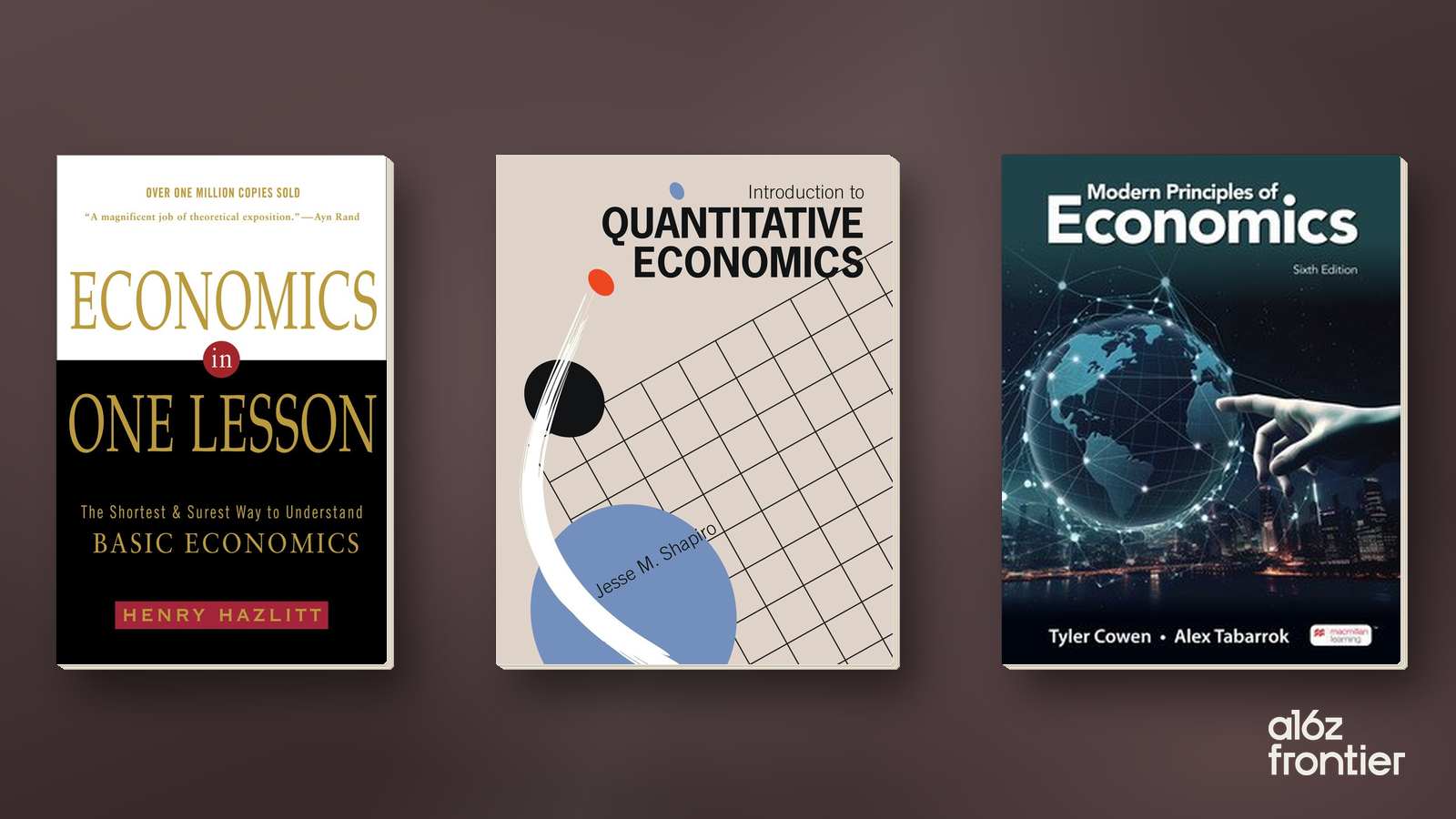
- Basic Economics by Thomas Sowell
“Not exactly a hidden gem, but this book — originally released in 1996 and again in 2016 — is the origin story of a genre-defining group of musicians. The authors collected hundreds of interviews with the likes of Joey Ramone, Lou Reed, and Iggy Pop — which can be noisy, messy, grim, and moving. Just like the music. A tip: assemble a playlist as you go, and be sure to include any influences mentioned, from Elvis to the Doors.”
How auctions, markets, and incentives work
This section explores the mechanisms of auctions and markets, providing insights into economic incentives. The featured books offer valuable perspectives on these topics.
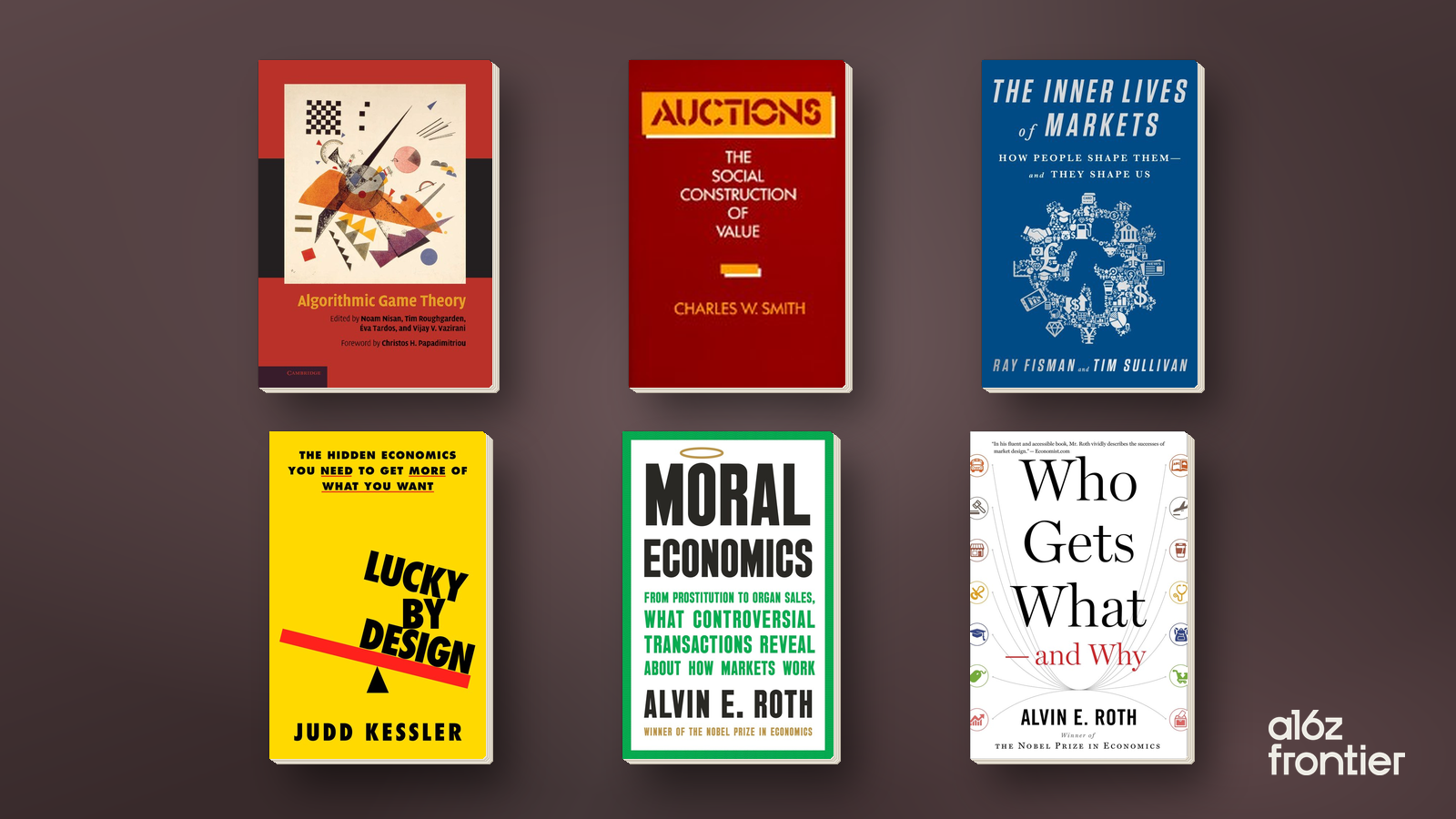
- Algorithmic Game Theory edited by Noam Nisan, Tim Roughgarden, Éva Tardos, and Vijay V. Vazirani Founders Summit 2022
How to build competitive advantage
This subsection discusses strategies for establishing a competitive edge in business. The selected titles provide actionable insights for entrepreneurs.
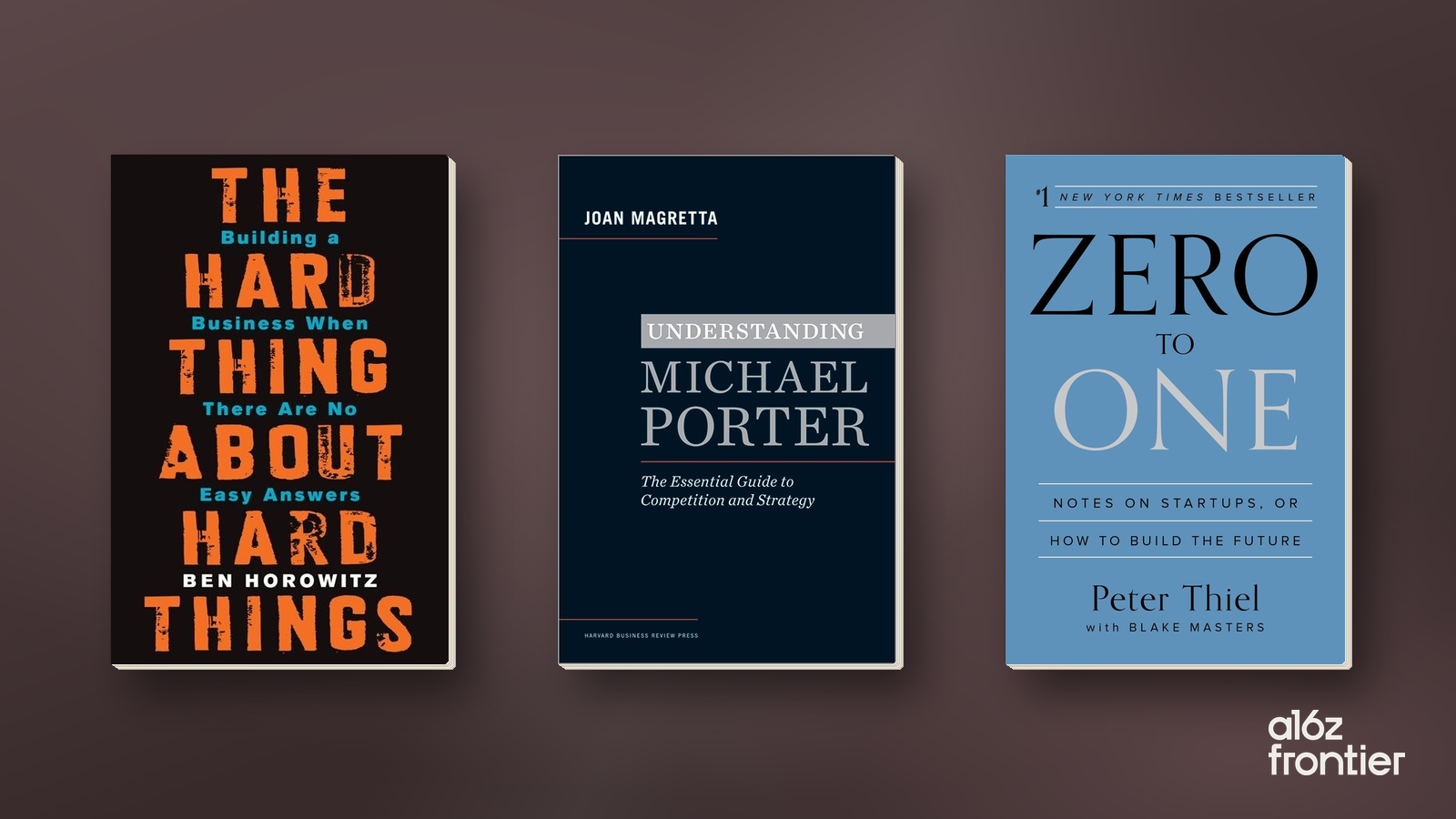
- 7 Powers: The Foundations of Business Strategy by Hamilton Helmer
“Part biography, part behind-the-scenes, and part life inspiration, this book is a charming and cozy read. I was inspired by both how Cynthia has overcome challenges in her life and career as well as her preparation and mindset to be able to accept and excel when opportunities presented themselves. It’s no accident that she was able to ‘defy gravity’ when the cameras rolled for her star turn in film sensation Wicked. Bonus: She reads the book herself for those who prefer audiobooks — and her ASMR is top notch!”
Understanding financial systems
This section covers the intricacies of financial systems and their impact on the economy. The featured books offer a comprehensive understanding of these concepts.
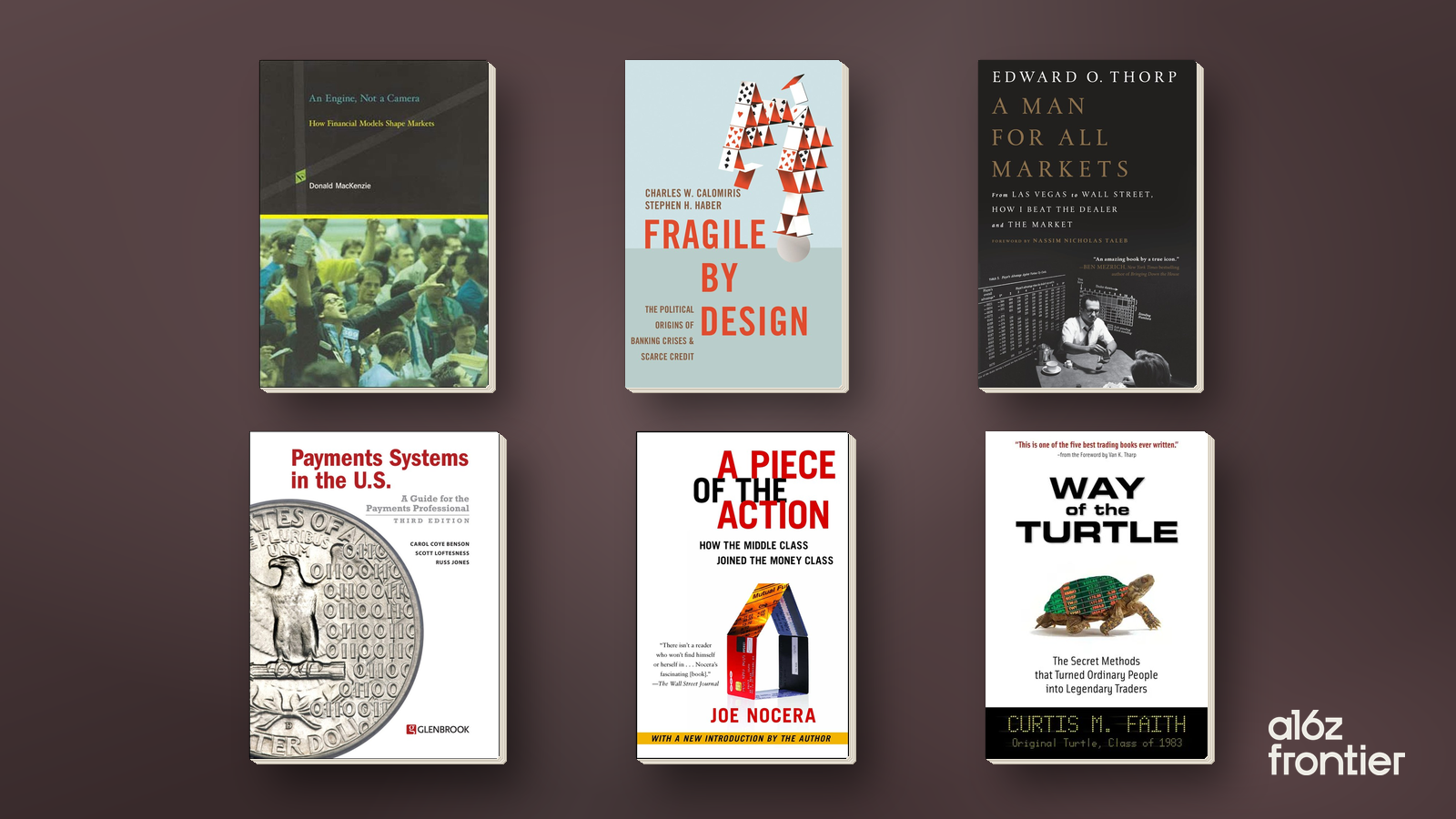
- Boom: Bubbles and the End of Stagnation by Byrne Hobart and Tobias Huber
“Straightforward and direct in its approach and language, really thoughtful and useful. The idea that if you can get 1 percent better each day for one year, you’ll end up thirty-seven times better by the time you’re done is amazing to really think about. I love starting off the new year with that mindset.”
Health, endurance, and longevity
This section focuses on health and wellness, exploring topics related to endurance and longevity. The selected titles provide insights into maintaining a healthy lifestyle.
- Exercise and longevity 5
- Philosophers on how to live well 8
- What makes athletes keep going? 8
Exercise and longevity
This subsection discusses the relationship between exercise and longevity, highlighting the importance of physical activity for a healthy life.
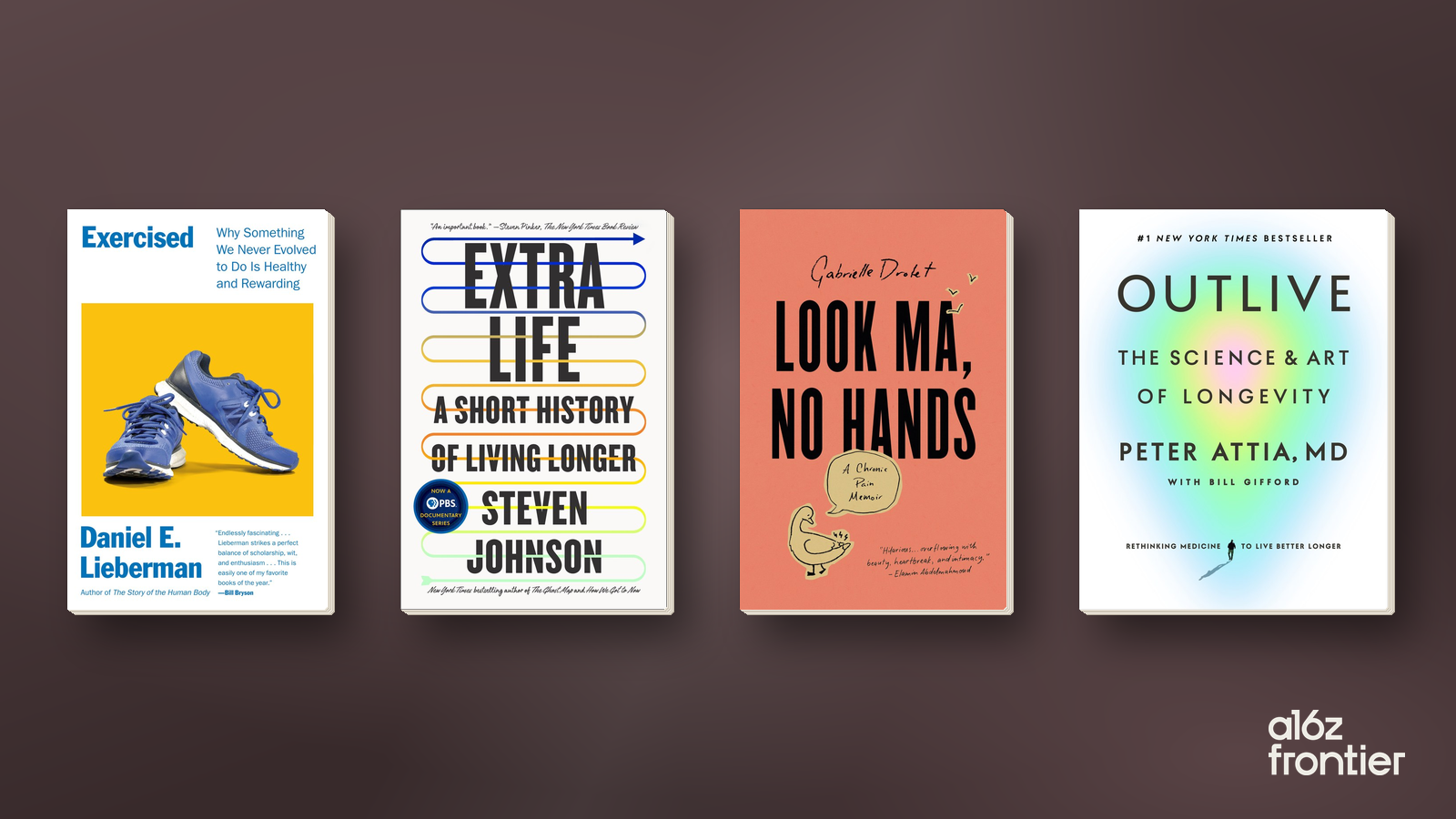
- Biohack Like a Woman: How to Get Fit Effortlessly, Feel Beautiful, Have More Energy, and Unleash Your Superpowers with Biohacking by Aggie Lal
“The key principle is something that I think everyone can implement (doesn’t matter if you’re a marketer, founder, builder, etc.). You can apply it to anything you are doing and it will increase opportunities, ‘luck,’ engagement from others, and more. I’d also recommend checking out the Audible version since Arnold narrates it himself and he’s a great storyteller.”
Philosophers on how to live well
This section features philosophical perspectives on living a fulfilling life. The selected titles encourage readers to reflect on their values and choices.
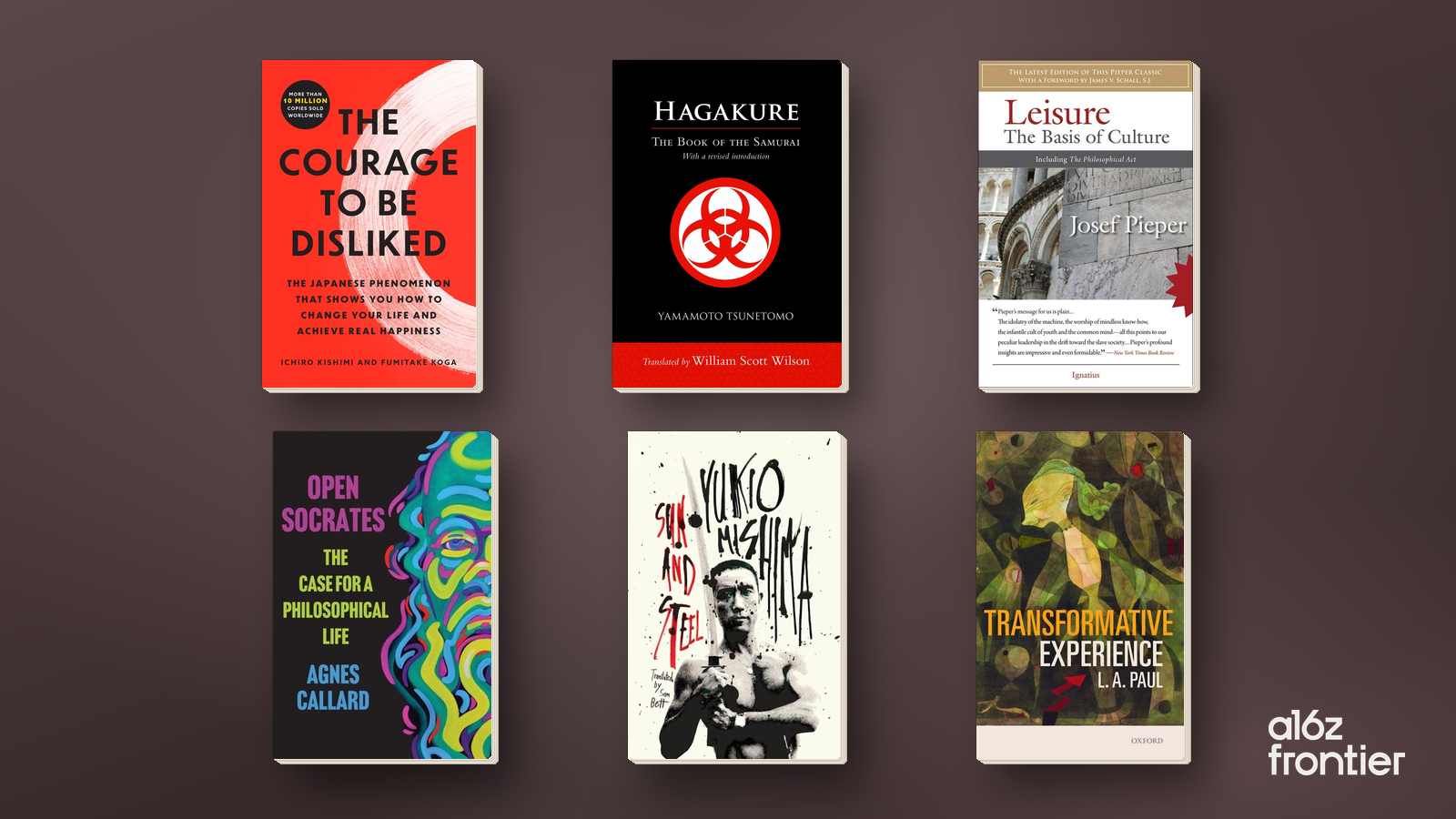
- The Courage to Be Disliked: The Japanese Phenomenon That Shows You How to Change Your Life and Achieve Real Happiness by Ichiro Kishimi and Fumitake Koga – Justin Blau, CEO, Royal Winter 2025
What makes athletes keep going?
This subsection explores the motivations and mental resilience of athletes. The selected titles provide insights into the mindset required for success in sports.
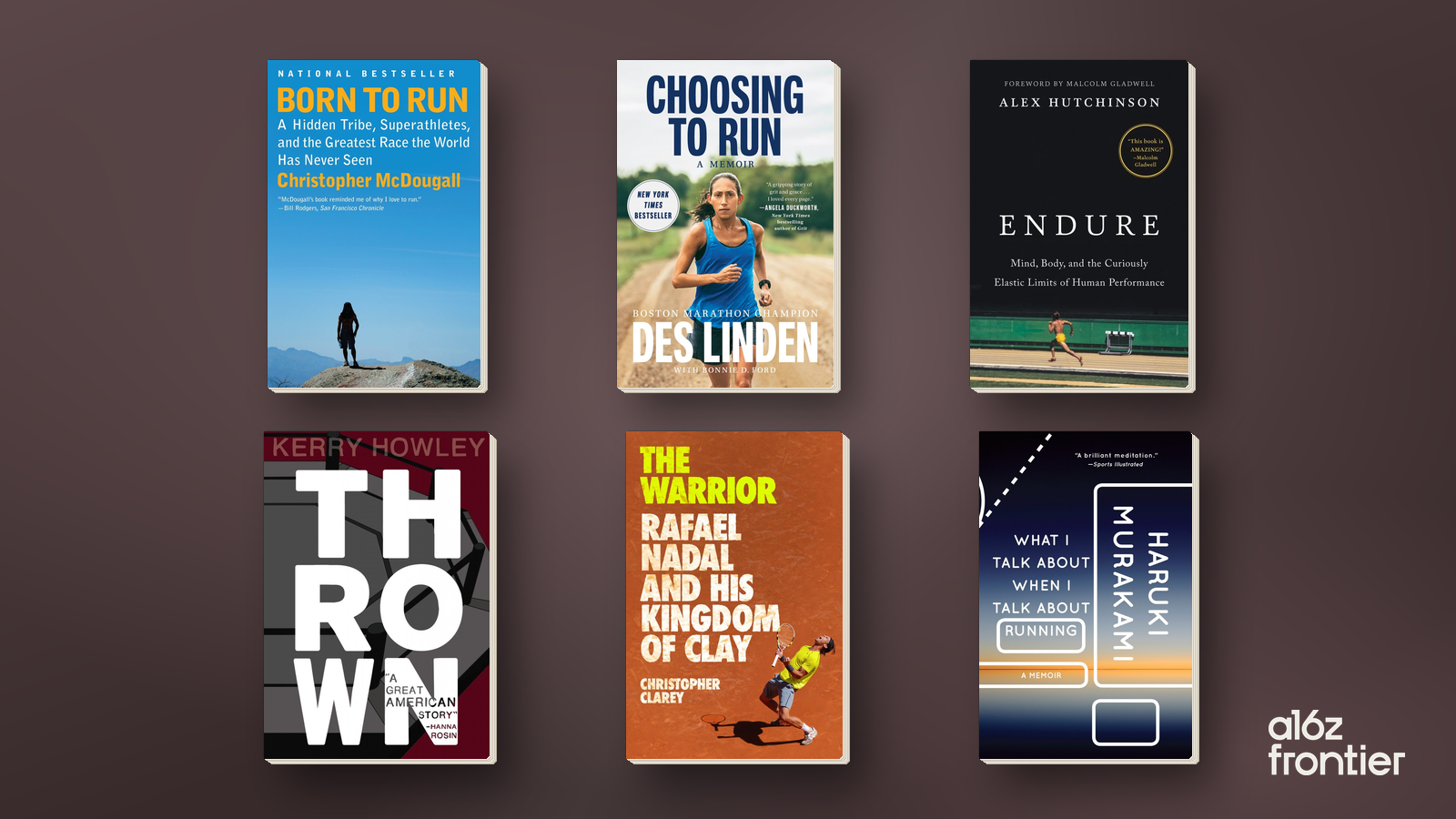
- Born to Run: A Hidden Tribe, Superathletes, and the Greatest Race the World Has Never Seen by Christopher McDougall
“In a world in which every day is a firehose of content, Forte presents a framework for optimizing information capture and processing for maximum creative value. The book is both theory and practical guide — one chapter even works through the micro-details of your digital organizer flow. Particularly compatible and complementary with David Allen’s Getting Things Done system. (Incidentally, I think of Getting Things Done by David Allen as the perfect all-ages holiday gift.)”
History and politics
This section examines historical events and political dynamics, providing insights into the lessons learned from the past. The selected titles encourage readers to reflect on the implications for the present and future.
- Lessons from war 7
- On government as builder: city, state, policy 7
- How rulers rule 6
- The rise and fall of ancient empires 7
- True crime and covert operations 5
Lessons from war
This subsection explores the lessons learned from historical conflicts. The selected titles provide valuable insights into military strategy and human resilience.
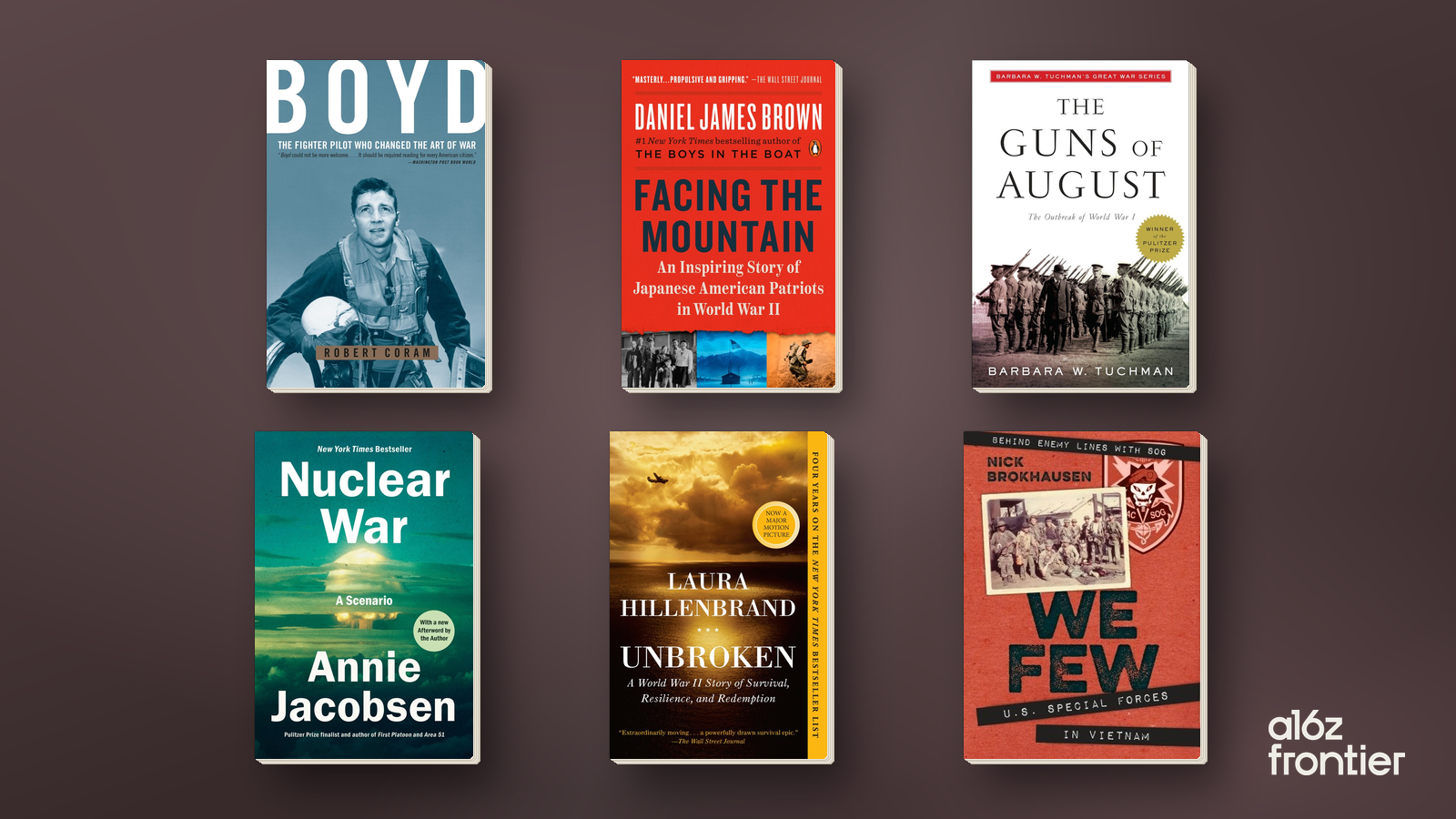
- Boyd: The Fighter Pilot Who Changed the Art of War by Robert Coram
“This book introduced me to the idea of kairos. The ancient Greeks had two words for time — one was chronos, the standard linear, chronological time that we are all familiar with, as measured by clocks. The second was kairos, representing the opportune time, or the ‘right’ time, that is only experienced by existing in the now. Kairos is a timeless time that occurs during a decisive or meaningful moment. None of us can change chronos (despite sometimes wanting time to move faster, and sometimes slower!), but we can all increase the amount of time we live in kairos. This is an older bestseller, and it’s worth a re-read.”
On government as builder: city, state, policy
This section discusses the role of government in shaping society and infrastructure. The selected titles provide insights into policy-making and urban development.
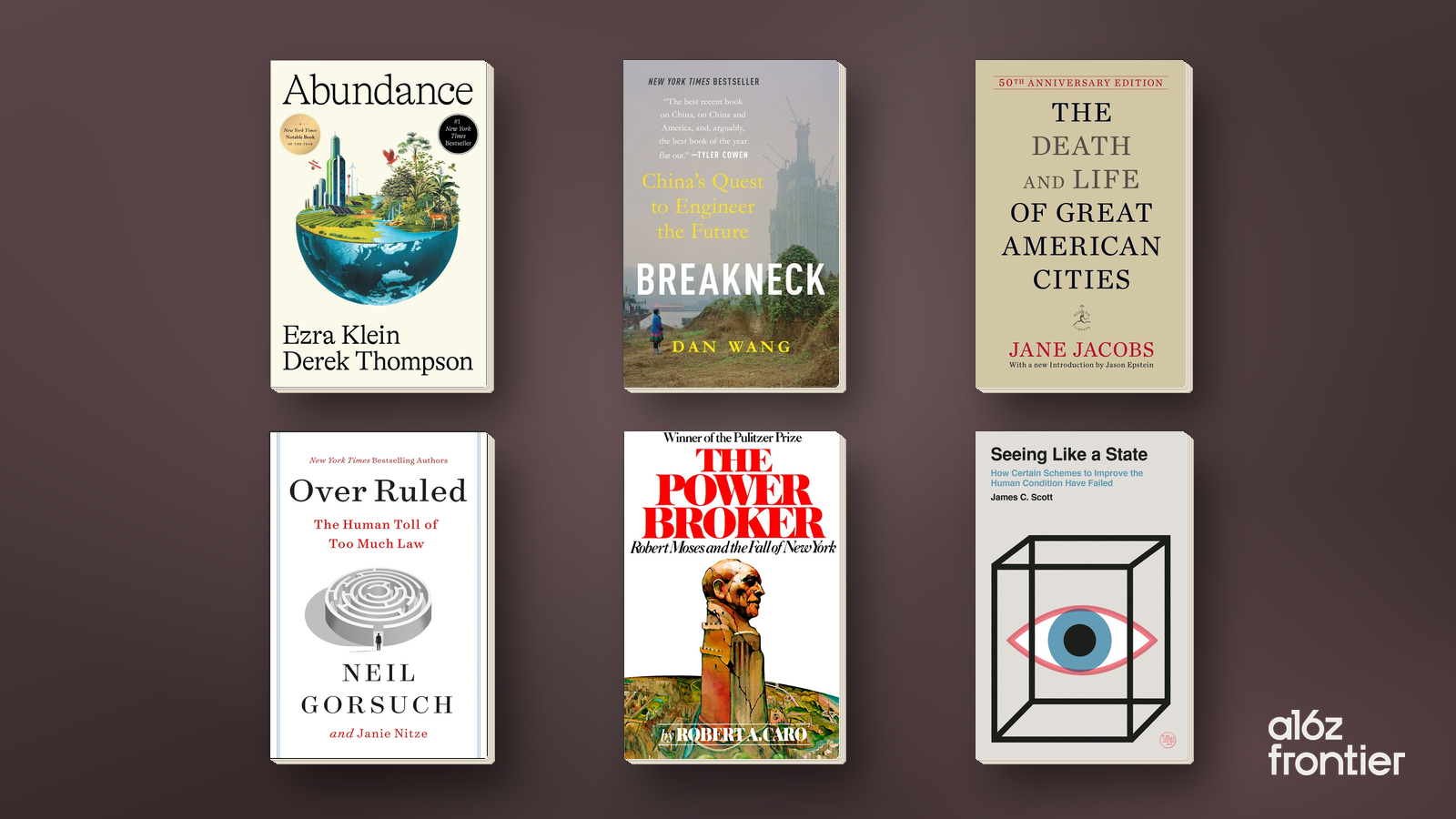
- Abundance by Ezra Klein and Derek Thompson
“Both engaging in its storytelling examples, and very detailed in its actions and path to have more grit — the book is both a great read and a great learning tool.”
How rulers rule
This subsection examines the strategies employed by rulers throughout history. The selected titles provide insights into governance and power dynamics.
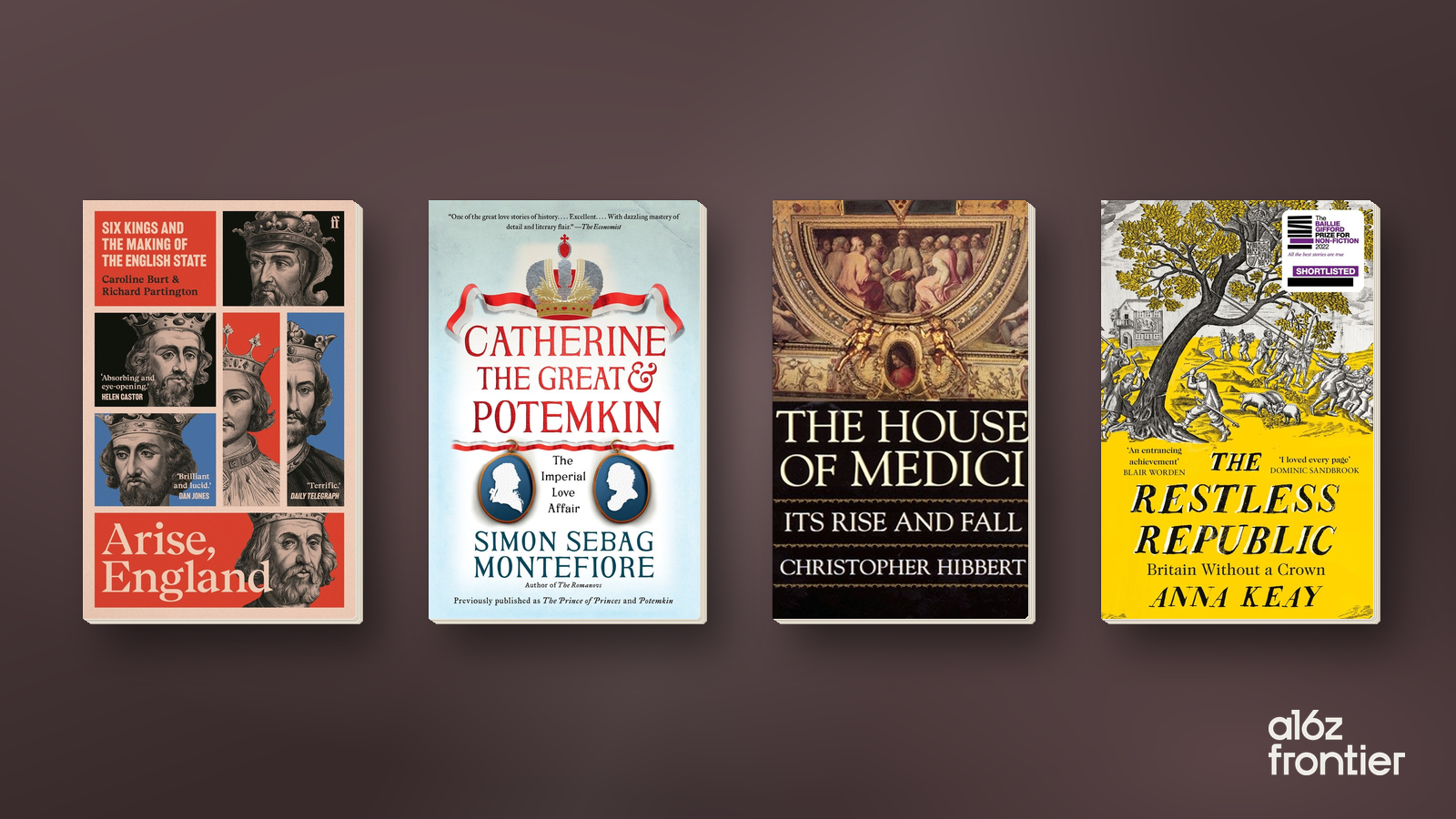
- Arise, England by Caroline Burt and Richard Partington
“This is the first book that I recommend to any builder, creator, or founder. It’s inspiring and fun, while also super tactical and changes your perception of accomplishing seemingly difficult (and borderline impossible) goals. I’ve read it eight times and plan on re-reading many more times to be constantly reminded of its core message.”
The rise and fall of ancient empires
This section explores the factors that contributed to the rise and fall of ancient civilizations. The selected titles provide valuable historical context.
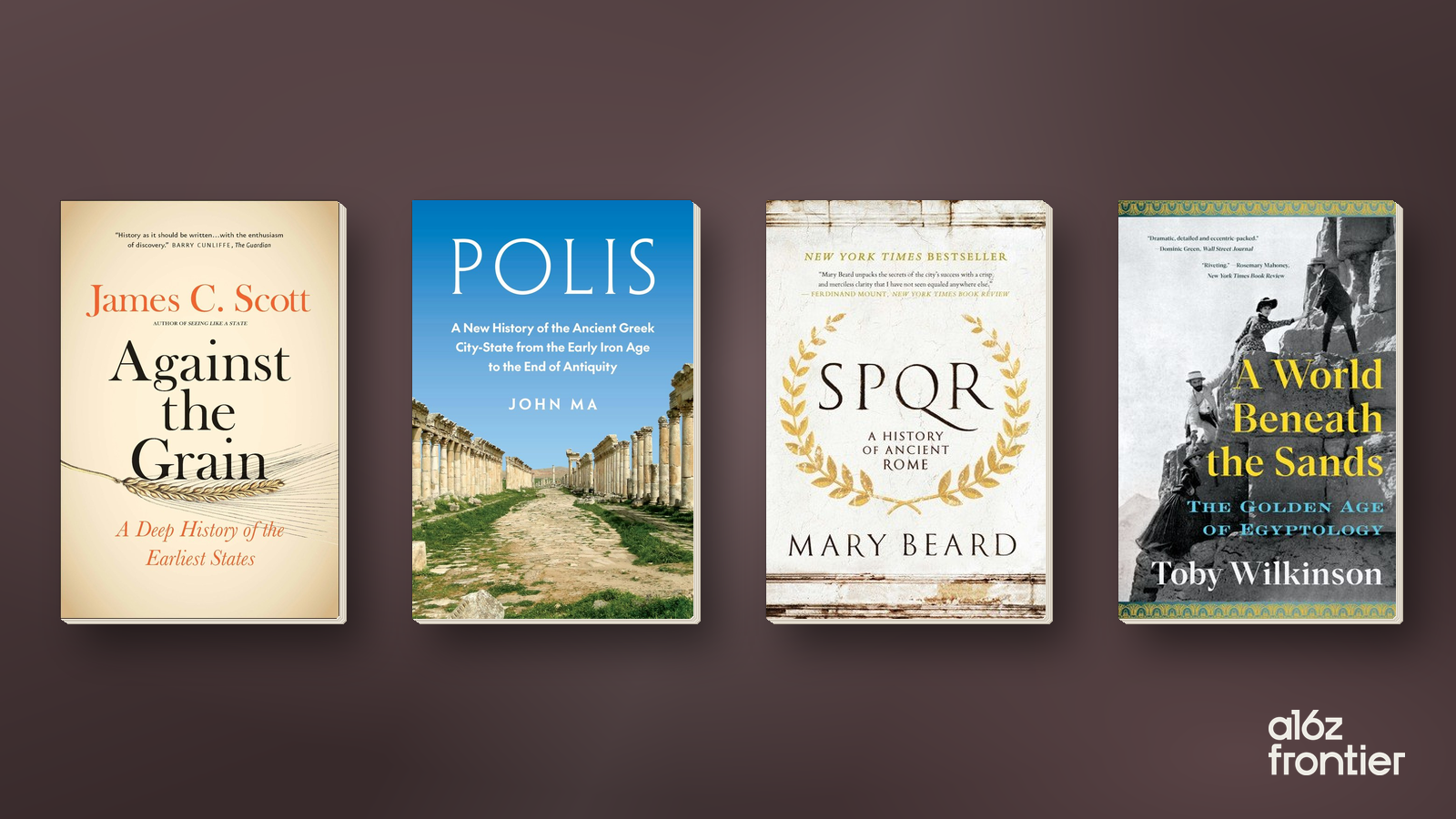
- Against the Grain by James C. Scott
“I’m reading 2–3 books at a time, which helps me stay entertained and efficiently absorb information at the same time. Recently, I’ve been re-reading and taking notes on Tools of Titans and I find it helps me to push myself.”
True crime and covert operations
This subsection delves into the world of espionage and criminal activities. The selected titles provide thrilling accounts of covert operations and their implications.
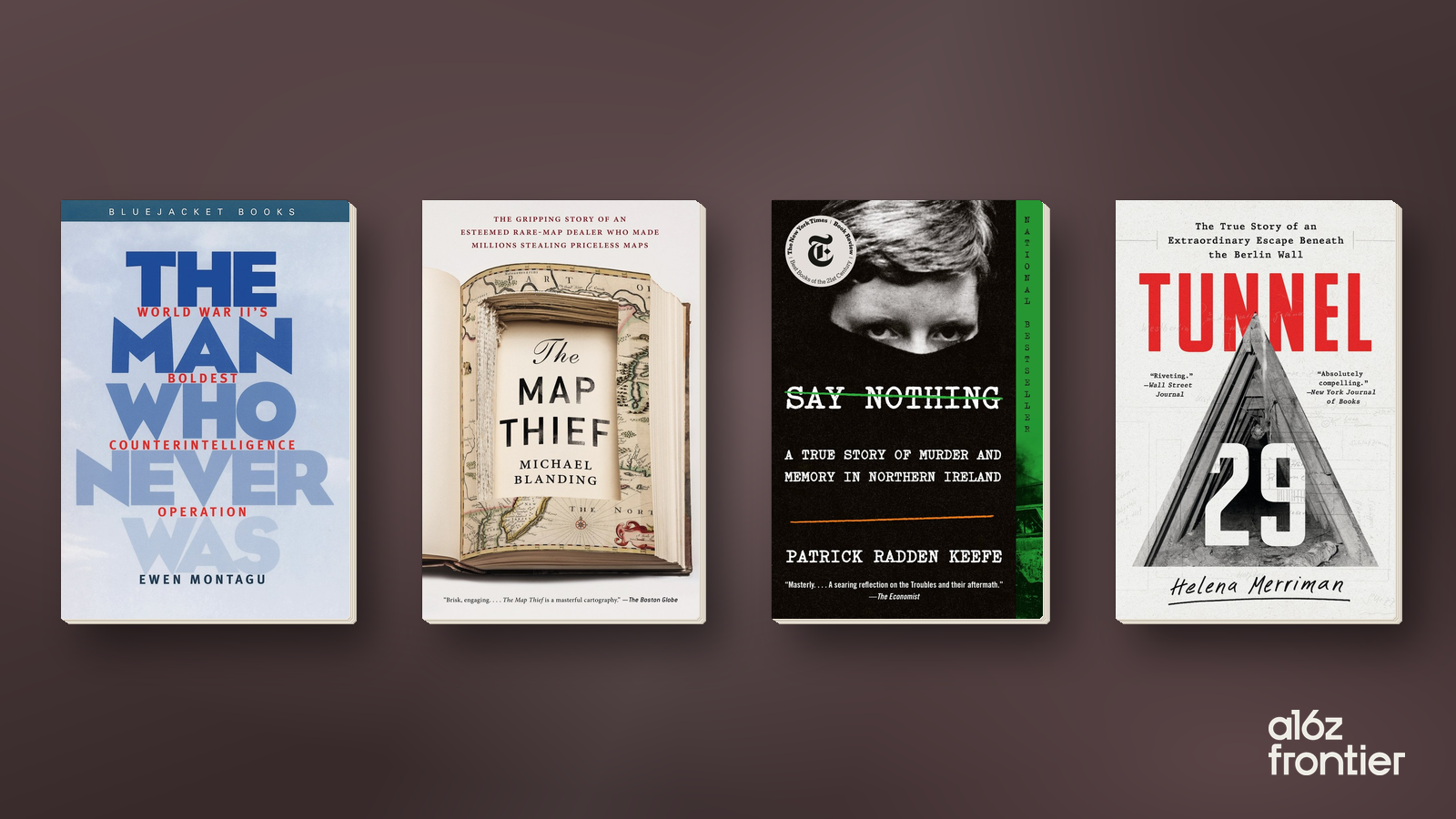
- The CIA: An Imperial History by Hugh Wilford
“How did China become so good at tech manufacturing? This book tells the story of how Apple spent over a decade and many resources to train firms in China to build Apple products, with stringent requirements and high precision. Along the way it tells the history of many Apple products and how they came to be. It is an interesting story of how we ended up where we are.”
Science and technology
This section explores the advancements in science and technology, highlighting their impact on society. The selected titles encourage readers to engage with contemporary issues and innovations.
- Computing and the internet 7
- Cryptography and digital ownership 6
- Genes, evolution, and disease 6
- Technology changing society 6
- Physics on a cosmic scale 4
- Precision engineering 7
- The art of solving math problems 10
- All things energy 6
- Models, systems, and decisions 7
- From idea to reality 9
Computing and the internet
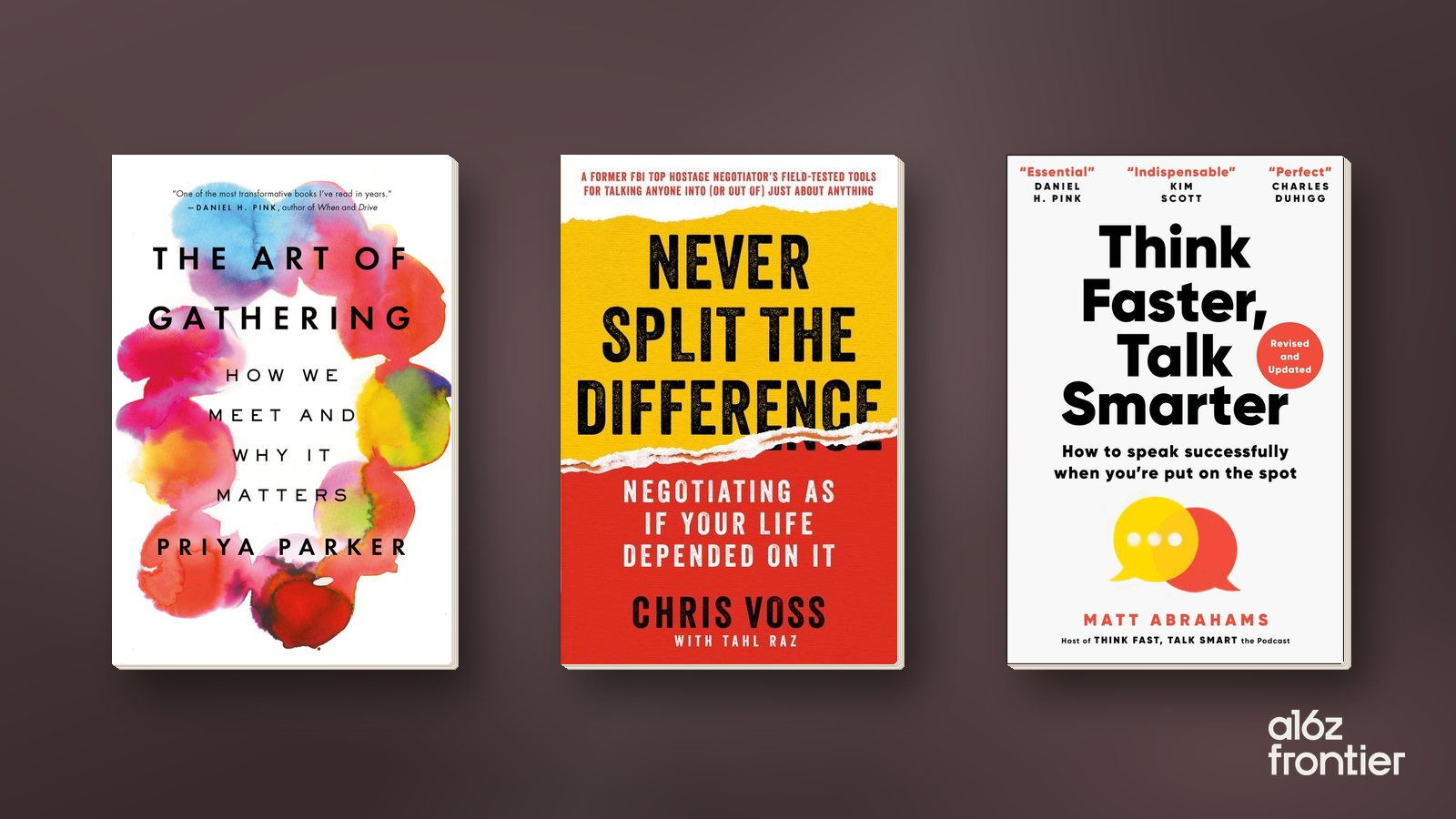
This subsection examines the evolution of computing and the internet, highlighting their transformative effects on communication and information sharing.
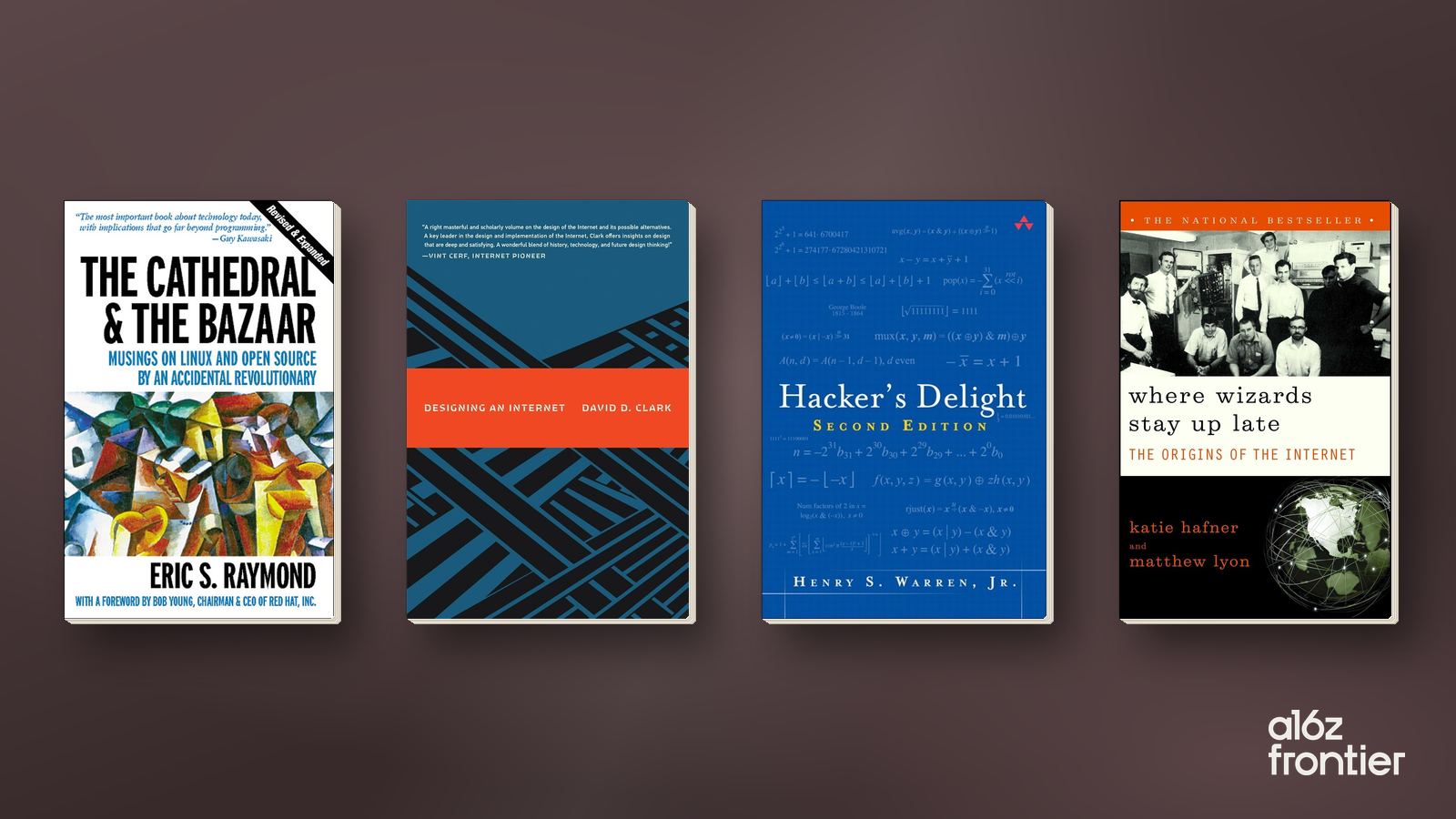
- Alan Turing: The Enigma by Andrew Hodges Founders Summit 2022
Cryptography and digital ownership
This section explores the significance of cryptography and digital ownership in the modern world. The selected titles provide insights into security and privacy in the digital age.
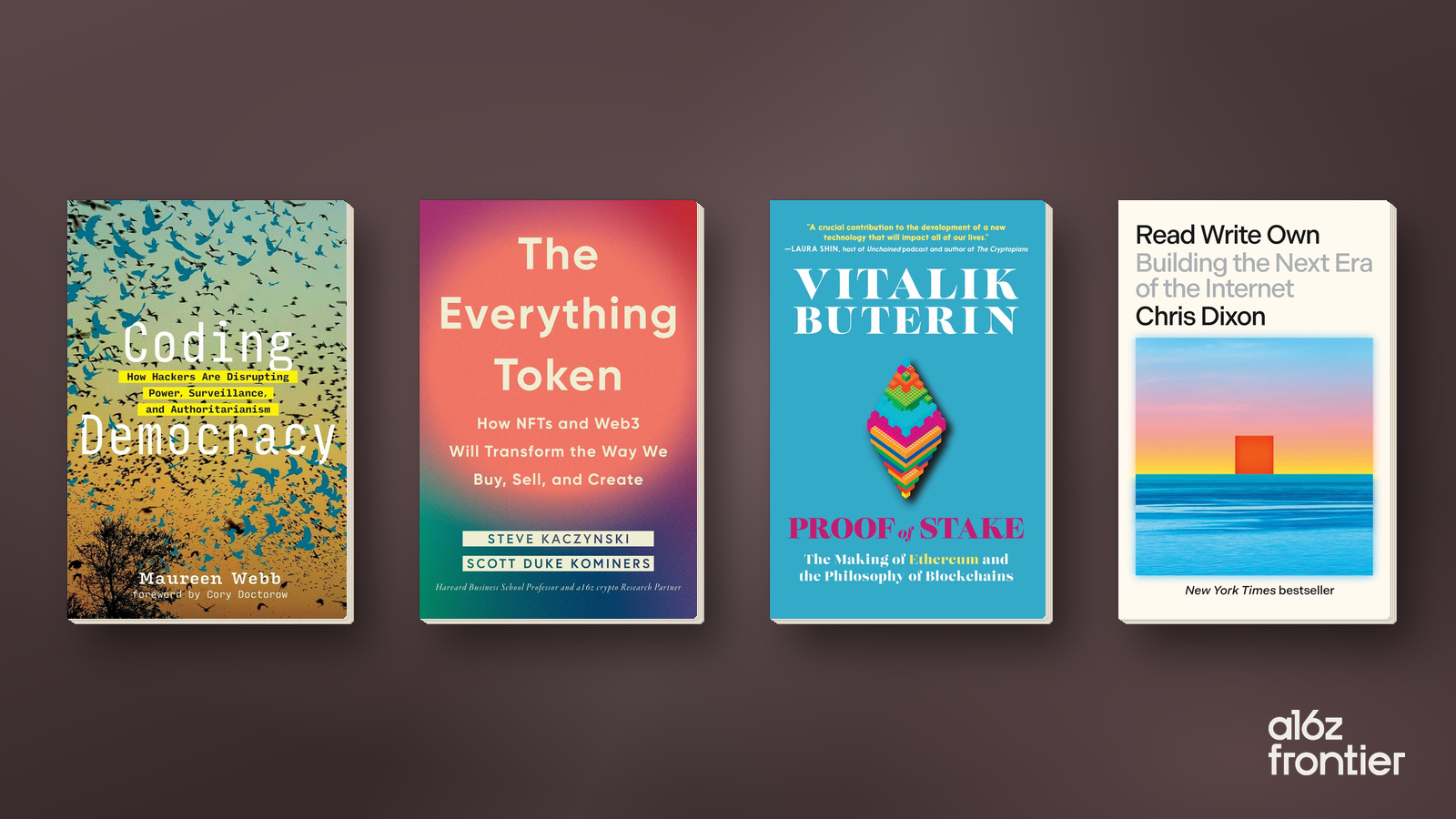
- Coding Democracy: How Hackers Are Disrupting Power, Surveillance, and Authoritarianism by Maureen Webb Founders Summit 2022, Founders Summit 2023, CSX 2024
Genes, evolution, and disease
This subsection discusses the intersection of genetics and health. The selected titles provide valuable insights into the science of evolution and disease prevention.
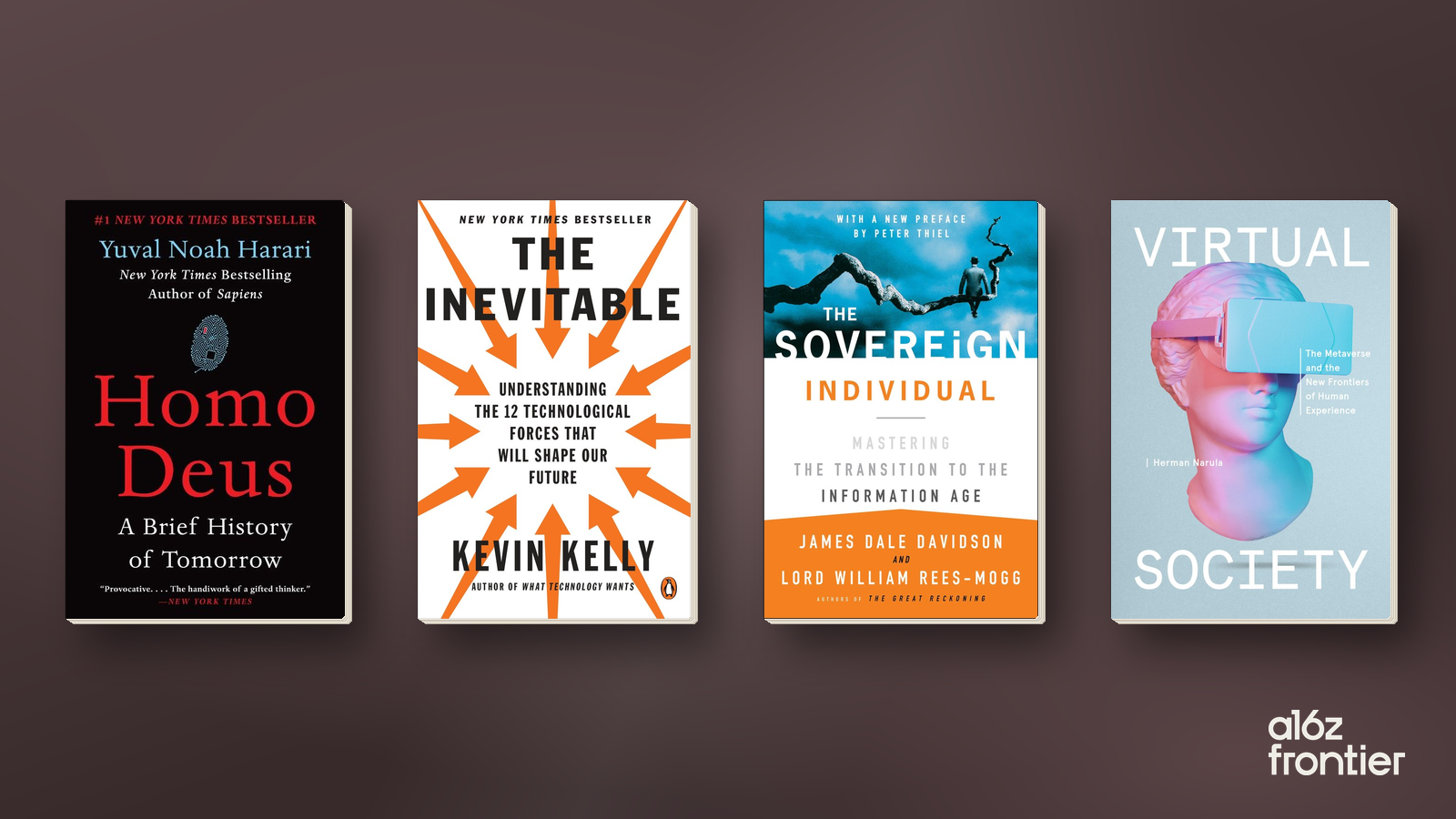
- Blight: Fungi and the Coming Pandemic by Emily Monosson
“Deeply reported and sober-minded account of how Apple became subjugated to China. Essential reading for anyone trying to understand the nature of the competition between governments and tech companies today.”
Technology changing society
This section examines how technology is reshaping society and influencing human behavior. The selected titles encourage readers to consider the implications of technological advancements.
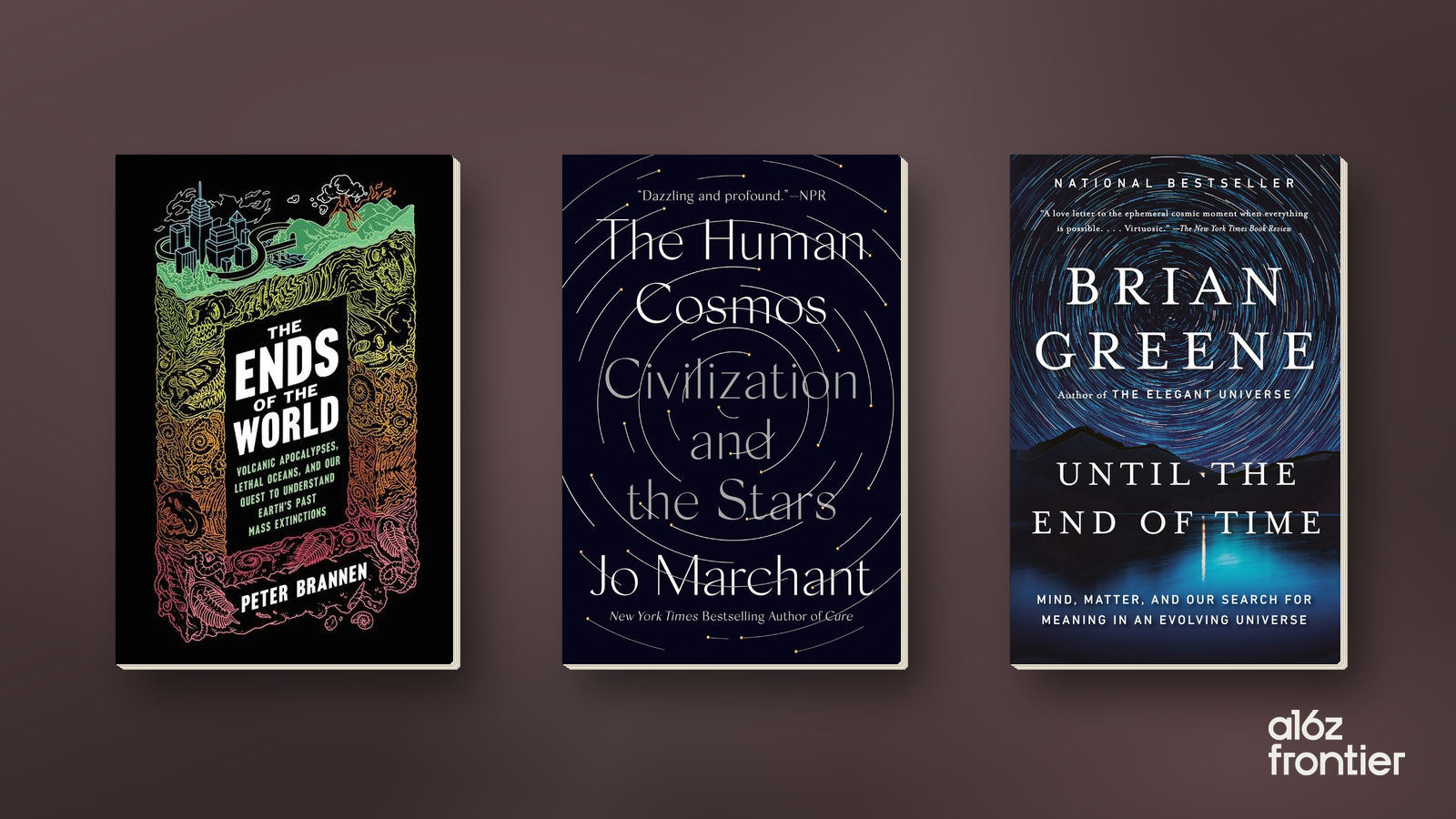
- AI Needs You: How We Can Change AI’s Future and Save Our Own by Verity Harding
“A concise and thoughtful history of the manufacturing of semiconductors, from 1947 to 2022. It’s the kind of book that, when it ends, leaves you wondering what’s next — and situates all of us (as founders, engineers, technologists, writers, and participants) firmly in the history of computing.”
Physics on a cosmic scale
This subsection explores the fundamental principles of physics and their implications for understanding the universe. The selected titles provide insights into cosmic phenomena.
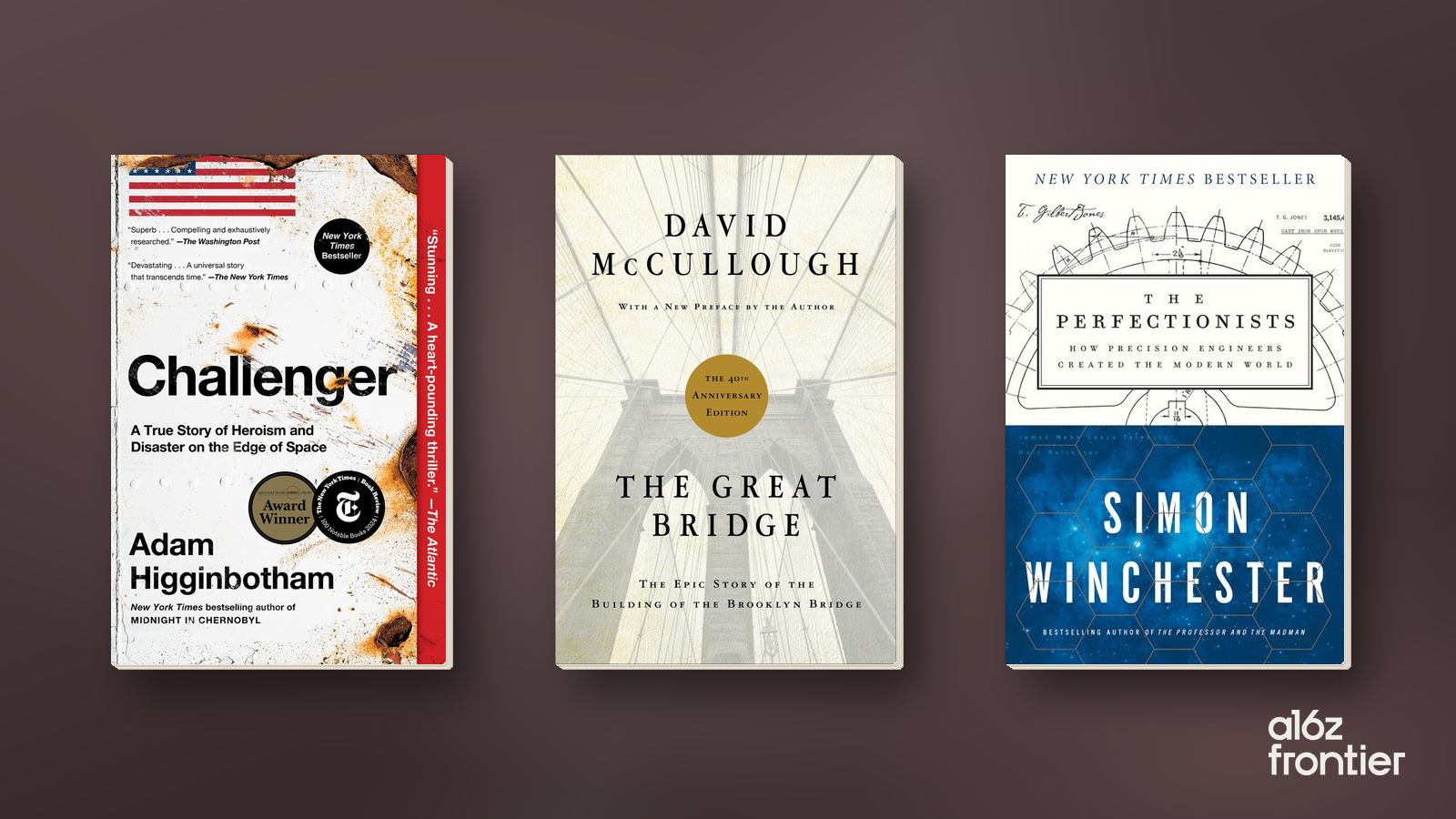
- The Ends of the World: Supervolcanoes, Lethal Oceans, and the Search for Past Apocalypses by Peter Brannen
“A comprehensive overview of the semiconductor industry, the geopolitical implications of its supply chain, and how it affects the world going forward.”
Precision engineering
This section discusses the importance of precision engineering in various fields. The selected titles provide insights into the challenges and innovations in engineering.
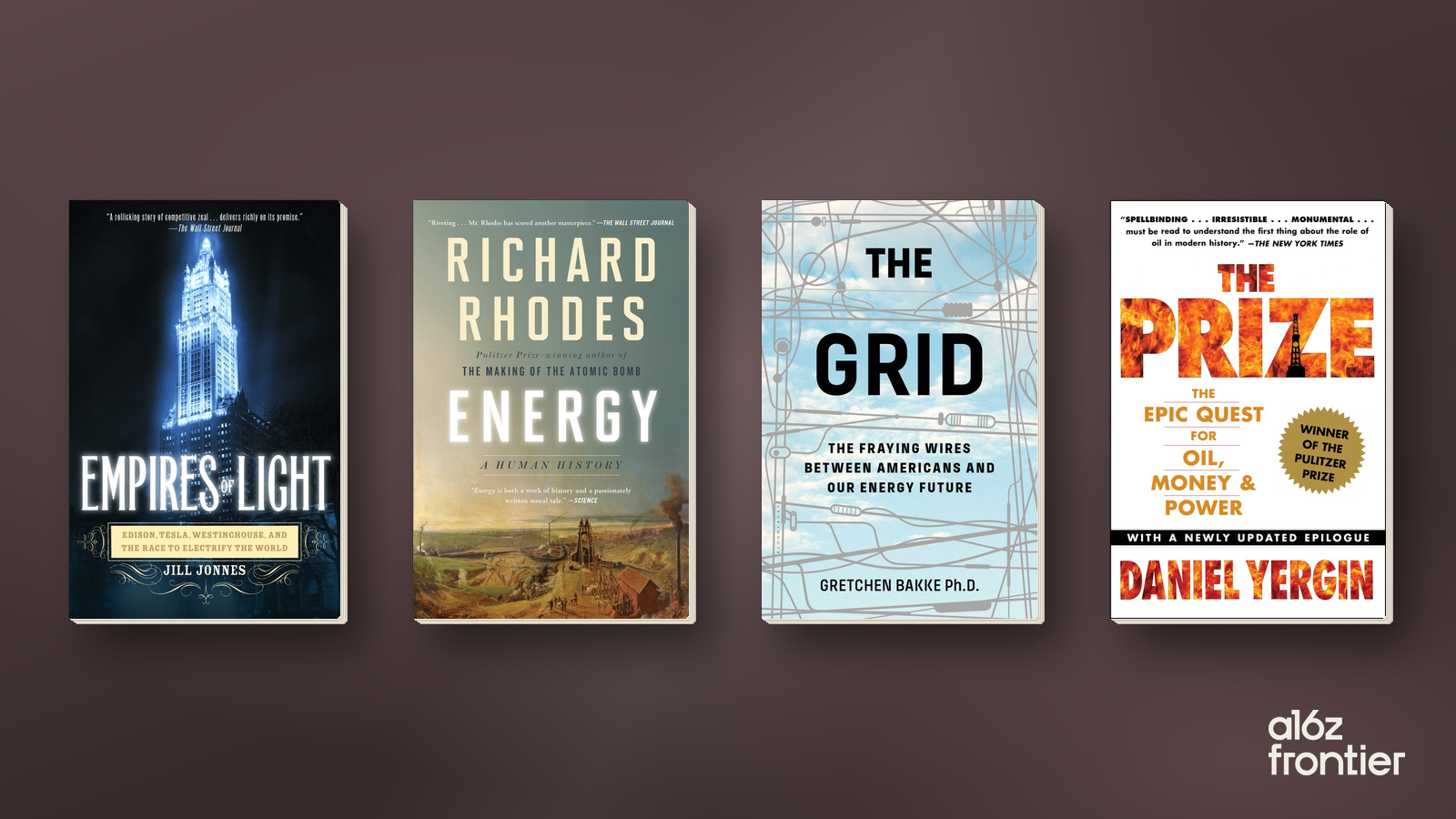
- Challenger by Adam Higginbotham
“Read if you want to better understand how Musk channels inhuman tolerance for risk into ‘fuel.’ A person of a weaker constitution might argue that some of the risk-taking is needless. (At one characteristic birthday celebration, Musk has a blindfolded knife-thrower bullseye a target posted under his crotch, William Tell-style.) Yet it is to this same spirit that America owes the restoration of heavy industries such as electric vehicle and spaceship manufacturing. So let the blades fly.”
The art of solving math problems
This subsection explores the beauty of mathematics and problem-solving. The selected titles encourage readers to engage with mathematical concepts.
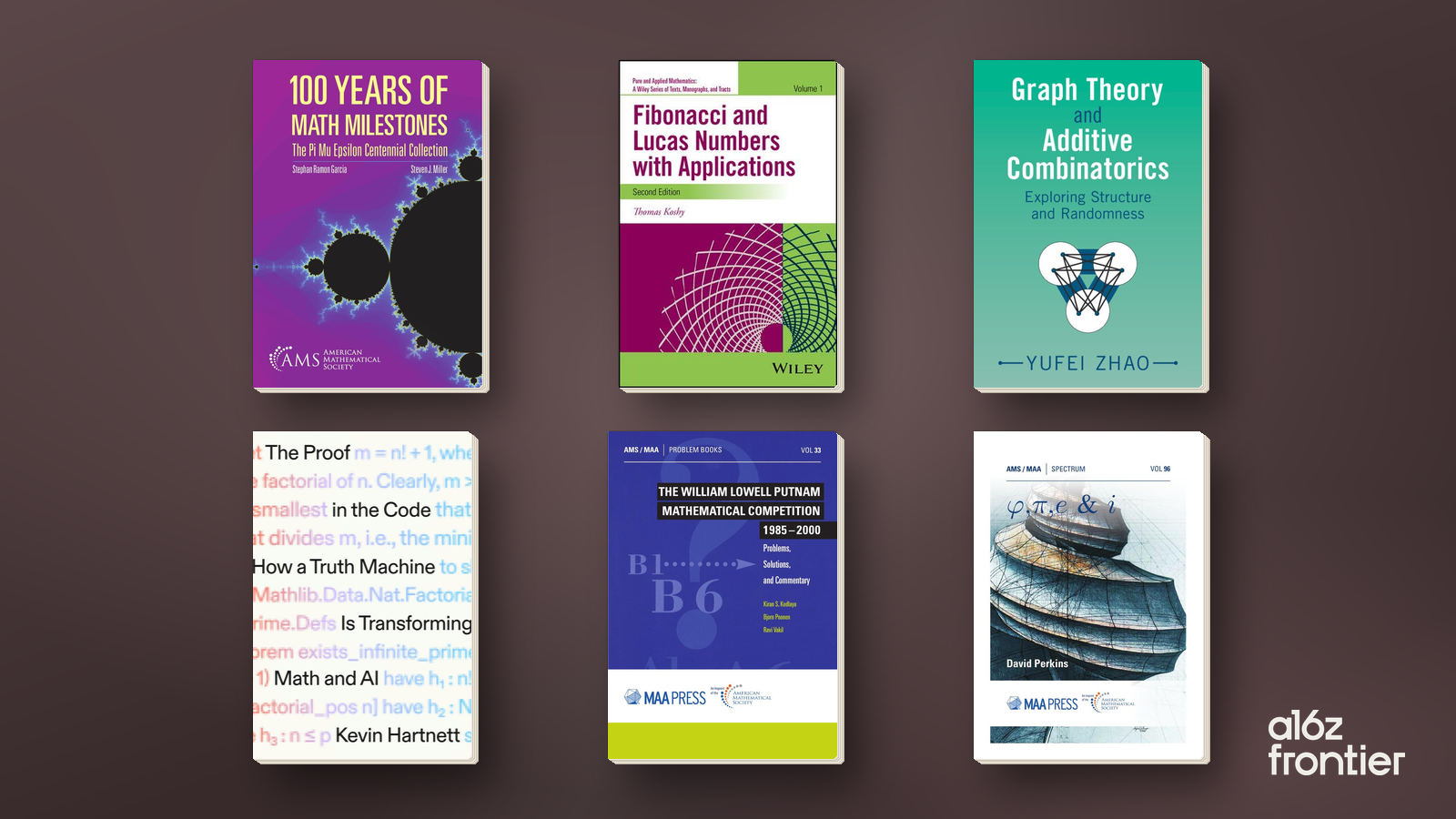
- 100 Years of Math Milestones: The Pi Mu Epsilon Centennial Collection by Stephan Ramon Garcia and Steven J. Miller
“ASML is a strange and fascinating company — it’s the quiet giant that builds the enormous, complicated machines that produce the vast majority of the world’s chips. In the age of AI, its importance is only growing, and the book provides an interesting look at its history and internal dynamics.”
All things energy
This section examines the various forms of energy and their significance in our lives. The selected titles provide insights into energy production and consumption.
- Empires of Light: Edison, Tesla, Westinghouse, and the Race to Electrify the World by Jill Jonnes
“Philosophical reflection on the genesis and growth of the Visa financial network.”
Models, systems, and decisions
This subsection discusses the role of models and systems in decision-making processes. The selected titles provide valuable insights into effective decision-making strategies.
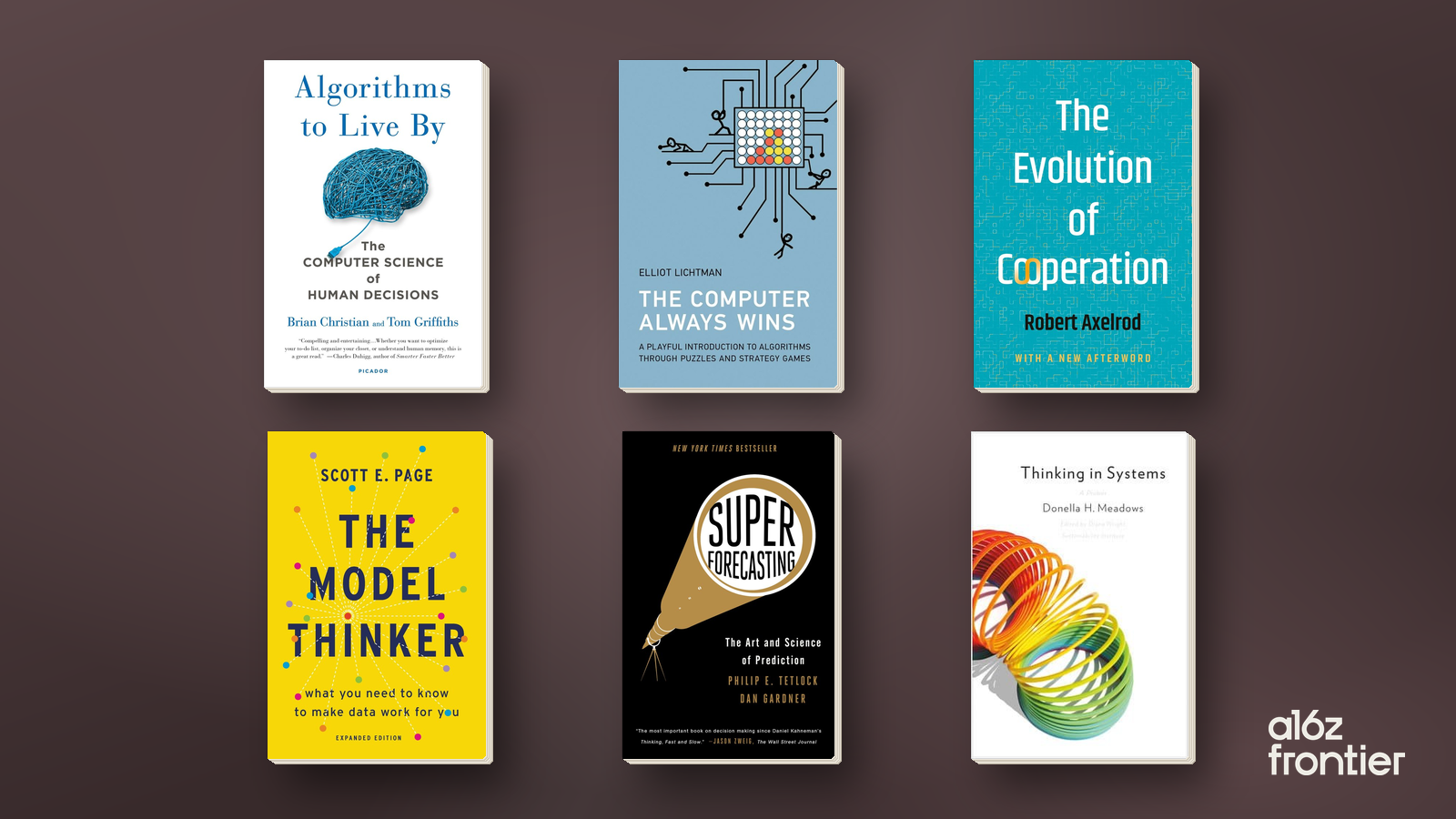
- Algorithms to Live By: The Computer Science of Human Decisions by Brian Christian and Tom Griffiths
“Great business and life lessons contextualized and illustrated using real examples and moments. Great pacing, thoughtful points of focus; really made you feel and understand the challenges and opportunities of building a successful business, career, and life. Both inspirational and educational.”
From idea to reality
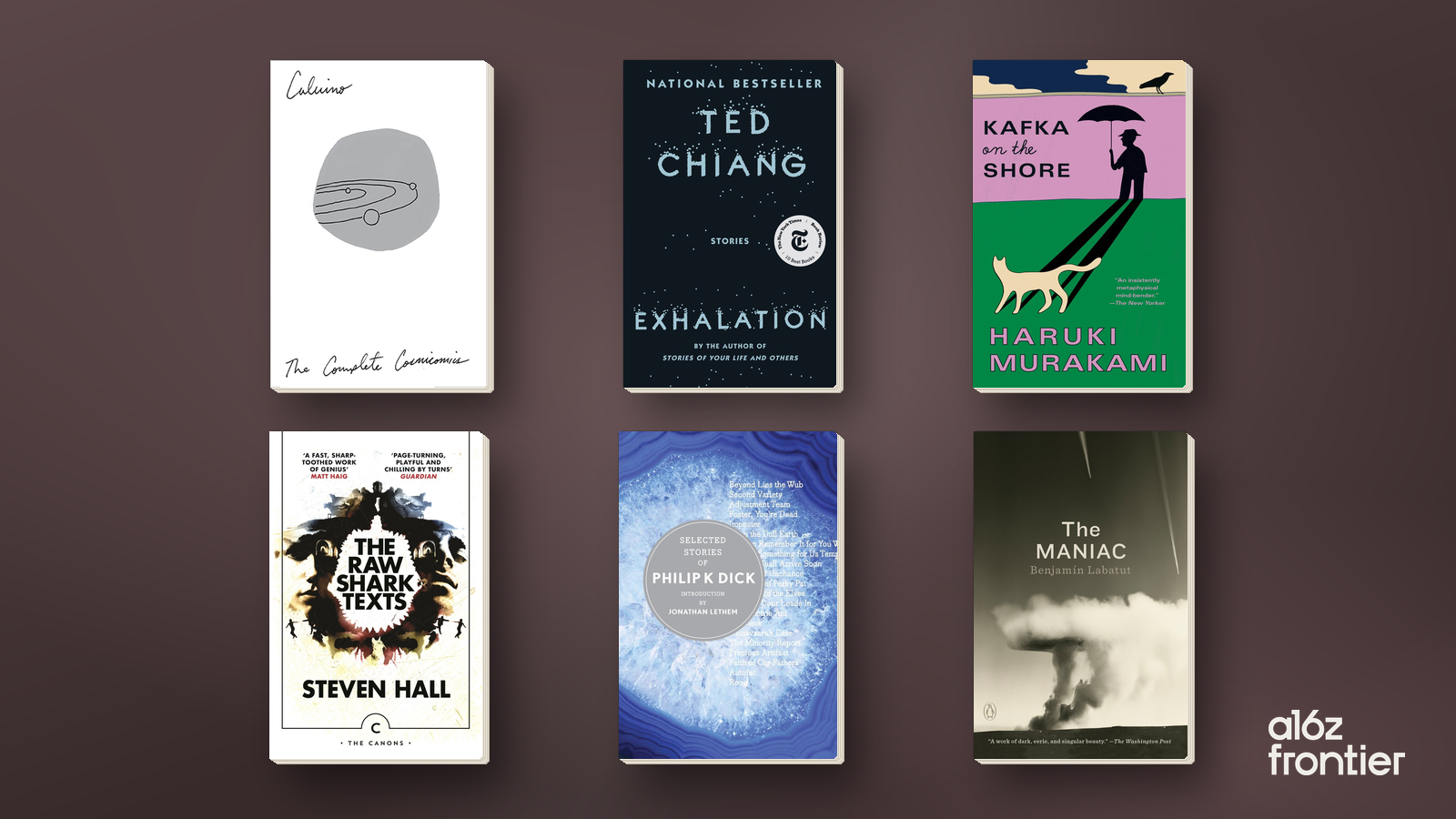
This section explores the journey from conceptualization to realization. The selected titles provide insights into the creative and practical aspects of bringing ideas to life.
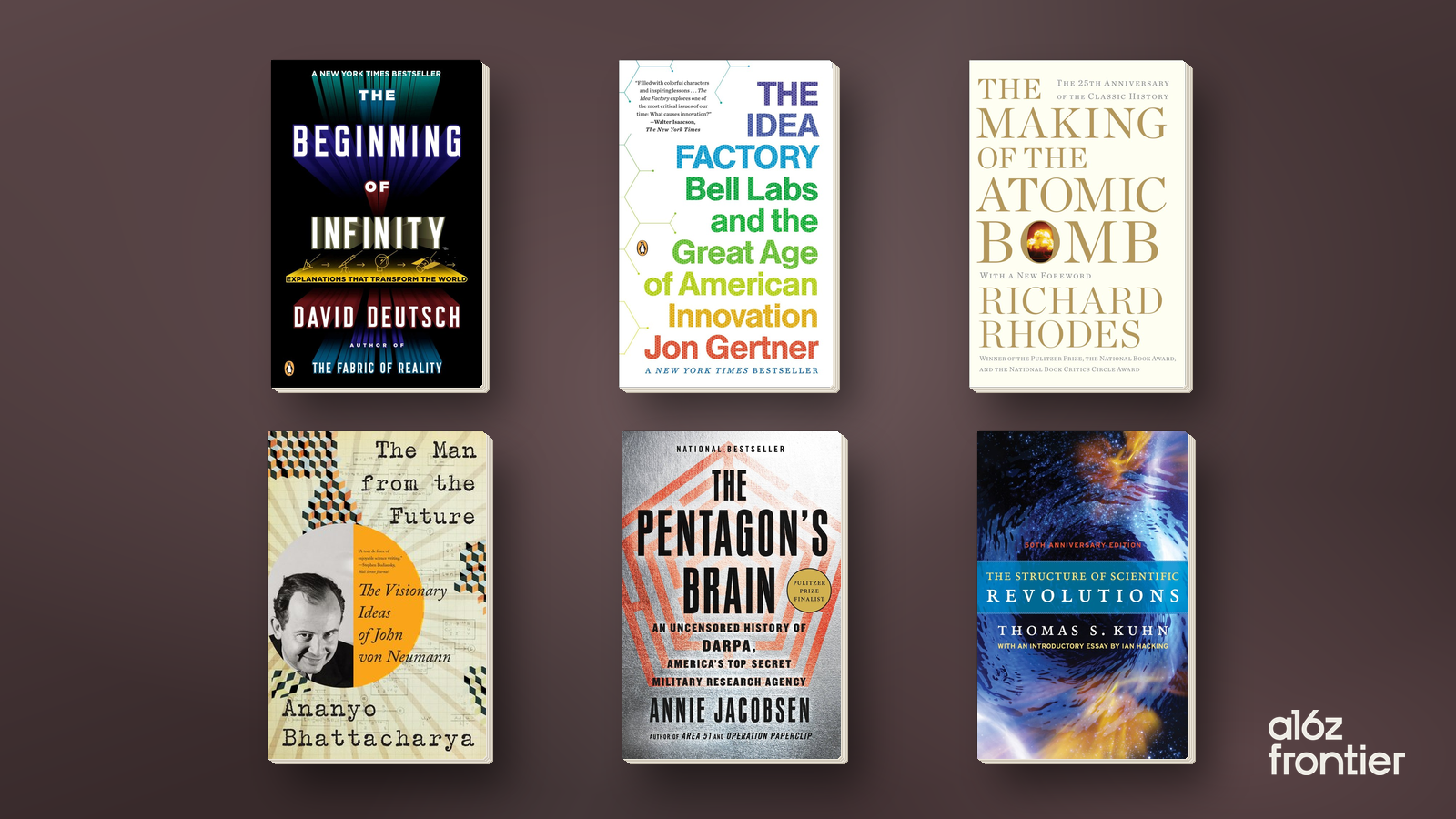
- The Art of Doing Science and Engineering: Learning to Learn by Richard Hamming Founders Summit 2023, CSX 2024
Fiction
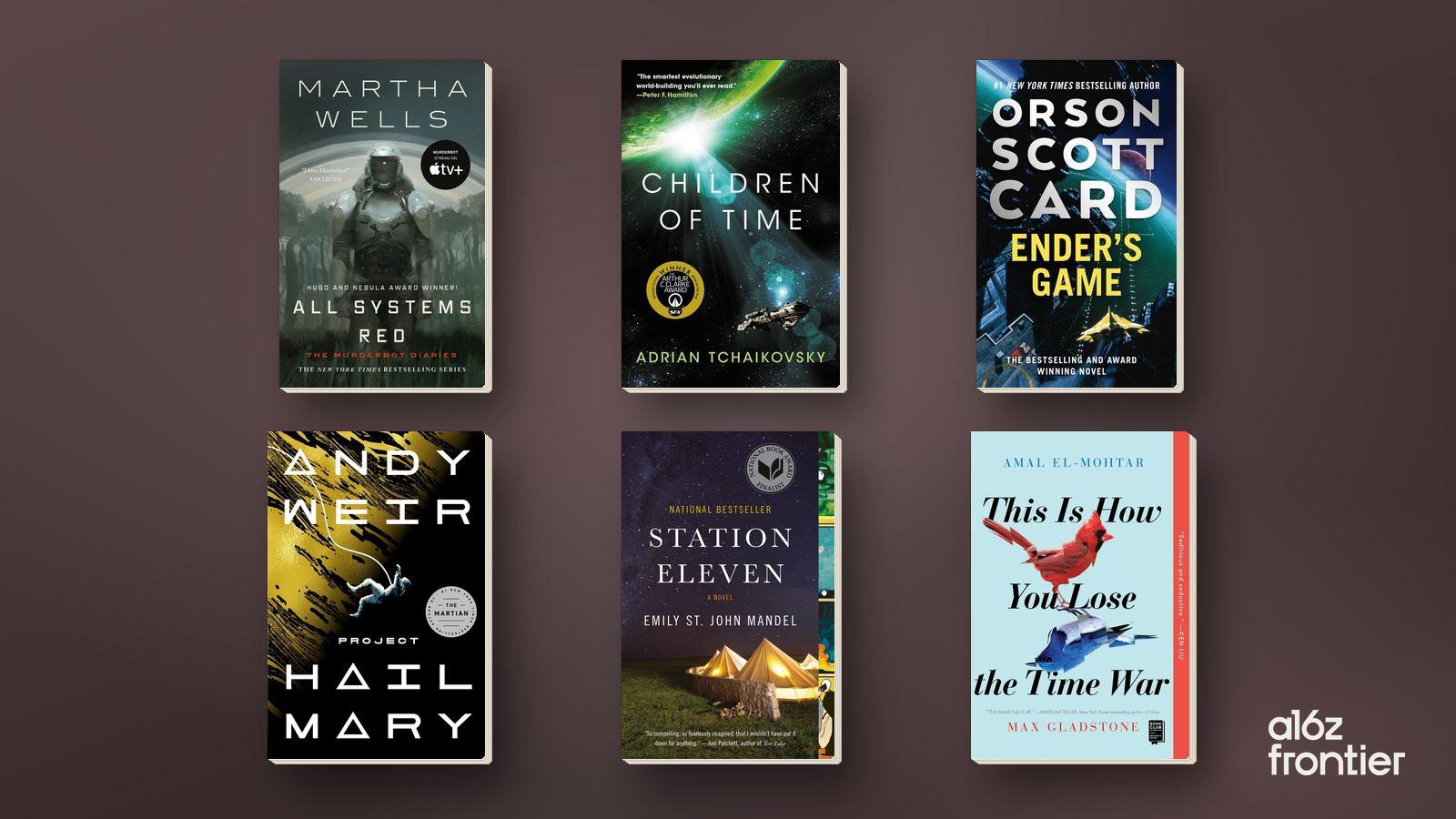
This section features a diverse range of fictional works, showcasing various genres and themes. The selected titles invite readers to immerse themselves in imaginative narratives.
- Coming-of-age 8
- Crime and thrillers 14
- Fantasy (and yes, romantasy) 7
- Historical fiction 8
- Novel forms 8
- Perception vs. reality 9
- Science fiction 22
Coming-of-age
This subsection explores the theme of coming-of-age through various narratives. The selected titles resonate with readers who appreciate personal growth and self-discovery.
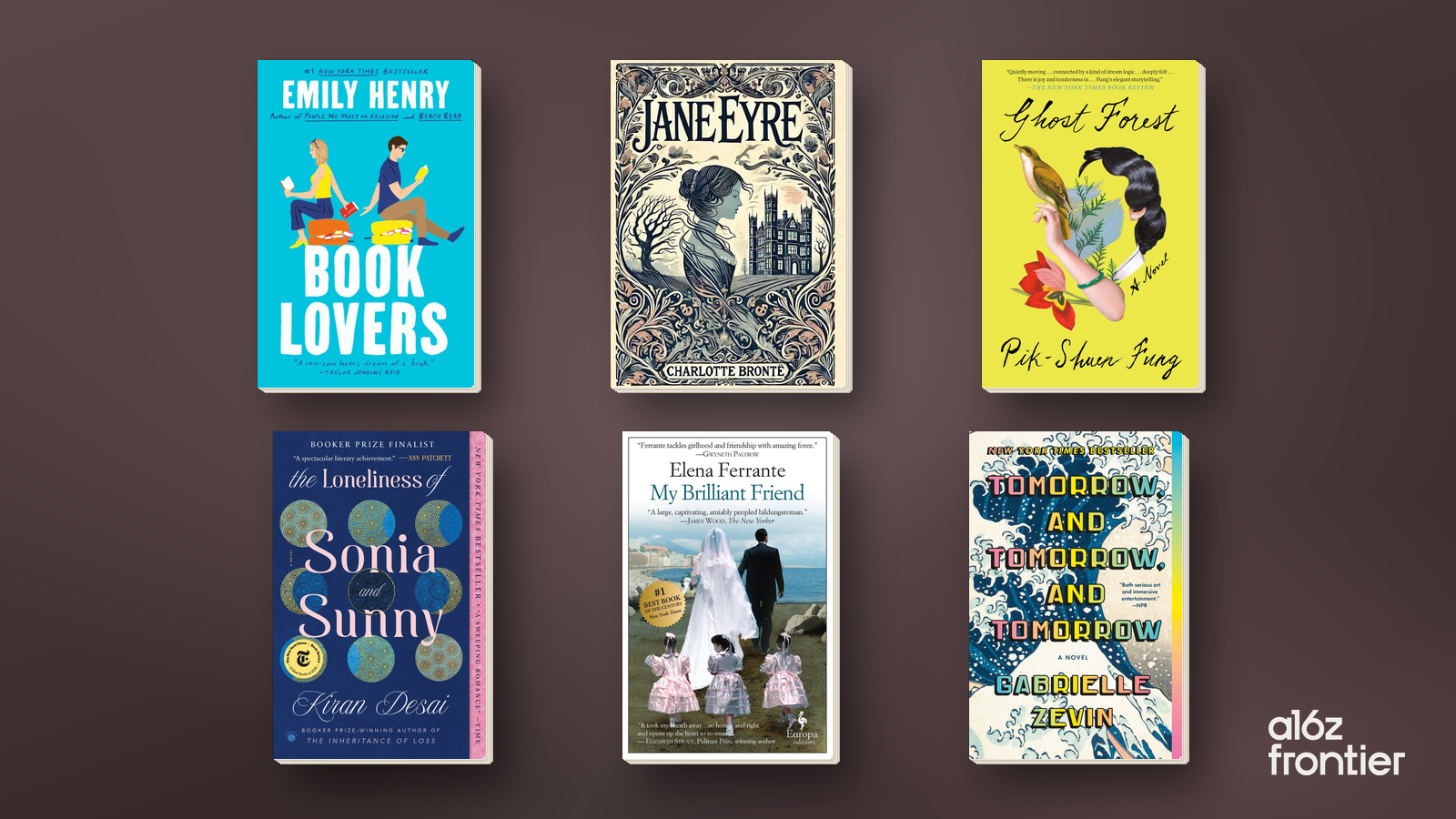
- Book Lovers by Emily Henry
“A great autobiography, with many lessons, especially when it comes to running a non-software business.”
Crime and thrillers
This section features gripping crime and thriller novels that keep readers on the edge of their seats. The selected titles offer suspenseful plots and intriguing characters.
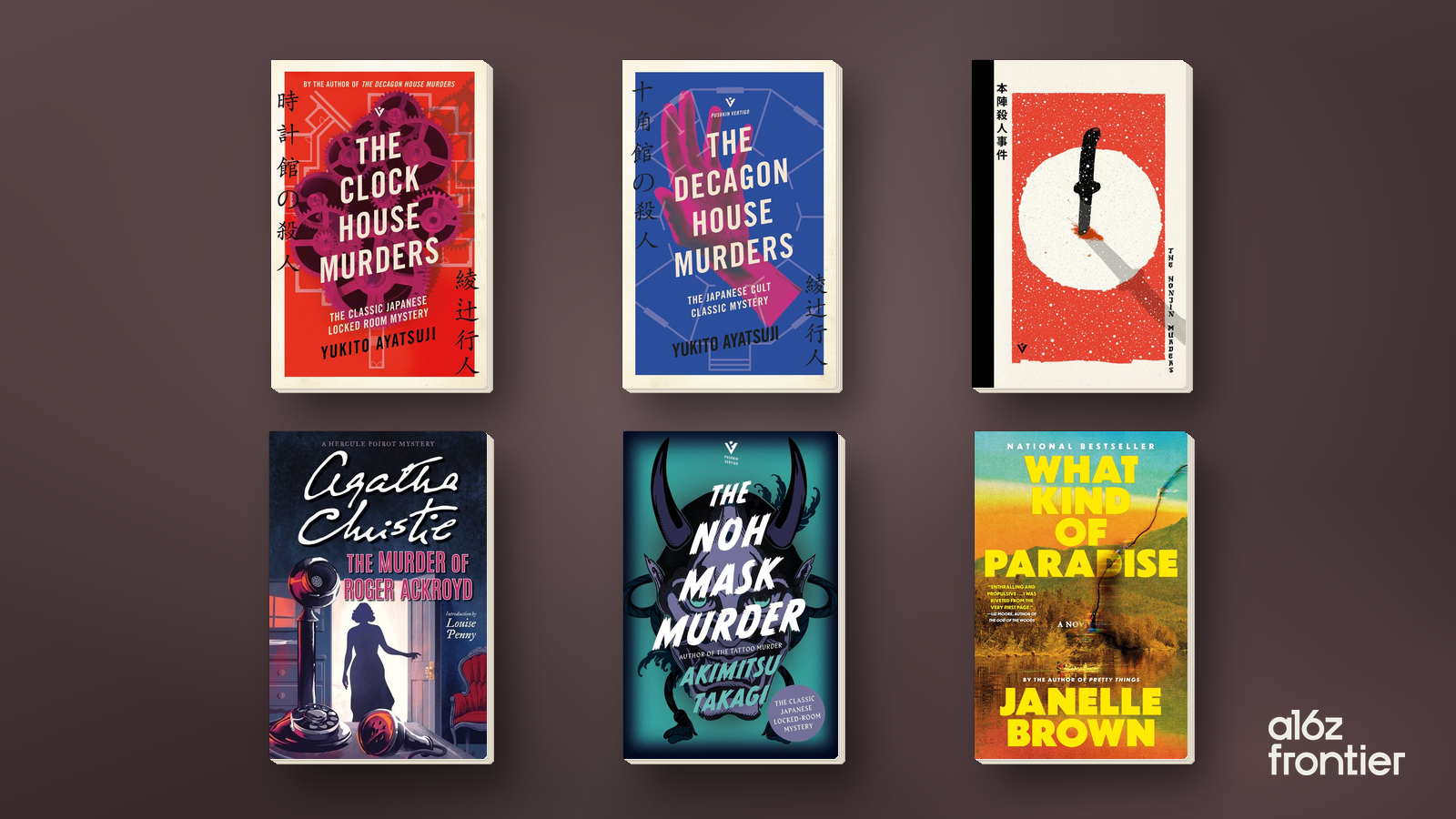
- The Clock House Murders by Yukito Ayatsuji
“It might be impossible to write a more cogent explanation of the fundamental economic principles that govern human behavior. This book is filled with the basic mental models that explain a lot of what makes the world tick. It’s filled with examples from history that show how economic forces have shaped major events like the Great Depression and the housing crisis.”
Fantasy (and yes, romantasy)
This subsection showcases enchanting fantasy novels that transport readers to magical realms. The selected titles appeal to fans of imaginative storytelling.
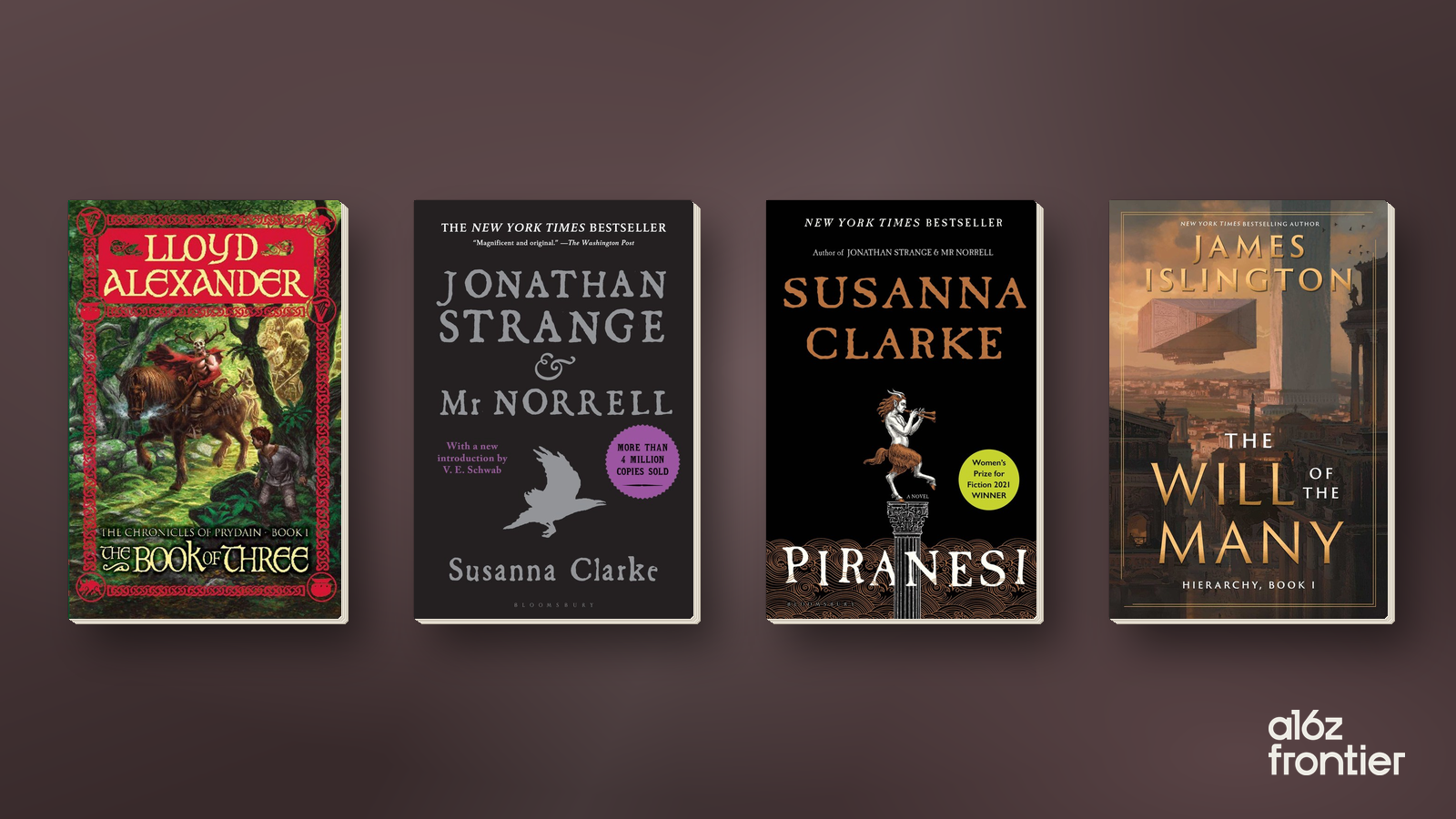
- The Chronicles of Prydain (start with The Book of Three) by Lloyd Alexander
“A fascinating, dynamic collection of essays examining the intellectual history and philosophy of economic theory. Spiegler discusses the ‘how’ and ‘why’ of the way economists reason about topics like strategic behavior, (ir)rationality, and information — simultaneously teaching the conceptual frameworks and anthropologizing the field.”
Historical fiction
This section features historical fiction that brings the past to life through compelling narratives. The selected titles offer insights into different eras and cultures.
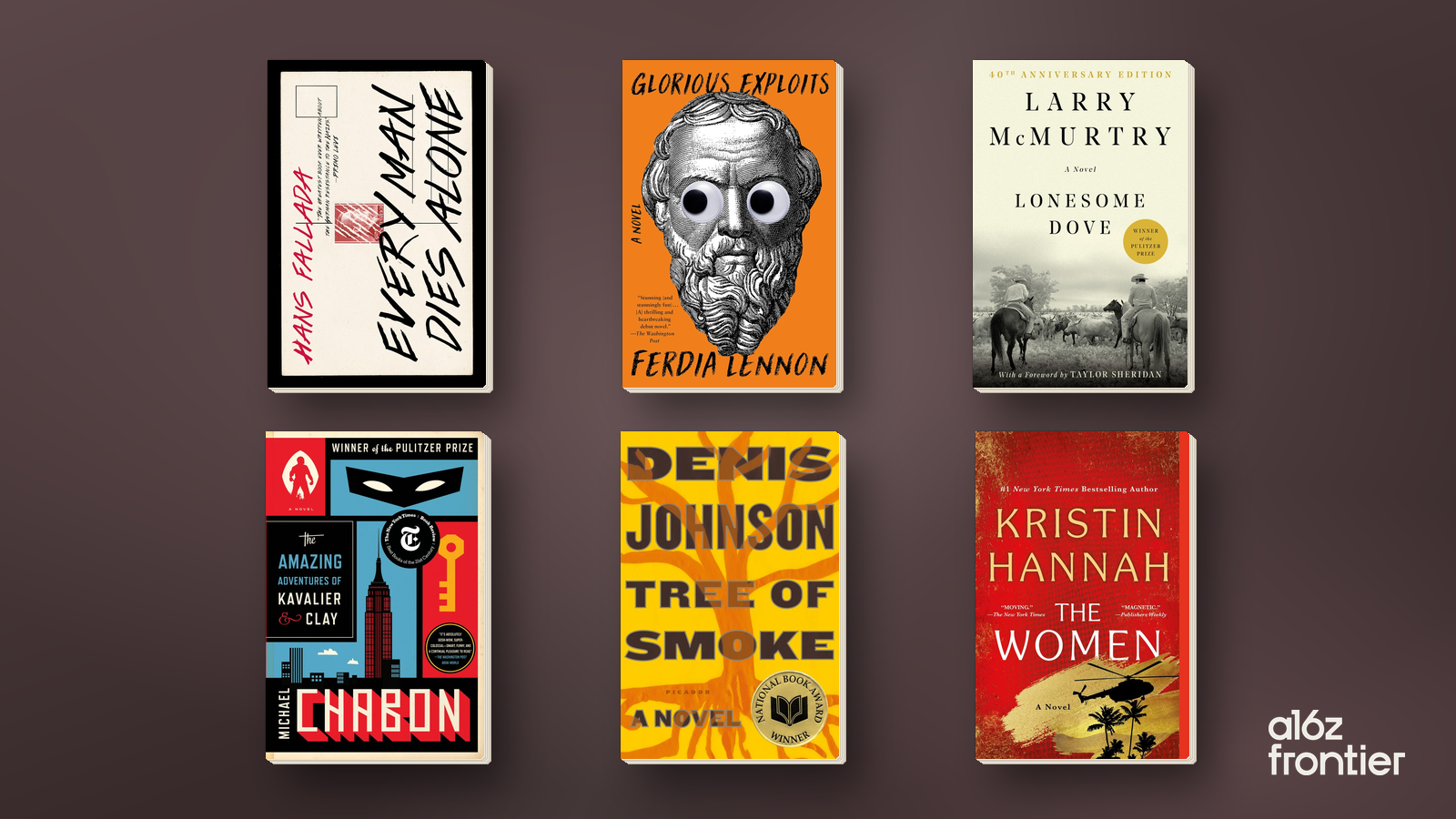
- The Amazing Adventures of Kavalier & Clay by Michael Chabon
“Packed with insight about how to think about basic economics.”
Picture books and graphic novels
This section highlights delightful picture books and graphic novels that captivate readers of all ages. The selected titles offer visual storytelling and imaginative themes.
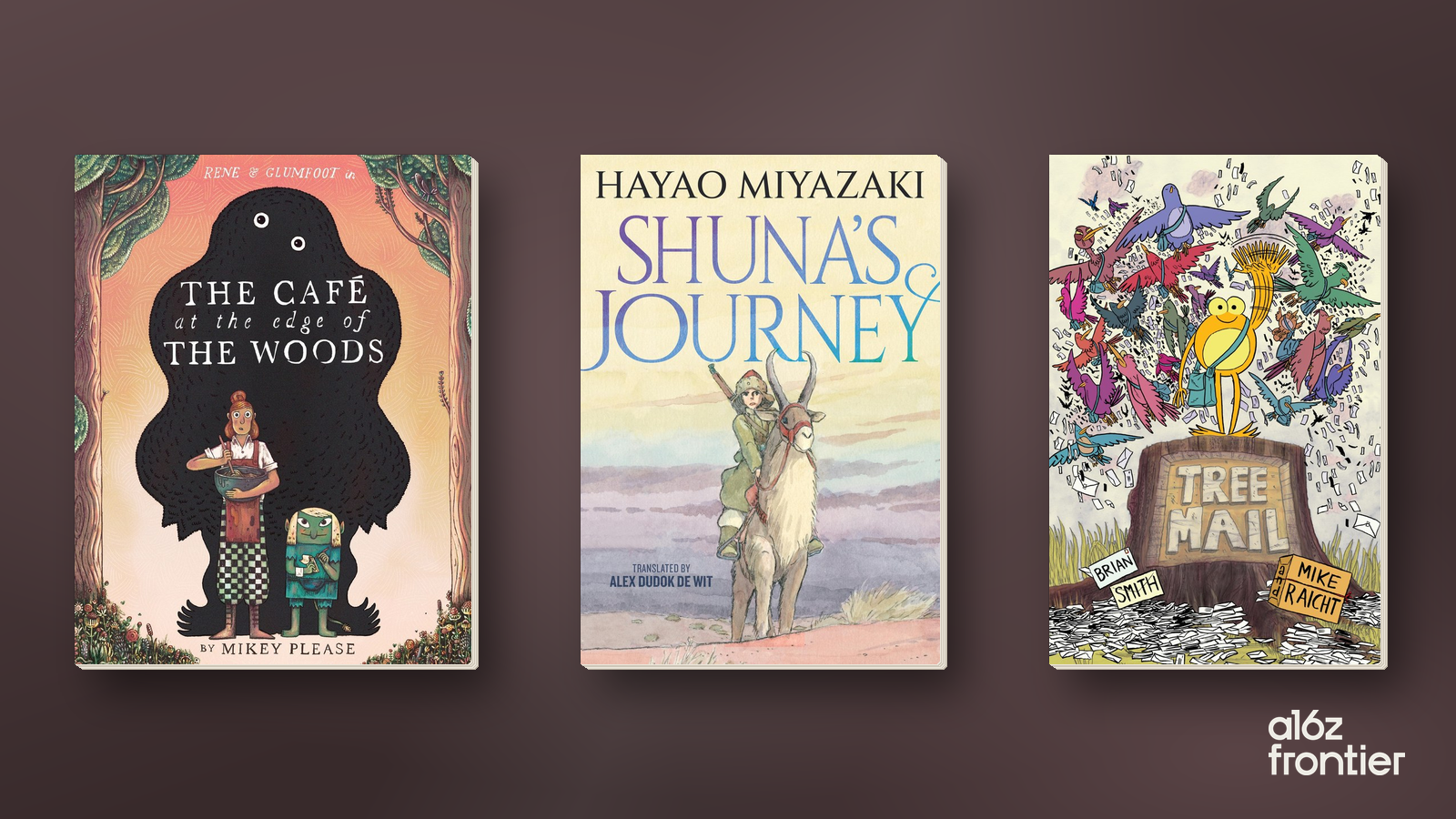
- The Café at the Edge of the Woods by Mikey Please
“Jesse Shapiro’s book teaches his special brand of theory-grounded reasoning about data in economics. Shapiro is one of the most brilliant pedagogues in the field, and the book translates his crystal-clear thinking into a series of illustrations and exercises that take you from classic first-principles price theory to the empirical frontier in just 64 pages. It’s perfect for a self-study course, and appropriate for both newcomers and experts alike.”
Archives
This section provides a glimpse into past reading lists and recommendations. The selected titles reflect the evolving interests of our team over the years.
- Some books we’re reading this summer 2026 Jun 2026
- Some books we’re reading this winter 2025 Dec 2025
- Some books we’re reading this summer 2025 Jun 2025
- Some books we’re reading this winter 2024 Dec 2024
- Some books we’re reading this summer 2024 Jun 2024
- Books, shows, apps: Some recommendations for winter 2023 Dec 2023
- Some books we’re reading (and games we’re playing) this summer 2023 Jun 2023
- Some books we’re reading (and games we’re playing) this winter 2022 Dec 2022
- Some books we’re reading this summer 2022 Jul 2022
- 19 surprising books for builders Oct 2025
- Books for crypto builders and beyond (2024) Sep 2024
- Books for crypto builders and beyond (2023) Dec 2023
- Books for crypto builders and beyond (2022) Dec 2022
- What we’re reading & technology changing reading Jul 2025 · Robert Hackett, Sonal Chokshi, Stephanie Zinn, Tim Sullivan
- What we’re reading, how we’re reading, why we read Jul 2024 · Sonal Chokshi, Robert Hackett, Tim Sullivan, Stephanie Zinn