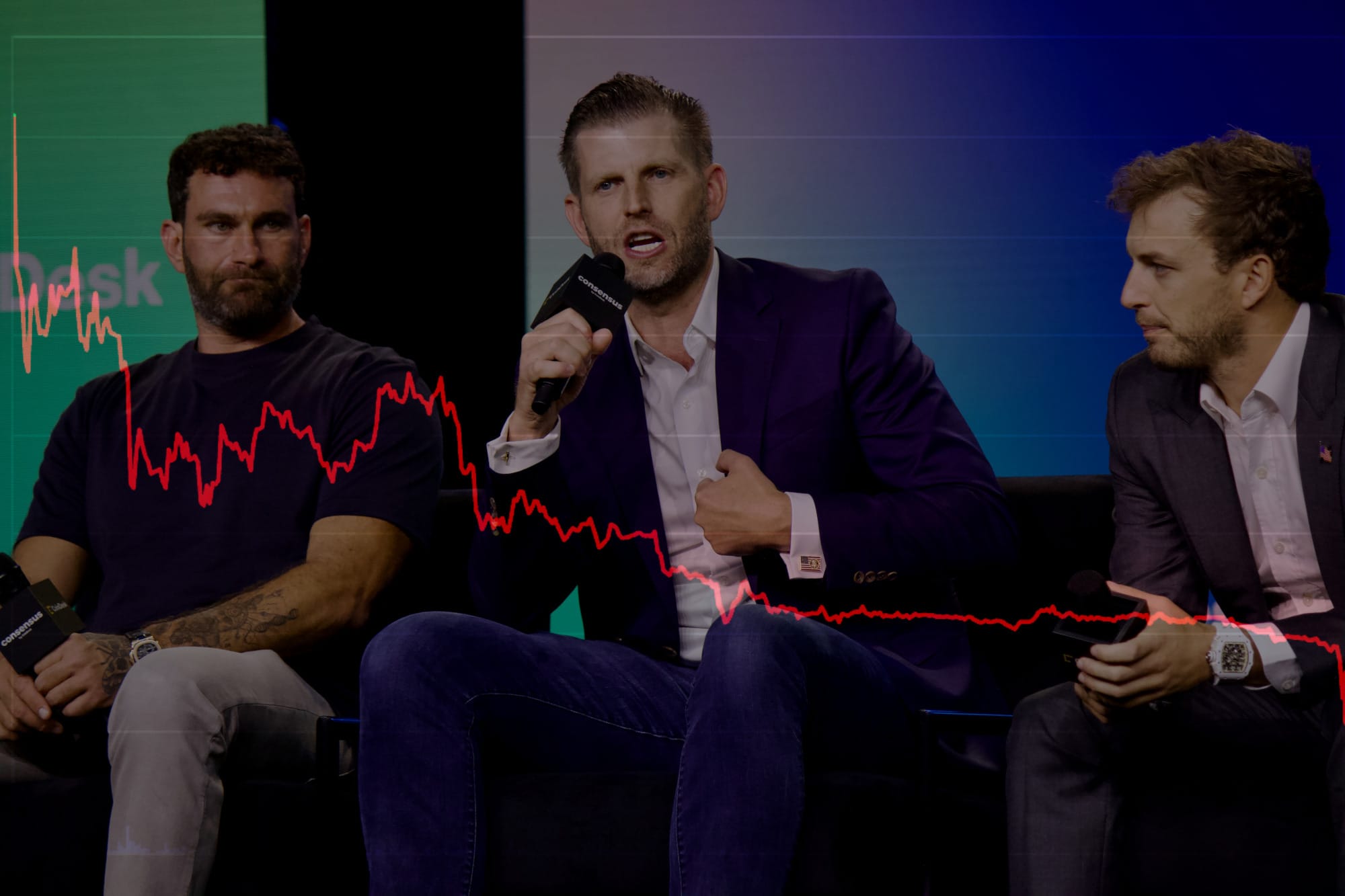
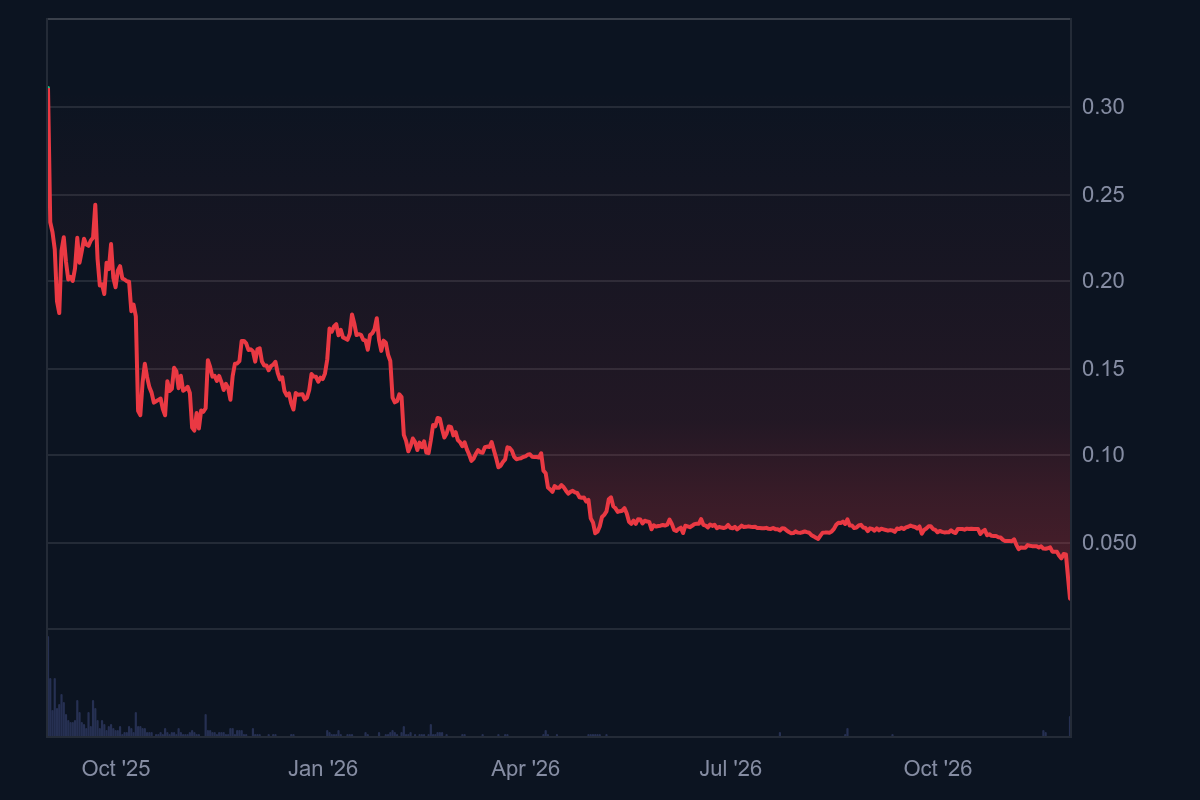
World Liberty Financial, a cryptocurrency firm linked to the Trump family, spent the weekend urgently trying to prevent the liquidation of a loan secured by its WLFI token. The value of this token has been in a steady decline since it began trading in September 2025, dropping more than 50% on Friday night and now sitting over 95% lower than its peak value.
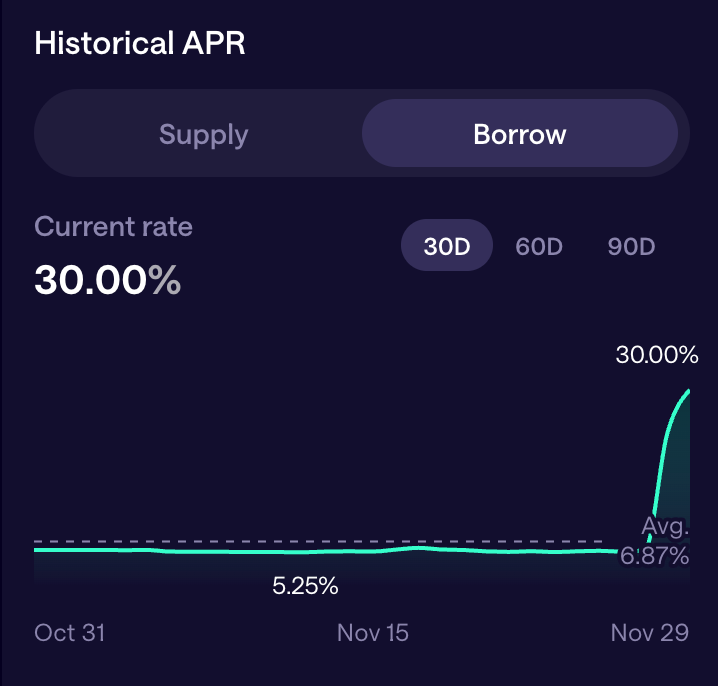
The decline coincided with World Liberty starting to liquidate much of its remaining ETH at about half of its initial purchase price to bolster its loan position. When this strategy proved insufficient, the company transferred another billion WLFI tokens it already held on Dolomite to secure the loan and resorted to borrowing its own stablecoin at a steep 30% interest rate.
While the company managed to stabilize the loan, it did so by selling a significant portion of its ETH. Aside from its issued token, the on-chain assets in the company’s treasury are roughly equivalent to its liabilities, raising questions about World Liberty's actual liquidity. This situation prompts inquiries about the company's financial reserves and what actions it might take if the WLFI price falls again.
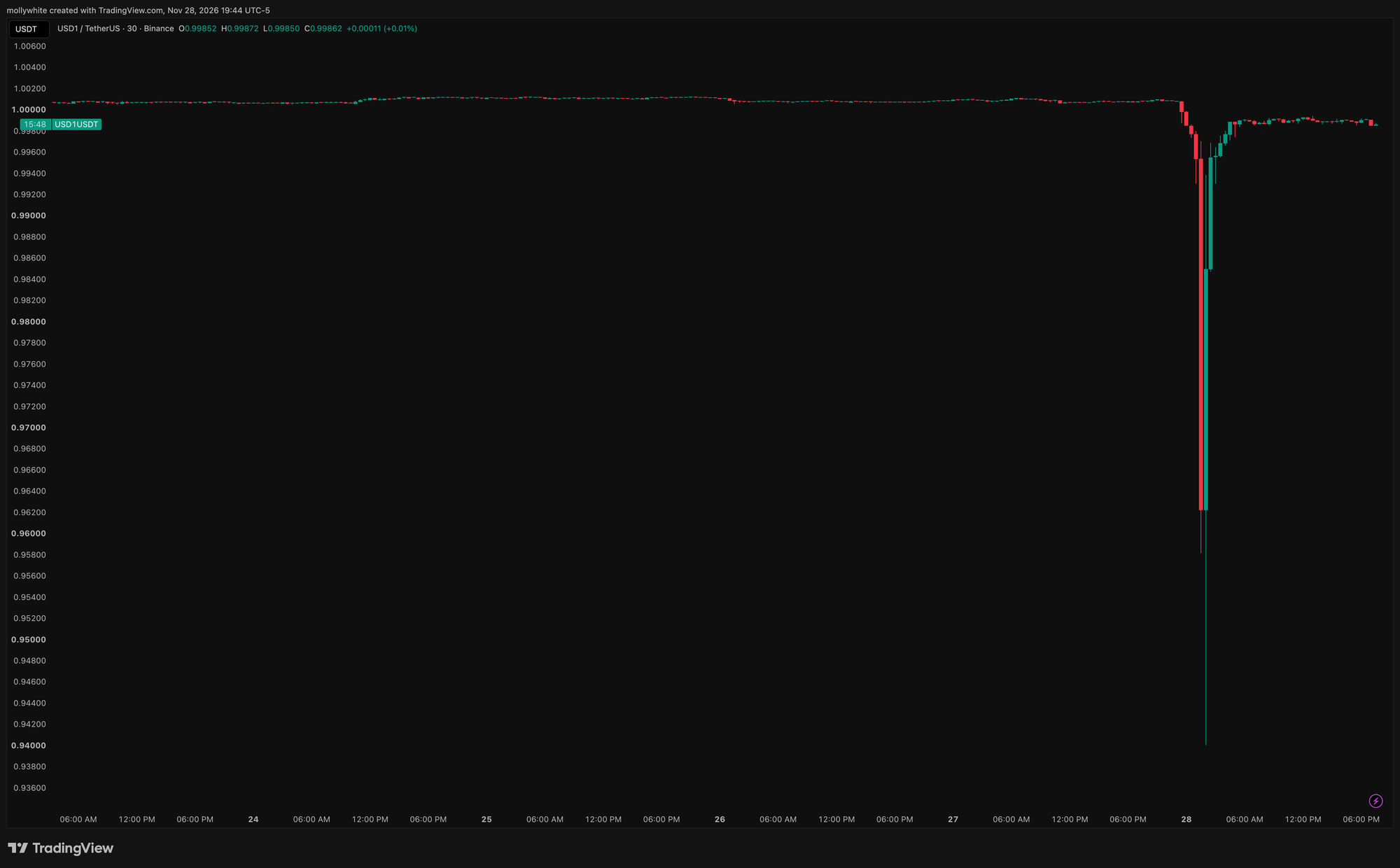
The turmoil at World Liberty extends beyond its WLFI token. The company is also responsible for USD1, a stablecoin it promotes as a safe equivalent to the US dollar. Last year, the UAE-backed MGX utilized USD1 in a $2 billion investment in Binance, benefiting the Trump family from the considerable interest generated from those reserves. Although there is no indication that USD1 redemptions were affected by the recent chaos, its holders displayed noticeable anxiety. Only selected customers can redeem USD1 directly for dollars through World Liberty's partner, BitGo. The rest must transact on the open market, and some opted to sell at a loss of up to 6% rather than risk further declines, causing the stablecoin to briefly stray from its $1 peg. As a result, USD1's circulating supply dropped by about $250 million in one day, adding to an overall decline that has reduced its supply to less than half of its February levels.
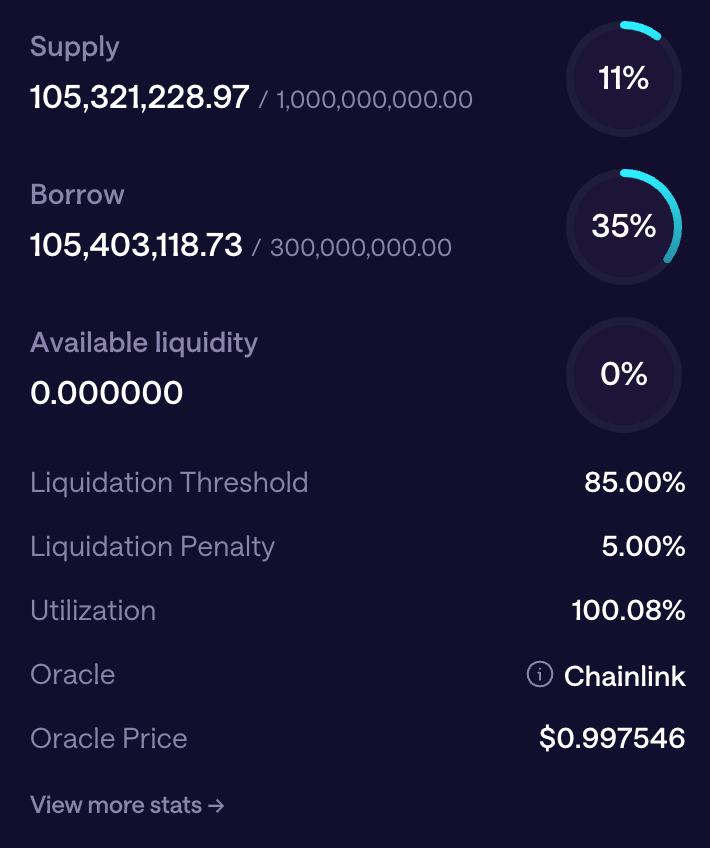
Meanwhile, individuals who loaned USD1 on Dolomite—a lending platform co-founded by Corey Caplan, an adviser to World Liberty—are currently unable to withdraw their funds. Approximately $105 million in USD1 has been lent out on Dolomite, and all of it is currently borrowed, with about 30% being taken by World Liberty itself. Lenders find themselves unable to recover their funds until the borrowers repay their loans, and as of Saturday afternoon, no USD1 was available for withdrawal.
The Trump family benefits from both WLFI and USD1 as their administration formulates regulations for the industry. According to Donald Trump’s latest financial disclosure, entities owned by him generated nearly $800 million from World Liberty in 2025, which includes $527 million from WLFI token sales and $263 million from divesting interests in its holding companies. If the loan encounters difficulties again, will any of that money be directed towards it? Or will it be sourced from another party? Perhaps one of the numerous companies and investors seeking favorable crypto regulations who have already invested in World Liberty and other Trump-associated crypto initiatives? Or will the buyers of WLFI and lenders on Dolomite be left to absorb the losses now that the Trump family has extracted its share?
The loan
As previously reported in April, World Liberty secured a loan of $75 million on Dolomite by putting up about 5 billion of its WLFI tokens as collateral. This included approximately $65 million in USD1, its own stablecoin. At that time, the tokens were valued at around $450 million. Dolomite was co-founded by Corey Caplan, who joined World Liberty Financial as an adviser in August 2024 and has since referred to himself as the firm’s Chief Technology Officer. World Liberty provides lending services on its website via an integrated version of Dolomite.
Critics quickly highlighted a significant concern: World Liberty was borrowing against a thinly traded token it created, which it had never paid for. This arrangement allowed World Liberty to convert those tokens into real dollars without selling any WLFI, transferring the risk to individuals who loaned the dollars instead. Given that WLFI’s value is tied to confidence in World Liberty, this loan arrangement posed the risk of a downward spiral; if the token's price dropped low enough to trigger liquidation, Dolomite would have to sell billions of WLFI into a declining market, further driving the price down. Some compared this setup to FTX, whose sister trading firm faced similar issues when FTT's price fell in November 2022, leading to the collapse of both entities.
When concerns about World Liberty’s loan were raised in April, the company dismissed them as “outsized stablecoin yields”:
Yes, we supplied WLFI as collateral and borrowed stablecoins. No, we are nowhere near liquidation — and frankly, even if markets moved dramatically against us, we’d simply supply more collateral. That’s not a risk. That’s how this works. World Liberty Financial, April 9, 2026
In the same thread, World Liberty characterized itself as “Not because we had to. Because we believe in where this is going.” whose borrowing created “We’d simply supply more collateral” for others. The company claimed to have spent $65.58 million to repurchase 435 million WLFI tokens at an average price of about $0.15, stating, “$159.5M annual revenue run rate.”
At that time, WLFI was trading at approximately $0.09 but has since fallen to below $0.02. Presently, the roughly 435 million tokens the company repurchased for over $65 million are valued at around $7.3 million.
Simply supplying more collateral
In April, World Liberty asserted that the loan was “independently operates and manages its perpetual futures markets” However, by Friday, the situation had changed significantly. WLFI was trading at around $0.04, and liquidation would occur if it dropped to approximately $0.02. Shortly after 3 PM Eastern, World Liberty began withdrawing its ETH from Dolomite, where it had been lending it out to earn interest, and proceeded to sell it. Blockchain analyst EmberCN reported that the company had purchased its ETH at an average price of around $3,244 per token and sold it for roughly $1,655.
| Time | Event |
|---|---|
| Fri 3:09 PM | World Liberty’s strategic reserve wallet withdraws 1,378 mETH (staked ETH) from Dolomite |
| Fri 3:10 PM | Withdraws 10,000 ETH from Dolomite |
| Fri 3:16 and 3:20 PM | Sells ~10,000 ETH in two trades via CoW Protocol for ~$16.6M USDC |
| Fri 3:22–3:46 PM | Sells the mETH for ~2.5M USD1 |
| Fri 3:26 PM | Deposits 16.59M USDC back into Dolomite |
| Fri 3:40 PM | Withdraws another 600 ETH from Dolomite |
| Fri 3:44 PM | Sells the 600 ETH for ~$1M USDC |
| Fri 3:48 PM | Deposits 2.5M USD1 into Dolomite |
| Fri 3:57 PM | Moves 10.66M USDC to the loan position, paying off its USDC debt |
| Fri 4:07 PM | Moves 990M WLFI from a different Dolomite position into loan collateral |
| Fri 5:48 PM | Withdraws 2,000 ETH from Dolomite, keeps it |
| Sat 5:11 AM | Borrows 10M USD1 against its own USDC and ETH and uses it to pay down the loan; moves 1B more WLFI from a different Dolomite position into loan collateral |
Based on the reported health factor of the position, World Liberty’s actions on Friday reduced the liquidation price to approximately $0.0118.
This decrease was insufficient. Overnight, WLFI dropped more than 50% to a new all-time low of nearly $0.016, perilously close to the adjusted liquidation price. On Saturday morning, World Liberty borrowed $10 million in USD1 against its alternative Dolomite position, utilized it to decrease the balance on the WLFI-secured loan, and assigned another 1 billion WLFI into that loan’s collateral, further lowering its liquidation price to around $0.0063. This maneuver did not lessen World Liberty’s total debt; it merely transferred roughly $10 million from the WLFI-backed loan to a new loan secured by USDC and ETH. Currently, World Liberty owes around $31 million in USD1 on Dolomite, and it turns out that “actively reviewing the market activity” translated into selling the treasury’s ETH at a significant loss and rearranging debt.
This scenario exemplifies the very spiral critics cautioned about in April. As the loan is secured by WLFI, its declining price brings the loan closer to liquidation. Moreover, since token transfers are transparent on-chain, traders can observe a company depleting its treasury to save a loan tied to its own token, leading to justified concerns. Consequently, WLFI’s price halved overnight, necessitating a second rescue of the position by World Liberty.
Following the weekend, World Liberty’s Strategic Reserve wallet and Dolomite positions now hold approximately $31 million in non-WLFI assets including USDC, ETH, and its own USD1 stablecoin—almost precisely what it owes. Its other publicly identified treasury wallet contains solely WLFI.
Meanwhile, the segment of World Liberty's operations that actually generates revenue is contracting. Unlike WLFI, USD1 earns interest on the reserves backing it, some of which benefits the Trump family. When the company dismissed the Dolomite “proactive steps to strengthen its treasury and reduce liquidation risk amid a broader crypto market downturn.” back in April, it touted USD1’s “a portion of our treasury-owned ETH and mETH” USD1’s supply was around $4.3 billion at that time. Now that it has decreased by 40%, the income derived from its reserves has likely declined correspondingly.
World Liberty’s response
World Liberty’s initial public statement released Saturday morning did not address the ETH sale, the loan, or the depegging of USD1. Instead, it directed traders to Binance, which had forcibly closed some customers’ profitable WLFI perpetual futures positions through what appears to have been auto-deleveraging, a common mechanism used by exchanges to prevent accumulating bad debt when markets fluctuate rapidly. World Liberty emphasized that Binance “above $0.02 to approximately $0.00631” and that the company “not a single WLFI token was sold as part of this process” in the situation, urging affected users to reach out to Binance support. All of this is technically accurate, but it also conveniently shifted the blame onto Binance for a foreseeable outcome of WLFI's downward trajectory. Binance later stated it was “not a reflection of diminished confidence in WLFI or the broader crypto market.”
On Saturday afternoon, World Liberty Financial issued a more detailed statement, asserting that its actions on Friday were merely “another rerun of insider circular lending to cash out” It confirmed the general details outlined previously: that it had sold “a portion of our treasury-owned ETH and mETH” to pay down its debt, closed one of its lending positions, and consolidated its WLFI collateral to lower the liquidation price from “above $0.02 to approximately $0.00631.” It maintained that “not a single WLFI token was sold as part of this process,” claiming that these actions were “not a reflection of diminished confidence in WLFI or the broader crypto market.”
While it is true that the crypto market is experiencing downturns and that World Liberty’s loan is indeed more secure than it was on Friday, much of the statement seems to be spin. The company’s actions on Friday came as WLFI’s price continued to approach the loan’s liquidation threshold, and Saturday’s statement followed its near breach of that threshold. This is not what most would consider “proactive.” Furthermore, a significant portion of World Liberty’s debt reduction stemmed from closing a position where it had borrowed its own stablecoin against other stablecoins. It still owes about $31 million in USD1, and $10 million of the debt it “paid down” was effectively a new loan taken out to settle some of the WLFI-backed loan. WLFI has not fallen 95% due to a general downturn in the crypto market; while bitcoin and ETH are down, they have not declined by that magnitude. Although World Liberty is truthful in stating that it has not sold any WLFI, choosing instead to liquidate other assets, it raises the question of whether this decision is driven by confidence in its own token or a dwindling number of potential buyers.
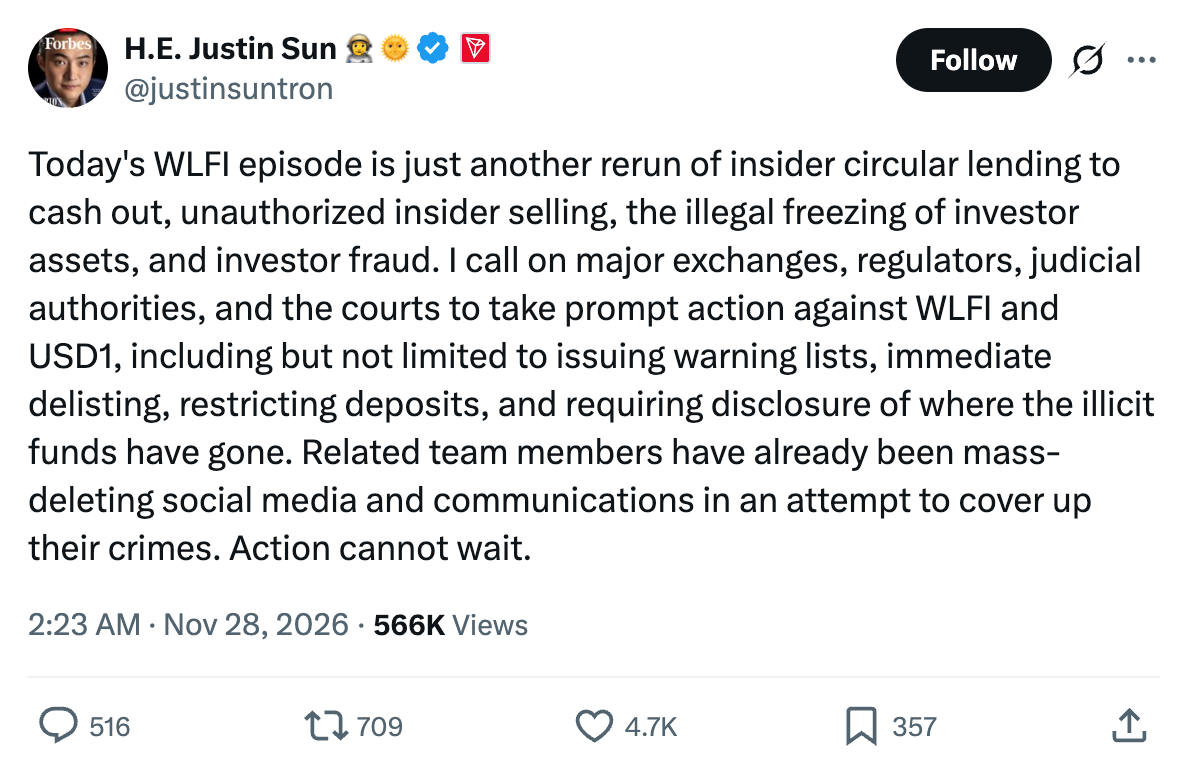
Justin Sun, who is currently engaged in legal disputes with World Liberty, characterized the incident as “another rerun of insider circular lending to cash out,” urging exchanges to delist WLFI and USD1 while calling for regulatory intervention. While Sun is not a neutral party and has his own controversial history, it’s challenging to find a more fitting description of a company borrowing its own stablecoin against its governance token from a platform established by one of its own advisors.
Although some might feel a sense of schadenfreude watching World Liberty struggle, it's crucial to recognize that the Trump family's financial exposure is predominantly theoretical at this stage. The family possesses around 22.5 billion WLFI, which is valued at about $360 million based on Saturday’s prices, a significant drop from several billion dollars during more favorable times. However, the Trump family has already largely reaped its rewards—primarily in cash, not illiquid tokens—through earlier token sales and equity disposals.
In contrast, WLFI purchasers face a different predicament. At its secondary market debut in September 2025, the token was priced at $0.31 and quickly rose to $0.46. Anyone who acquired it at the opening price has now seen their investment diminish by approximately 95%. Early presale buyers paid merely $0.015 or $0.05 per token, a fraction of what the average investor would later encounter. Nevertheless, some of these investors are now facing losses. Not everyone who invested in WLFI did so directly; for instance, an Indiana machinist invested $40,000—30% of his portfolio—into ALT5 Sigma, a Nasdaq-listed company that raised $750 million to acquire WLFI tokens, and he had lost around $32,700 as of this report. World Liberty was involved on both sides of that transaction: ALT5 Sigma, recently renamed AI Financial, is chaired by World Liberty co-founder Zach Witkoff, with fellow co-founder Zak Folkman on its board and Eric Trump serving as a board observer.
World Liberty Financial has not promptly responded to requests for comment.