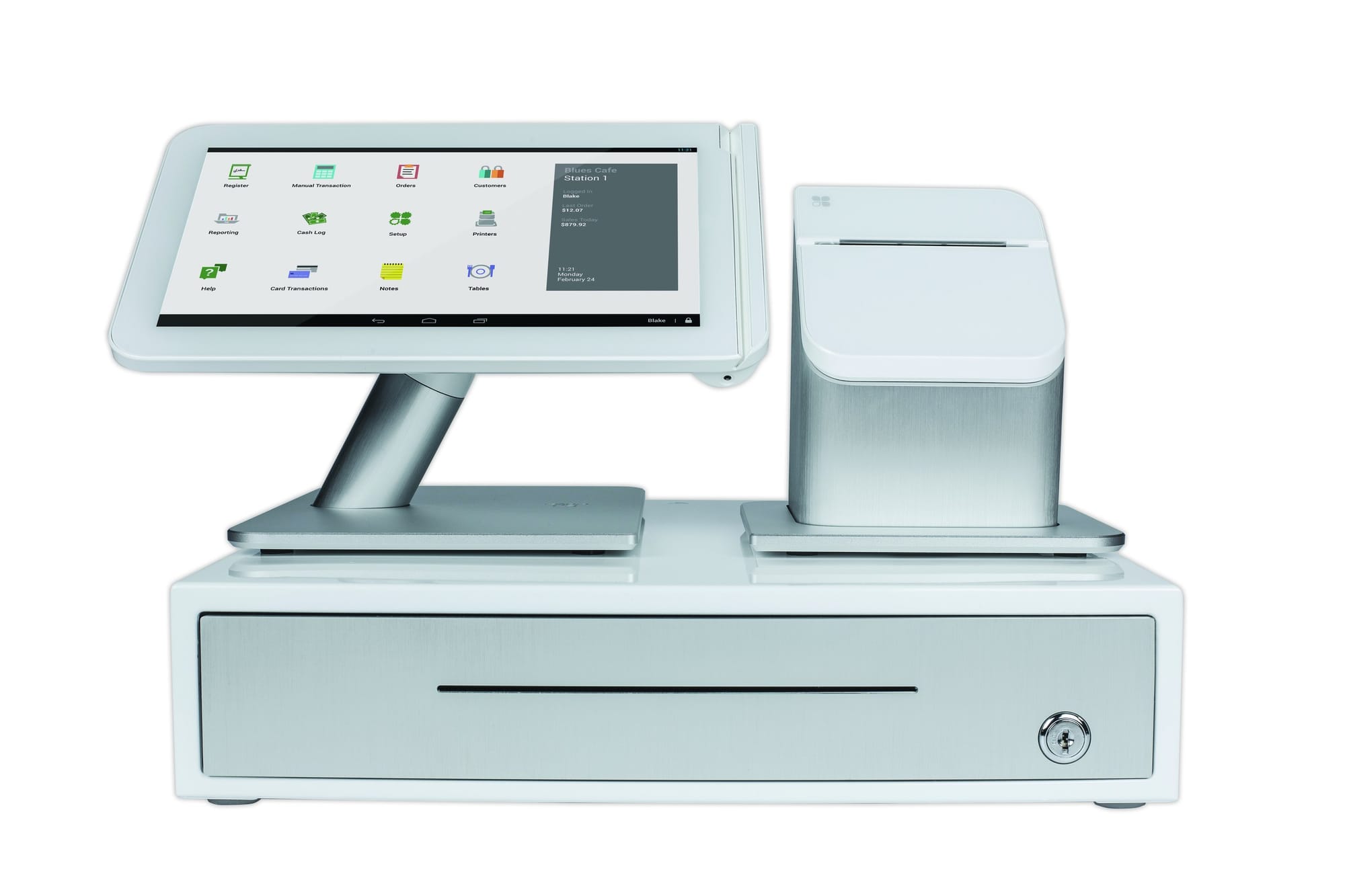
Square and Clover have emerged as the primary point-of-sale systems for small businesses, including shops, cafes, and salons. Square offers a no-cost monthly option that charges solely for card processing fees ( Square pricing ), while Clover provides lower rates for card transactions bundled with hardware that can be purchased outright or rented over three years ( Clover retail pricing ).
This analysis of Square and Clover is based solely on the companies' US pricing, hardware, and transfer information as of November 25, 2026. It examines card processing rates, software options, hardware costs, contract details, and payout speeds, along with a 36-month cost estimation for a typical small retailer to highlight when the cheaper option might change.
The conclusion is that Square serves as the safer choice for newcomers and seasonal businesses, given that it does not impose long-term commitments. Conversely, Clover's full Station Duo system becomes more economical once in-person card sales exceed approximately $17,000 each month, but this is contingent upon accepting terms that are challenging to exit.
Key Takeaways
- Square Free has no monthly fee and charges 2.6% + 15 cents for in-person card transactions and 3.3% + 30 cents for online transactions ( Square ).
- Clover's in-person rate stands at 2.3% + 10 cents for its Retail Growth and Restaurant Growth bundles, and 2.6% + 10 cents for the Starter Compact bundle ( Clover ).
- Clover's subscriptions are non-cancelable and do not offer refunds, whereas Square promotes the absence of locked-in contracts ( Clover FAQ, Square ).
- Square's instant transfer fee is 1.95% of the amount, compared to Clover's Rapid Deposit fee of 1.75% ( Square, Clover ).
- Both companies are experiencing growth: Square processed $76.4 billion in Q3 2026, marking a 14% increase ( Zacks via Yahoo Finance ), while Clover's annualized volume reached $368 billion ( Zacks via Yahoo Finance ).

Which is better for a small business: Square or Clover?
Square is more suitable for new, small, or seasonal businesses that prefer no monthly fees and no contractual obligations, while Clover is ideal for established, higher-volume businesses that seek lower card processing rates and a complete register setup that includes a printer and cash drawer. Square's entry-level plan is free with a rate of 2.6% + 15 cents per transaction ( Square ); Clover's lowest published in-person rate is 2.3% + 10 cents ( Clover ).
| Feature | Square | Clover |
|---|---|---|
| Entry software plan | Square Free, $0/month per location (Square) | Starter, bundled with Compact: $349 or $16/month for 36 months (Clover) |
| Lowest in-person card rate | 2.4% + 15 cents on Premium (Square) | 2.3% + 10 cents on Growth bundles (Clover) |
| Online / keyed rate | 3.3% + 30 cents online on Free; 3.5% + 15 cents keyed (Square) | 3.5% + 10 cents typed in (Clover) |
| Contract | No long-term contract, cancel or switch anytime (Square) | Subscriptions non-cancelable for the term (Clover) |
| Cheapest counter hardware | Square Stand $149 for iPad; Square Terminal $299 (Square) | Compact terminal $349 (Clover) |
| Fast payout fee | 1.95% instant transfer; free next business day (Square) | 1.75% Rapid Deposit (Clover) |
| Parent company | Block, Inc. (Square) | Fiserv (Zacks via Yahoo Finance) |
| Third-party processor | No, Square POS uses Square payments | Yes, hardware can be paired with another processor (NerdWallet) |
What is Square's cost structure in 2026?
Square's pricing model includes options of $0, $49, or $149 monthly fees per location, with each plan determining the corresponding card processing rate. The Square Free plan charges 2.6% + 15 cents for in-person transactions, while Square Plus at $49 reduces this to 2.5% + 15 cents, and Square Premium at $149 lowers it further to 2.4% + 15 cents ( Square ). Custom pricing is available for sellers processing over $250,000 annually.
| Square plan | Monthly fee | In person | Online | Online API |
|---|---|---|---|---|
| Free | $0 | 2.6% + 15c | 3.3% + 30c | 2.9% + 30c |
| Plus | $49 | 2.5% + 15c | 2.9% + 30c | 2.9% + 30c |
| Premium | $149 | 2.4% + 15c | 2.9% + 30c | 2.9% + 30c |
Several smaller fees associated with Square's services are more significant than they may initially appear. Manual entry or card-on-file payments incur a cost of 3.5% + 15 cents, while cards issued outside the US incur an additional 1.5%. Afterpay transactions carry a fee of 6% + 30 cents, and ACH bank transfers on invoices are charged at 1% with a $1 minimum ( Square ). In early 2025, Square increased its in-person rate from 2.6% + 10 cents and its online rate from 2.9% + 30 cents, making older comparisons quoting the previous lower rates outdated ( NerdWallet ).
What is Clover's cost structure in 2026?
Clover's pricing consists of hardware costs combined with a software fee, which can either be paid upfront or as a subscription over 36 months. On Clover.com, the retail Compact bundle is priced at $349 or $16 per month, while the Station Duo bundle costs $1,899 plus $84.95 monthly, or $180 a month on subscription. If the Flex handheld is added, the total rises to $2,648 with an additional $104.90 monthly or $240 per month ( Clover retail pricing ).
| Clover bundle (Clover.com) | Buy outright | 36-month subscription | In person | Typed in |
|---|---|---|---|---|
| Retail: Compact (Starter) | $349 | $16/mo | 2.6% + 10c | 3.5% + 10c |
| Retail: Station Duo (Retail Growth) | $1,899 + $84.95/mo | $180/mo | 2.3% + 10c | 3.5% + 10c |
| Retail: Station Duo + Flex | $2,648 + $104.90/mo | $240/mo | 2.3% + 10c | 3.5% + 10c |
| Restaurant: Station Solo (Restaurant Growth) | $1,799 + $89.95/mo | $179/mo | 2.3% + 10c | 3.5% + 10c |
| Restaurant: largest listed bundle | $4,447 + $129.85/mo | $354/mo | 2.3% + 10c | 3.5% + 10c |
This last point is significant. According to Clover's pricing page, the prices listed are only valid when purchased directly from Clover.com ( Clover ). Additionally, Clover hardware is also sold through banks and independent processors, which may set their own rates and terms ( NerdWallet ). Businesses receiving a Clover quote from a sales representative should clarify whether the quote is direct from Clover or from a reseller and compare it with the published pricing table.
Which service has lower card processing fees: Square or Clover?
On paper, Clover boasts lower published rates for in-person and keyed-in transactions, while Square offers cheaper rates for online card payments only on its paid plans. For a $25 in-store purchase, Clover Growth results in a fee of 68 cents (2.3% + 10 cents), while Square Free incurs a cost of 80 cents (2.6% + 15 cents), based on each company's rate card ( Clover, Square ).
| Fee per transaction | Square Free | Square Plus | Clover Starter | Clover Growth |
|---|---|---|---|---|
| $25 in-person sale | $0.80 | $0.78 | $0.75 | $0.68 |
| $100 in-person sale | $2.75 | $2.65 | $2.70 | $2.40 |
| $50 online or keyed sale | $1.95 online | $1.75 online | $1.85 typed in | $1.85 typed in |
This calculation is derived from the rates published on Square pricing and Clover retail pricing. Square's online rate is 3.3% + 30 cents (Free) or 2.9% + 30 cents (Plus), while Clover's keyed-in rate is 3.5% + 10 cents.
The 5-cent difference in the fixed fee is a detail that can easily be overlooked. Square charges 15 cents for each in-person payment, while Clover charges 10 cents ( Square, Clover ), which means that a coffee shop with a $6 average sale will proportionally incur a higher fixed fee compared to a furniture store. Consequently, businesses with low ticket prices but high transaction volumes will benefit significantly from Clover's fee structure.
What are the costs over 36 months for a small retailer?
For a retailer processing $20,000 monthly, with an average sale of $25 (resulting in 800 transactions), Clover's Compact bundle emerges as the least expensive over 36 months, costing approximately $21,950. In comparison, Square Free with a Square Register costs around $23,940. This model strictly uses published rates, plan fees, and hardware costs ( Square, Square hardware, Clover ).
| Setup ($20k/month, 800 sales) | Card fees per month | Software per month | Hardware | 36-month total |
|---|---|---|---|---|
| Square Free + Square Register | $640 | $0 | $899 | $23,939 |
| Square Plus + Square Register | $620 | $49 | $899 | $24,983 |
| Clover Compact, bought (Starter) | $600 | $0 listed | $349 | $21,949 |
| Clover Station Duo, bought (Retail Growth) | $540 | $84.95 | $1,899 | $24,397 |
| Clover Station Duo, 36-month subscription | $540 | in $180/mo | in $180/mo | $25,920 |
This model is based on Square pricing, Square hardware (Square Register $899), and Clover retail pricing. It excludes taxes, accessories, add-on applications, chargebacks, and payout fees.
Two key observations emerge. First, opting for a Clover subscription is the most expensive route to acquire a Station Duo, costing about $1,500 more than purchasing it outright over the same 36 months, based on the bundle prices on Clover's retail pricing page. Second, Clover's lower rates necessitate higher transaction volumes to offset the software fee. At a $25 average sale, Square Free accounts for approximately 3.2% of sales, while a purchased Clover Duo costs about 2.7% plus $84.95 monthly, indicating the Duo only becomes advantageous for monthly sales exceeding $17,000 ( Square, Clover ).
However, the Compact result comes with a caveat. Clover's Starter plan does not include features like itemized order creation, inventory management, detailed sales reports, or an online store, which are all part of the Retail Growth plan ( Clover retail pricing ). In contrast, Square Free encompasses an item library, an online site, and invoicing at no cost ( Square ), thus making the more accurate comparison between Square Free and the Station Duo, rather than the Compact.
Which POS hardware is superior: Square or Clover?
Square's hardware is more affordable initially, and businesses have the option to forgo it entirely, whereas Clover offers more comprehensive counter bundles. Square lists the Stand at $149, the Terminal at $299, the Handheld at $399, the Register at $899, and the Kiosk at $1,999 with a counter stand. Additionally, Square notes that its services can operate without hardware, since Tap to Pay on iPhone and Android, invoices, and payment links are functional without it ( Square hardware, Square ).
- Square: Hardware comes with a limited warranty and 30-day free returns, and credit-sale financing has a 15% APR ( Square hardware ).
- Clover: A subscription includes the Equipment Protection Program, covering accidental damage, theft, and loss for the duration of the contract, while purchased hardware comes with a one-year limited warranty ( Clover FAQ ).
- Clover's retail Station Duo bundles include a receipt printer and cash drawer, and the Compact features a built-in printer ( Clover retail pricing ).
Can you cancel Square or Clover subscriptions?
Square can be canceled at any time, whereas a Clover subscription cannot be canceled or refunded during its term. Square promotes the absence of any long-term contracts, and its paid plans come with a 30-day free trial ( Square ). In contrast, Clover states that subscriptions are non-cancelable and ineligible for refunds, and the only way to break a subscription is through a buyout or an upgrade, which can be paid off at any time ( Clover FAQ ).
NerdWallet emphasizes that Clover promotions often require a three-year contract, and early termination fees could apply if Clover is the payment processor ( NerdWallet ). For businesses uncertain about their trading status over the next three years, this represents a significant risk in this comparison, outweighing any differences in rates.
How quickly do Square and Clover process payments?
Both platforms provide next-business-day payouts for free but charge for immediate access, with Clover being slightly cheaper for instant payouts. Square imposes a 1.95% fee for instant or same-day transfers, with a $25 minimum and a $10,000 maximum per transfer ( Square ), while Clover's Rapid Deposit is 1.75% and delivers funds within minutes of a card transaction ( Clover ).
Square offers a workaround: sales are instantly deposited without fees into a Square Checking account, and Square Savings paid an annual percentage yield (APY) of 1.00% as of January 23, 2026 ( Square ). For those willing to keep operating cash within Square, the 1.95% fee is largely mitigated. Over $10,000 in monthly instant payouts, the difference between the 1.95% and 1.75% fees amounts to $20 monthly.
Which is more suitable for restaurants, retail, or services?
Square serves as the better general choice for service-oriented and appointment-based businesses, while Clover is more fitting for busy full-service restaurants that require bundled kitchen hardware. The two are relatively comparable for retail. Square's free plan includes booking and invoicing features ( Square ), whereas NerdWallet notes that Clover only provides appointment features in its $84.95 monthly plans ( NerdWallet ).
| Business type | Better pick | Why |
|---|---|---|
| New or seasonal shop | Square | $0 plan, no contract, cancel anytime (Square) |
| Salon, studio, or consultant | Square | Booking and invoicing included on Square Free (Square) |
| Busy cafe with low tickets | Clover | 10-cent fixed fee vs. 15 cents (Clover) |
| Full-service restaurant | Clover | Station Solo, Flex, and Duo restaurant bundles at 2.3% + 10c (Clover) |
| Predominantly online sales | Square Plus | 2.9% + 30c online vs. 3.5% + 10c typed in (Square,Clover) |
| Wants to shop processors | Clover | Hardware works with third-party processors (NerdWallet) |
This assessment is based on Square pricing, Clover retail pricing, Clover restaurant pricing, and NerdWallet.
Do Square or Clover accept cryptocurrency or stablecoins?
Square accepts bitcoin as a payment option, while Clover does not list any cryptocurrency acceptance on its pricing pages; neither service offers stablecoin payments. Square charges 0% on in-person bitcoin QR payments until 2027, and it provides automatic bitcoin conversion for card sales at 1.0%, or 0.5% on the Premium plan ( Square ). Clover's accepted payment methods include cards, Apple Pay, Google Pay, PayPal, and Venmo ( Clover ).
For merchants, a more practical alternative for payment methods are pay-later services. Square incorporates Afterpay with a fee of 6% + 30 cents ( Square ), similar to the Block-owned service discussed in the comparison between Klarna and Afterpay. For businesses wishing to directly accept USDC or USDT, a point-of-sale system with a stablecoin gateway would be necessary; resources like the Stripe alternatives and PayPal alternatives roundups enumerate providers that support this.
How significant are Square and Clover in the market?
Both platforms rank among the largest small-business payment solutions in the United States, and they continue to grow in transaction volume. Square's gross payment volume grew by 14% year-over-year, reaching $76.4 billion in the third quarter of 2026, with US volume increasing by 10.4% ( Zacks via Yahoo Finance ). Clover reported a volume increase of 9%, reaching an annualized $368 billion, although Clover's revenue grew by only 1% ( Zacks via Yahoo Finance ).
For merchants, scale is primarily reflected in product investment and stability. Block reported the introduction of over 180 new features for Square through September 2026 ( Zacks via Yahoo Finance ), while Fiserv noted a 12% increase in Clover's processing revenue during the same quarter ( Zacks via Yahoo Finance ). The underlying card network regulations continue to influence both companies; the Visa vs Mastercard guide explains how network fees impact the aforementioned rates.
Final thoughts
Choose Square if you are new, seasonal, appointment-oriented, or uncertain about your volume. The $0 plan and absence of a contract mean the worst-case scenario is a few months of slightly elevated card fees ( Square ). Opt for Clover if your business processes around $17,000 a month or more in card sales, can purchase the hardware upfront, and are comfortable with the subscription terms ( Clover ).
The broader trend indicates that both companies are transforming the checkout process into a banking relationship. Square encourages users to utilize Square Checking for immediate access to sales, while Clover markets Rapid Deposit and Clover Capital advances based on future card sales. This strategy aligns with what fintech applications and stablecoin payment providers are pursuing: controlling the flow of money rather than merely the transaction itself.
FAQ
Is Square or Clover cheaper?
Square is the more economical choice for low or unpredictable sales volumes due to Square Free's lack of a monthly fee ( Square ). In contrast, Clover has lower fees for in-person transactions at 2.3% + 10 cents on Growth bundles ( Clover ), making it more cost-effective at higher transaction volumes.
Does Clover have a monthly fee?
Yes, most bundles come with a monthly fee. The retail Station Duo bundle purchased outright incurs a charge of $84.95 per month, while the subscription option is $180 per month over 36 months ( Clover ). The Compact Starter bundle does not include a distinct monthly fee.
Can I cancel a Clover subscription?
No, Clover subscriptions cannot be canceled and do not qualify for refunds. However, they can be paid off, bought out, or upgraded ( Clover FAQ ).
Does Square impose a monthly fee?
No, there are no monthly fees for Square Free. Square Plus has a fee of $49, while Square Premium costs $149 per month for each location, with lower card processing rates available ( Square ).
Can I use Clover hardware with another payment processor?
Yes, Clover hardware is compatible with third-party processors, provided it is purchased through that processor to ensure proper programming ( NerdWallet ).
What is the cost of Square's instant transfer?
1.95% of the transfer amount, with a minimum charge of $25 and a maximum of $10,000 per transaction; next-business-day transfers are complimentary ( Square ).
This article serves as informational content and is not intended as financial, investment, legal, or tax advice, nor is it a recommendation to buy or sell shares of Block (XYZ) or Fiserv (FISV), any crypto asset, or any stablecoin. Prices, rates, and contract terms are sourced from Square and Clover pages as of November 25, 2026, applicable to US merchants purchasing directly; rates may differ for resellers, banks, and custom rate agreements. The cost model is a simplified estimate and does not account for taxes, chargebacks, add-on applications, or accessories. There is no affiliate relationship with Square or Clover.