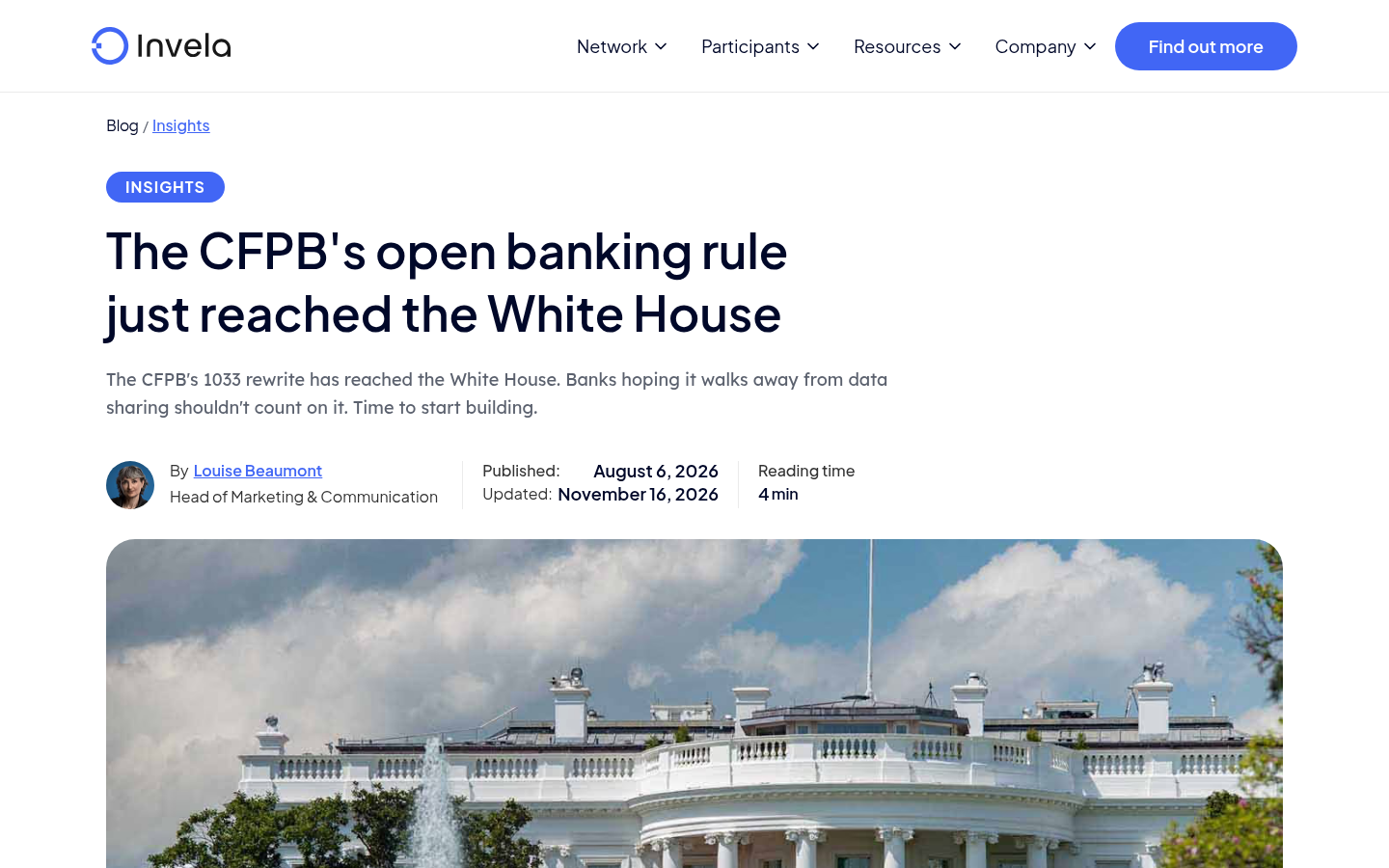
The Consumer Financial Protection Bureau's (CFPB) revision of its open banking rule has been under review by the White House since August 4, 2026. This rule has been designated as economically significant, and as of now, over 100 days have passed without a finalized date.
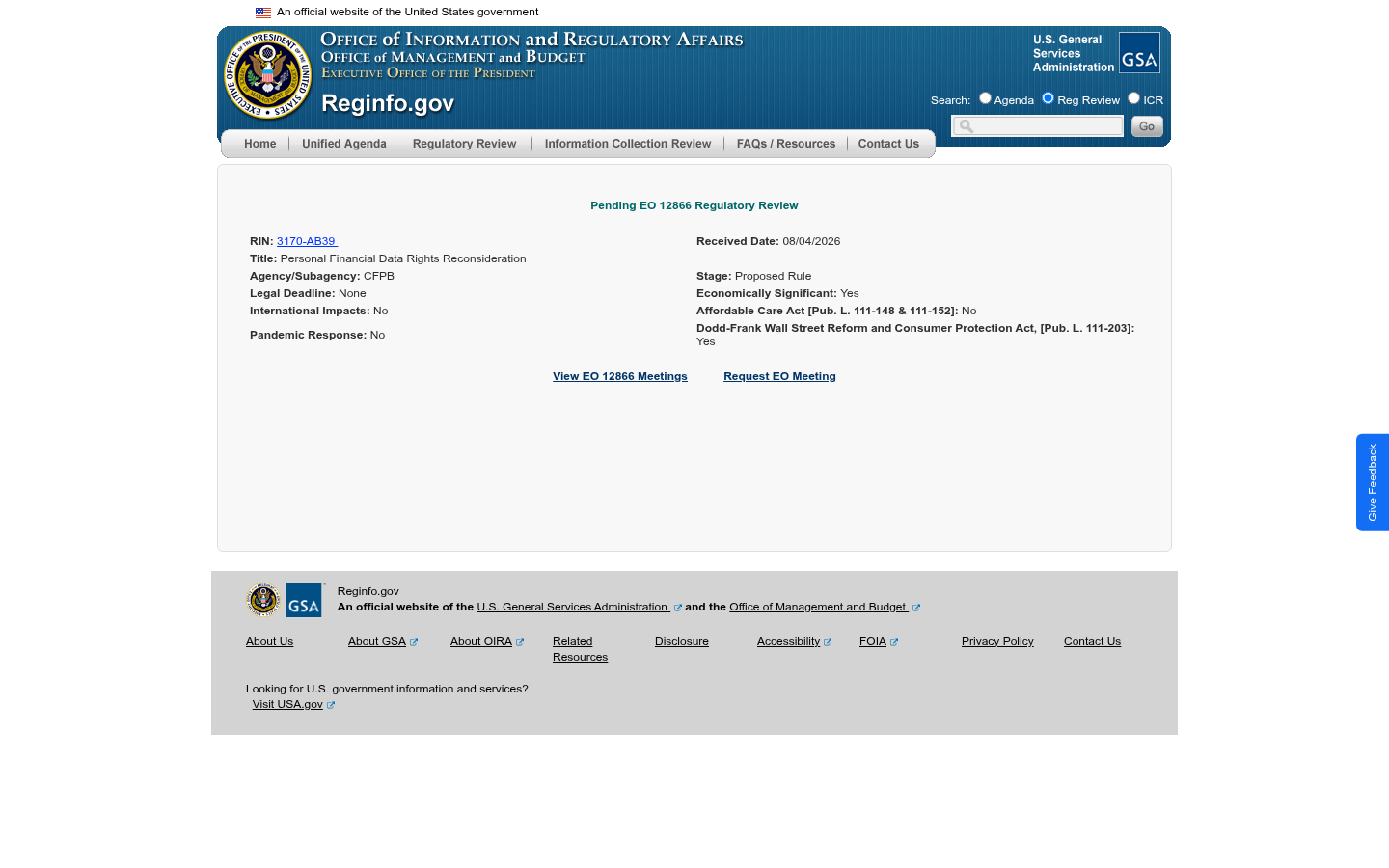
This regulation governs how money and data are exchanged between banks, fintech companies, and stablecoin applications. Section 1033 specifically outlines the control consumers have over their banking data.
This guide details the requirements of Section 1033, the circumstances that led to its suspension, anticipated changes in the rewrite, the current state as of November 2026, and the implications for fintechs, banks, and stablecoin applications.
Key Takeaways
- The 2024 Section 1033 rule is enjoined but not repealed.
- The rewrite has been with the White House since August 2026.
- Data access fees are a central contention, particularly following JPMorgan's actions in 2025.
- Compliance deadlines are not expected before 2028.
- New York has proposed its own bills for fee-free open banking.
Understanding Section 1033 and Its Importance
Section 1033 of the Dodd-Frank Act grants consumers the right to access their financial data. The CFPB's 2024 regulation established specific requirements, mandating that banks and card issuers provide account data through secure channels at no cost to consumers and their authorized third parties.
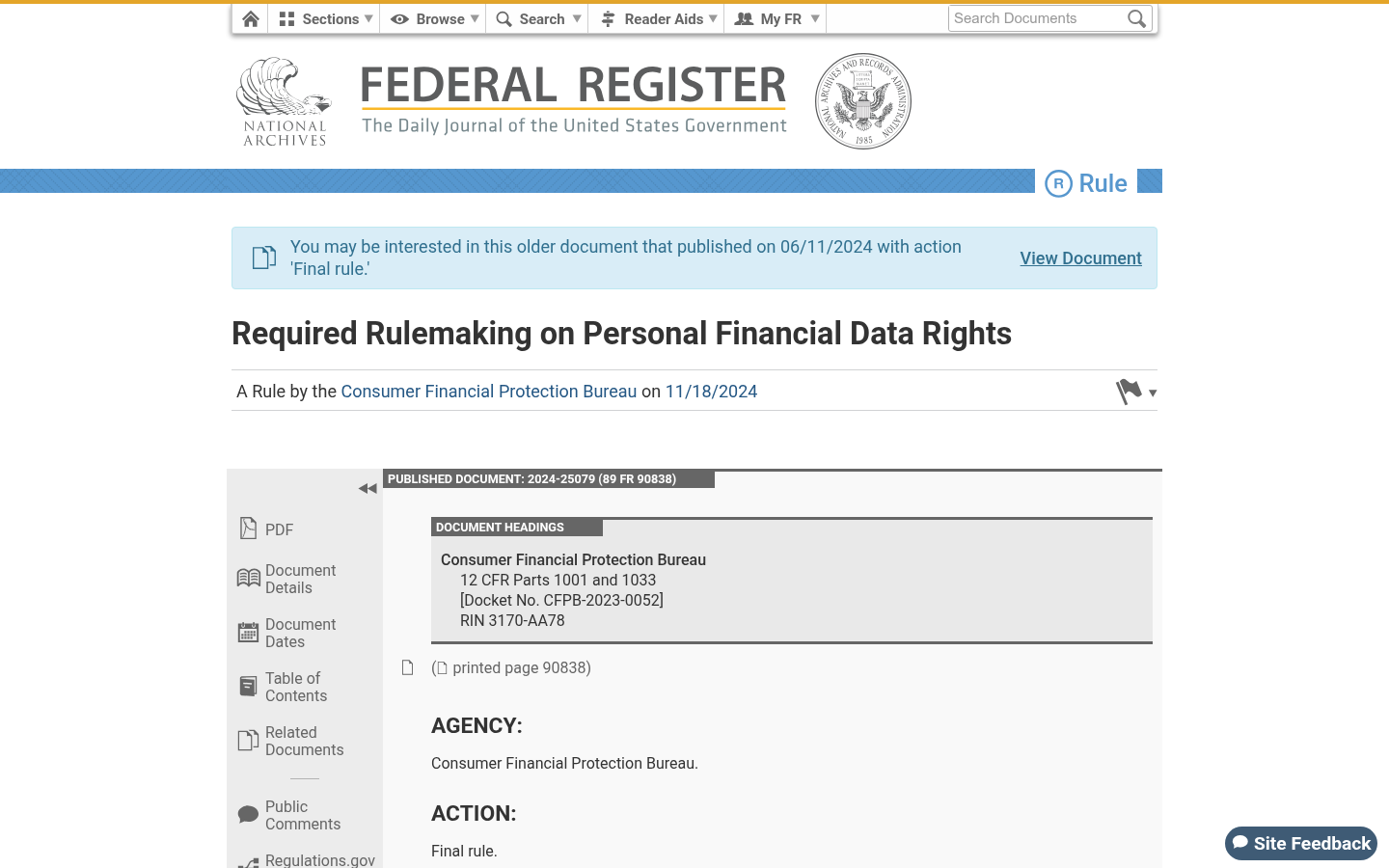
- Scope includes checking and savings accounts, prepaid accounts, digital wallets under Regulation E, and credit cards.
- The rule prohibits data providers from charging consumers or third parties for access.
- Developer interfaces must be created by banks so that applications do not require customer passwords for data retrieval.
- Compliance dates were phased, with larger institutions required to comply from April 2026, and smaller ones through 2030.
This regulation acts as the foundational infrastructure for linking accounts, budgeting applications, credit assessments, and bank payments. It also supports stablecoin on-ramps in verifying and funding bank accounts.
How the Rule Was Halted
The implementation of the rule never commenced. Bank trade associations filed lawsuits in the Eastern District of Kentucky, and the CFPB declared the rule unlawful in May 2025. By late October 2025, the court prohibited the CFPB from enforcing the rule until the reconsideration process concluded.
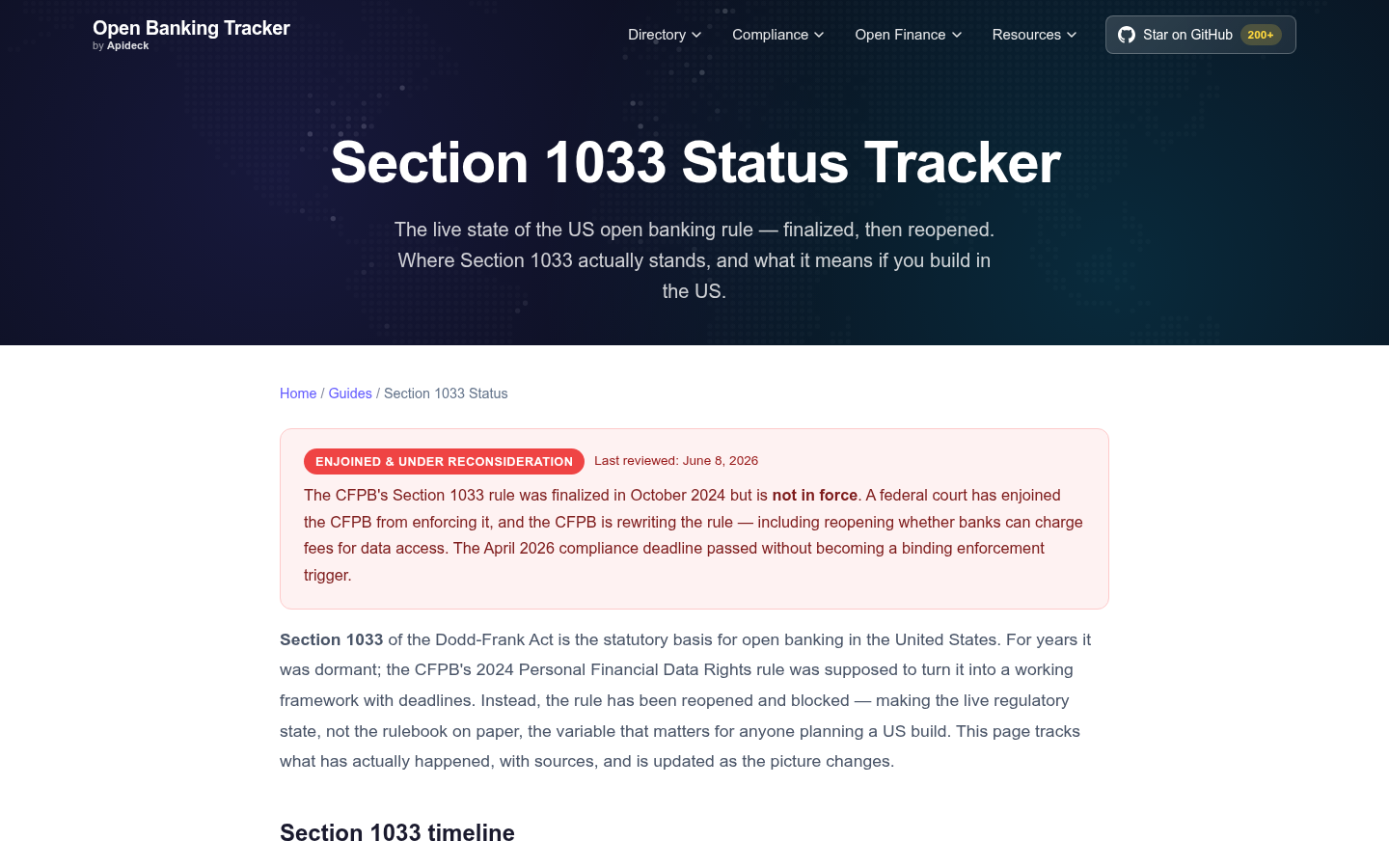
| Date | Event |
|---|---|
| October 2024 | Final rule issued |
| May 2025 | CFPB deems rule unlawful |
| August 2025 | Reconsideration begins |
| October 2025 | Court halts enforcement |
| April 2026 | First compliance deadline missed |
| August 2026 | Rewrite submitted to OIRA |
This distinction is crucial; the rule is enjoined, not vacated, meaning it remains in effect while the CFPB works on a new version.
The CFPB's Questions During Reconsideration
The CFPB revisited the rule in August 2025 with a notice that posed four key questions: who can serve as a consumer's authorized representative, whether data providers can impose fees, how to ensure data security, and how to safeguard data privacy.
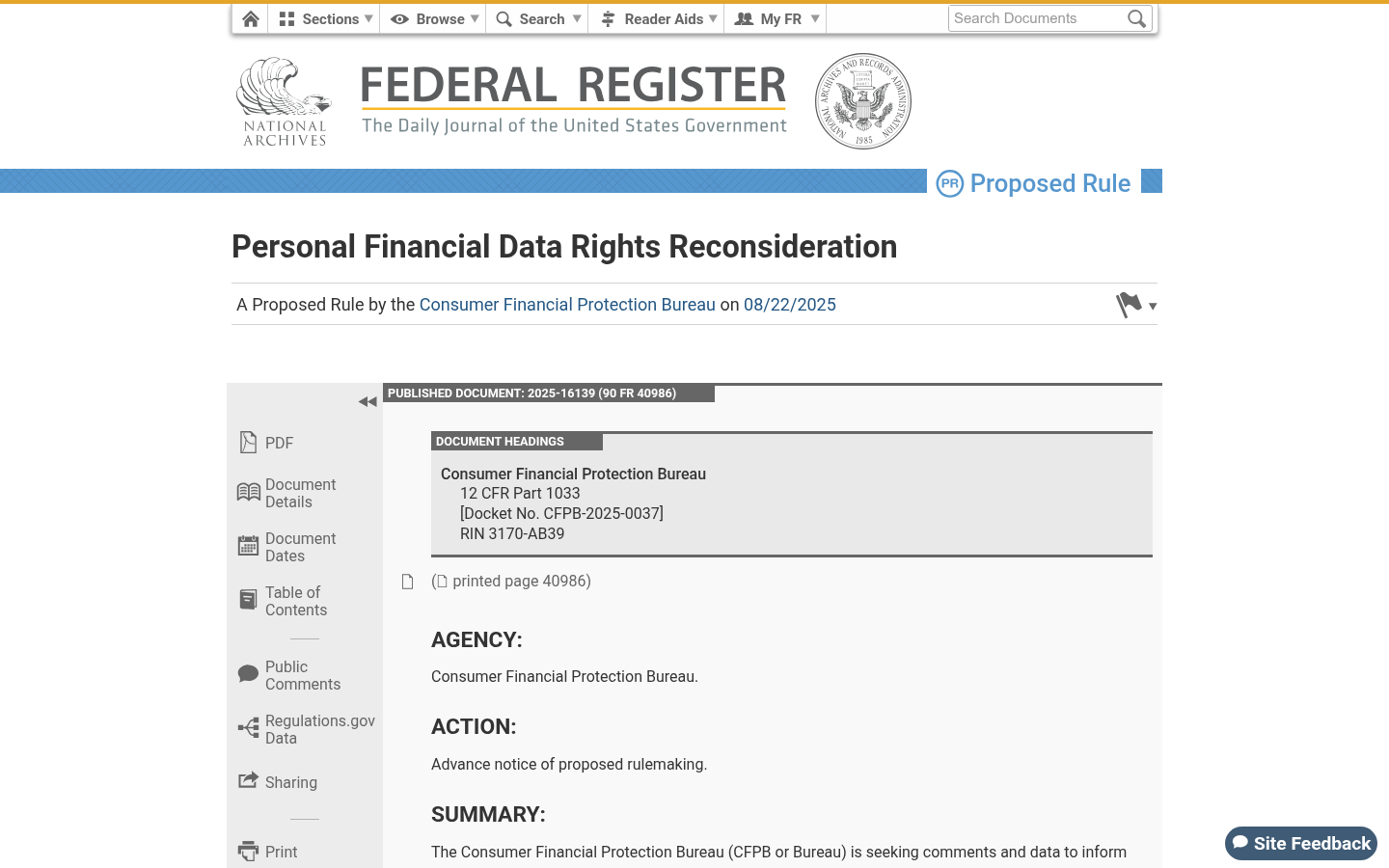
The response was significant, with nearly 14,000 comments received. The CFPB's revised proposal reached the White House Office of Information and Regulatory Affairs in August 2026.
The Dispute Over Fees
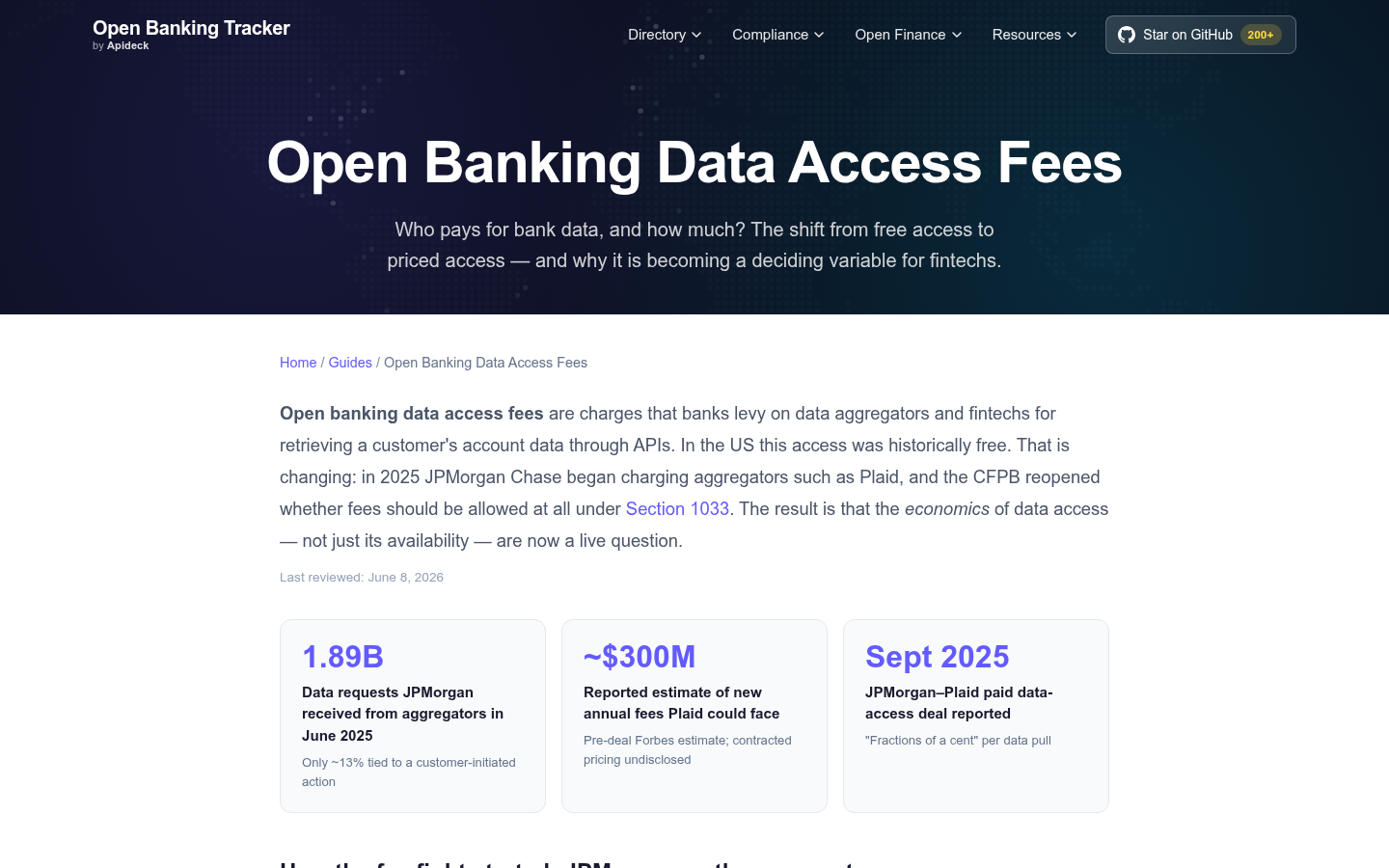
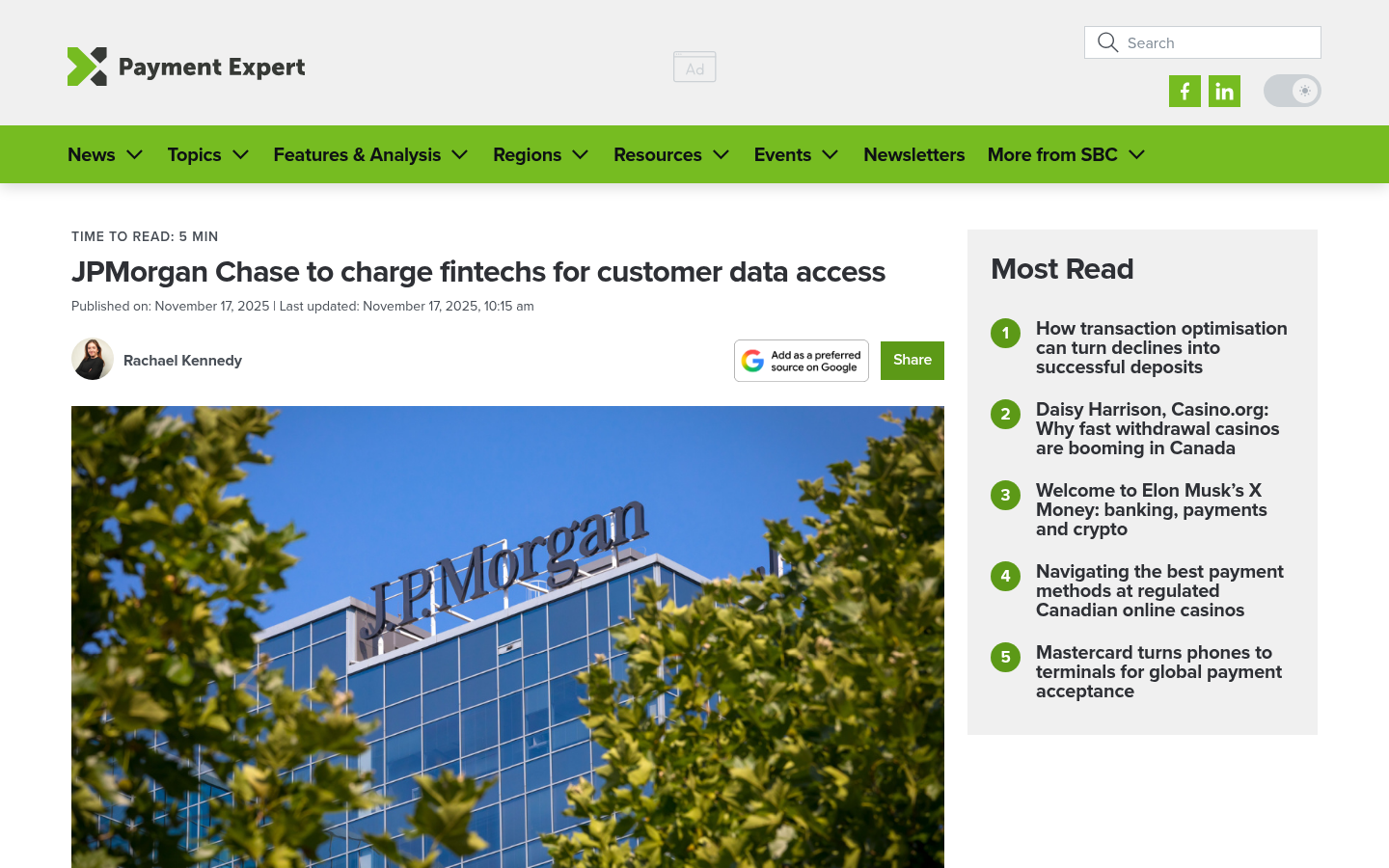
Fees are at the center of the ongoing dispute. In June 2025, JPMorgan reported 1.89 billion data requests from aggregators, of which only about 13% were linked to immediate customer actions. By September 2025, the bank entered a paid data access agreement with Plaid.
Other aggregators soon followed suit. Companies like Plaid, Yodlee, Morningstar, and Akoya are responsible for over 95% of data requests from third-party applications connected to JPMorgan accounts. The bank subsequently established pricing contracts with these firms after agreeing to lower rates than initially proposed.
- From the bank's perspective: Continuous automated data retrieval incurs costs for service and security, and thus, data users should bear these costs.
- From the fintech's viewpoint: Consumers own their data, and fees enable large banks to impose charges on competitors that attract customers.
- A potential compromise: Free access up to a specific number of requests, with fees applied beyond that limit.
Banks are also developing their own digital dollar products, including a bank stablecoin from Zelle's parent company, which gives them additional motivation to regulate access to customer data.
Anticipated Changes in the Rewrite
The specifics of the rewrite remain undisclosed. Preliminary analyses suggest that the CFPB may consider lifting the blanket ban on fees, allowing data providers to charge after a certain number of free requests, while retaining much of the original 2024 framework.
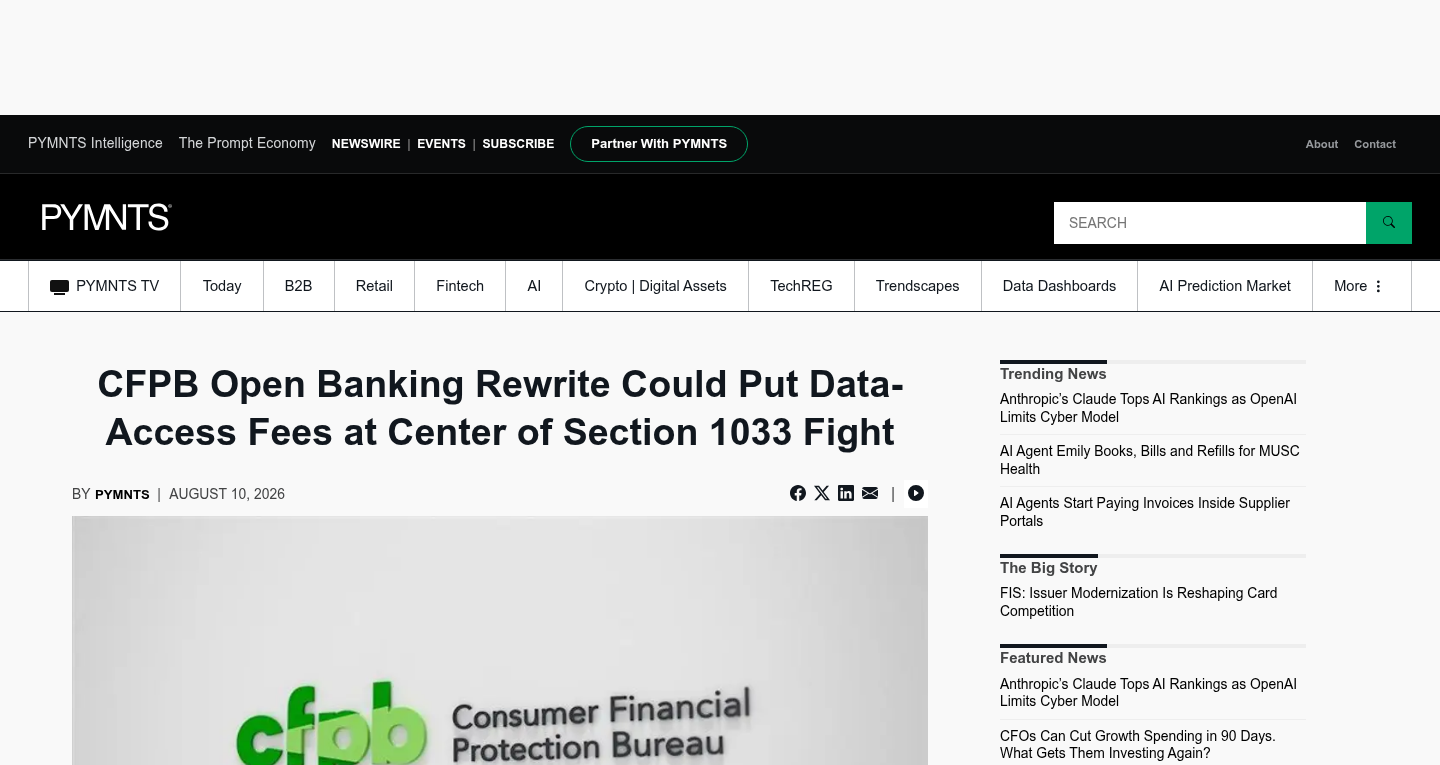
Another anticipated modification involves the criteria for who can request data. The rewrite could shift from a consent-based approach to a stricter standard for authorized representatives, requiring applications to demonstrate ongoing benefits to consumers for each data usage.
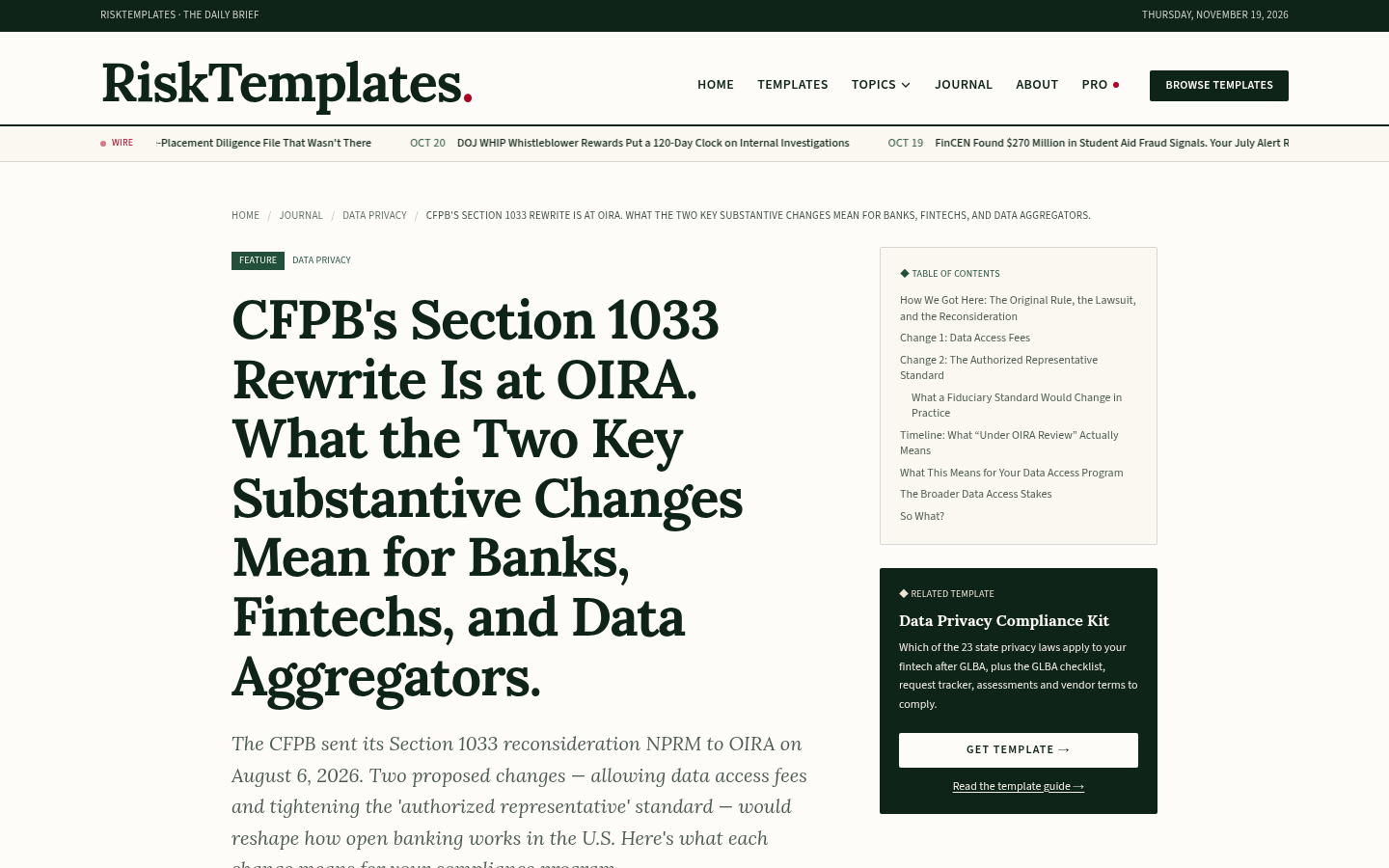
Both adjustments would likely favor banks compared to the original 2024 rule, but nothing is confirmed until the proposal is officially released.
Current Status as of November 2026
The proposal remains with the White House. After the review process concludes, the CFPB will publish it for public feedback, typically for around 60 days. Following this, they will evaluate the comments and issue a final rule along with new compliance timelines.
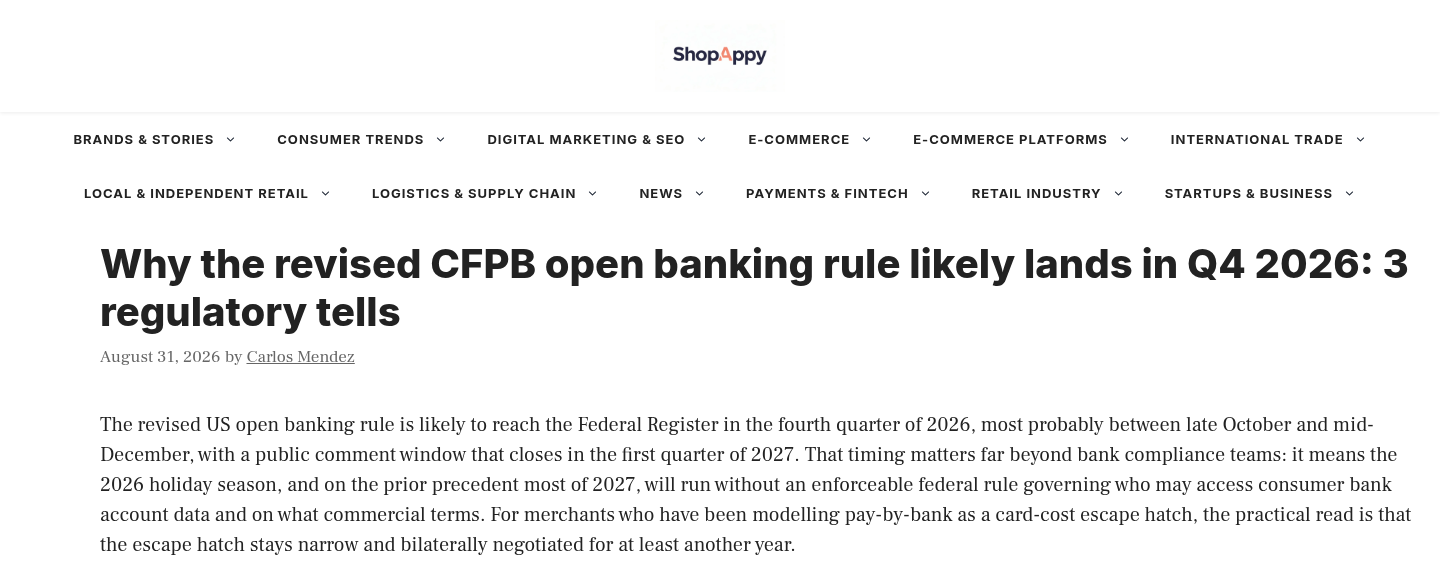
This situation pushes real obligations further into the future. Analysts expect that the comment period will close in the first quarter of 2027, with no enforceable compliance requirements before 2028, during which access will be governed by private contracts between banks and aggregators.
State-Level Initiatives
As federal regulations face delays, states are beginning to take action. In March 2026, New York lawmakers proposed Assembly Bill A10640 and Senate Bill S9483, which would mandate developer interfaces, prohibit data access fees, encompass all consumer financial products, and impose penalties of up to $10,000 per violation.
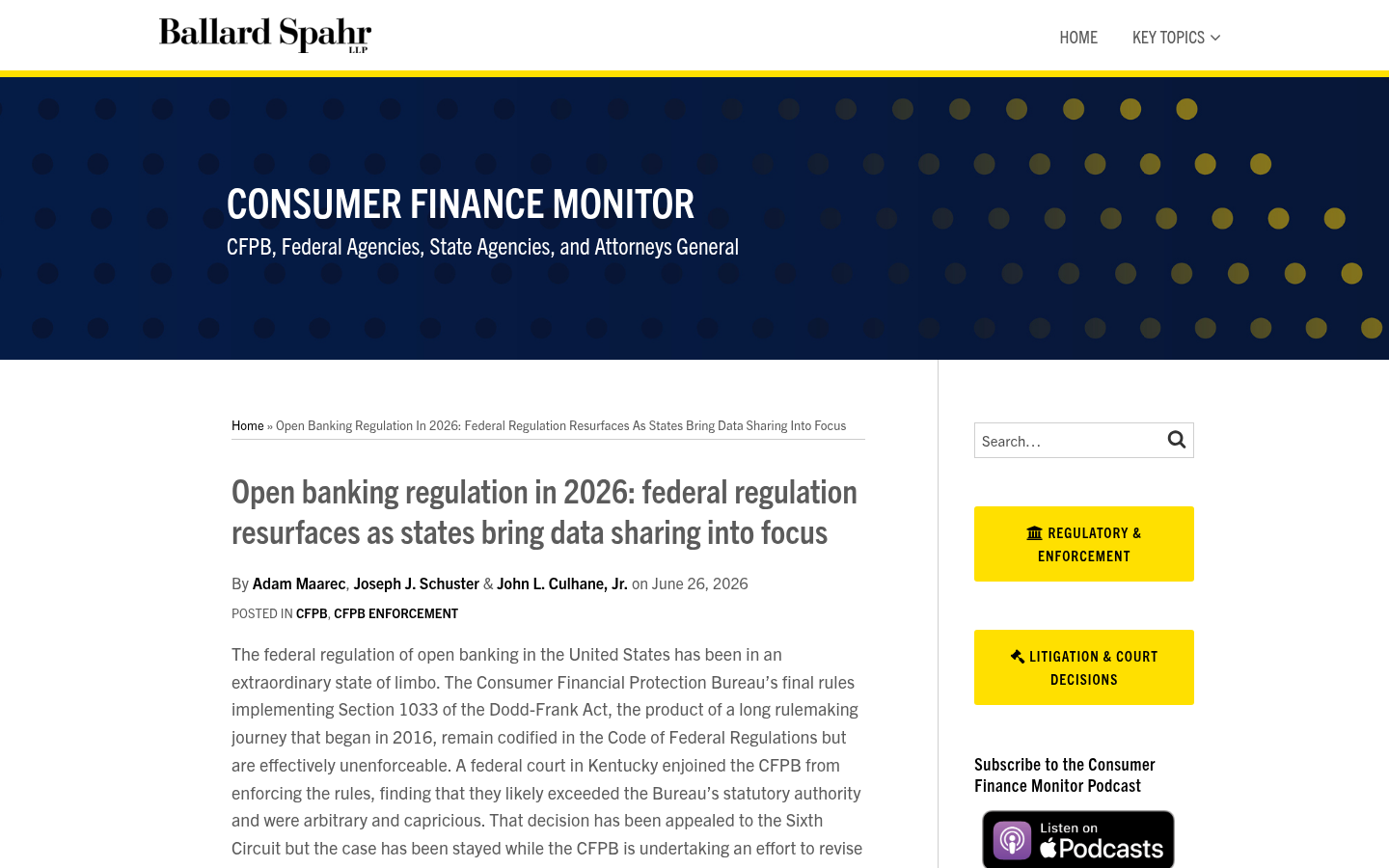
This analysis also notes that the federal injunction only applies to the CFPB, suggesting that state attorneys general may contend they can enforce the existing federal rule using their Dodd-Frank powers.
Implications for Fintechs, Banks, and Stablecoin Applications
- Fintechs: Anticipate increased data costs as more banks adopt JPMorgan's model, and prepare for aggregator price hikes in contracts starting in 2027.
- Banks: While the urgency to develop developer interfaces has lessened, it is believed that much of the 2024 framework, including these interfaces, will persist in the rewrite, making delays risky.
- Stablecoin on-ramps: Connecting a bank account for purchasing or redeeming stablecoins relies on the same data access; thus, increased fees could elevate on-ramp costs.
- Pay-by-bank: Instant account-to-account transactions through FedNow and RTP require verified bank data, so the outcome of Section 1033 will influence their affordability.
The contrast with Europe is stark. According to EU regulations, banks must provide dedicated data interfaces without charging fees per request to licensed third parties.
Points to Monitor
- OIRA review: The timeline for the White House to approve the proposal and for the CFPB to release it.
- The fee structure: Determining whether fees will be permitted, limited, or only applicable beyond a certain free threshold.
- The authorized representative criteria: Assessing how stringent the new requirements will be for applications and aggregators.
- Legal challenges: The ongoing Sixth Circuit appeal and any disputes related to the new regulation.
- State actions: Observing whether New York or other states will enact their own open banking legislation.
Conclusion
The rules governing the connections between bank accounts and fintech as well as stablecoin applications hinge on Section 1033, which will ultimately dictate whether this linkage is free, fee-based, or managed by banks.
For further insights, refer to these guides on US payment systems, bank data, and the integration of stablecoin applications into the banking framework in 2026.
- Jumper vs Bungee (2026): Fees, Chains, Safety and Stablecoin Bridging Compared
- Medicare Part B Premium 2027: $209.40 a Month, Deductible and IRMAA
- Monzo vs Revolut in 2026: Fees, Savings and Crypto
FAQs
1. What is the CFPB Section 1033 rule?
The CFPB Section 1033 rule, also known as the Personal Financial Data Rights rule, was finalized in October 2024 under Section 1033 of the Dodd-Frank Act. It mandates that banks and card issuers provide consumers and their authorized applications with free, secure access to account data via developer interfaces.
2. Is the Section 1033 open banking rule currently in effect?
Practically, the Section 1033 open banking rule is not in effect. A federal court in Kentucky prohibited the CFPB from enforcing it in October 2025 while the agency reconsiders it. Consequently, the compliance deadline of April 2026 passed without any enforcement.
3. Are banks allowed to impose fees for open banking data?
At present, banks can charge fees for open banking data through private agreements, as the 2024 fee prohibition is not enforced. In 2025, JPMorgan established paid access arrangements with Plaid and other aggregators, and the upcoming rewrite is expected to permit certain fees.
4. When is the new Section 1033 rule anticipated to be finalized?
It is unlikely that the new Section 1033 rule will be finalized before 2027. The proposal has been under review by the White House since August 2026, followed by a public comment period, and analysts predict no enforceable compliance dates before 2028.
5. How does Section 1033 impact stablecoin applications?
Section 1033 significantly influences stablecoin applications, as many on-ramps and wallets link a user's bank account through aggregators like Plaid for verification and funding of purchases. If banks impose higher charges for data access, these costs could elevate the expense of transitioning between traditional dollars and stablecoins.