
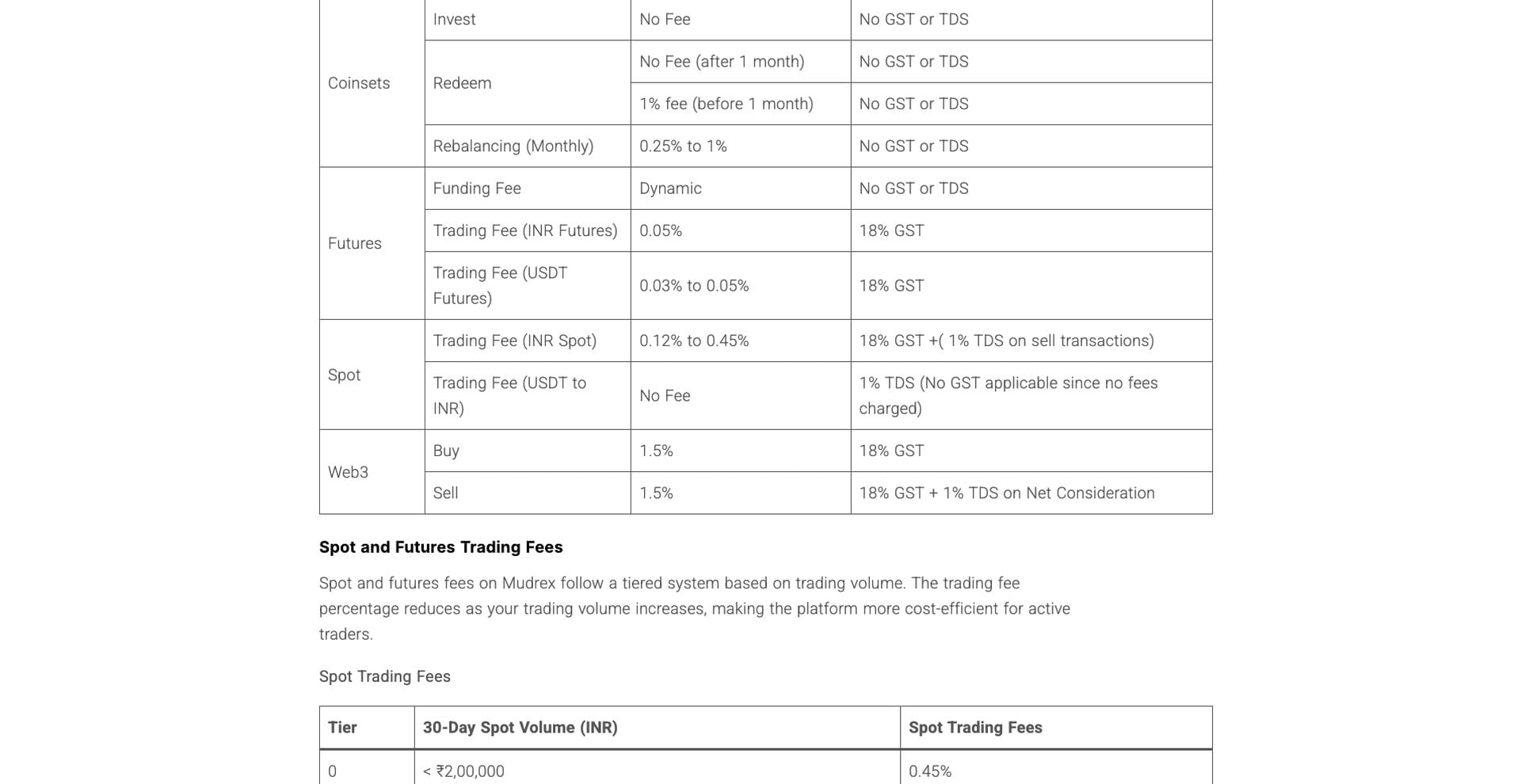
For converting USDT to INR, the process involves transferring your USDT to an Indian exchange that is registered with the Financial Intelligence Unit (FIU-IND), selling it for Indian rupees, and withdrawing the funds to a bank account under your name. On Mudrex, the conversion of USDT to INR incurs no trading fee, but there is a 1% Tax Deducted at Source (TDS).
Other options include peer-to-peer (P2P) trading, global exchanges that support rupee transactions, over-the-counter (OTC) desks, and invoice payout services. Each of these methods has varying costs, limits, and associated risks, particularly regarding potential bank account freezes.
This guide assesses five methods to cash out USDT in India, detailing published fees, tax regulations, and safety measures to consider before making a sale.
The least expensive option is not necessarily the one with the most favorable exchange rate. A P2P trade that offers a slightly higher rupee value for each USDT can end up being more costly if it results in your bank account being frozen.
Key Takeaways
- Utilize an FIU-registered exchange and ensure your bank account is in your name.
- The sale of USDT triggers a 1% TDS above certain annual thresholds.
- Any profit realized from the sale is subject to a flat 30% tax.
- Mudrex does not charge any fees for USDT to INR conversions.
- P2P sales present a significant risk of bank account freezes.
Current Value of USDT in Rupees
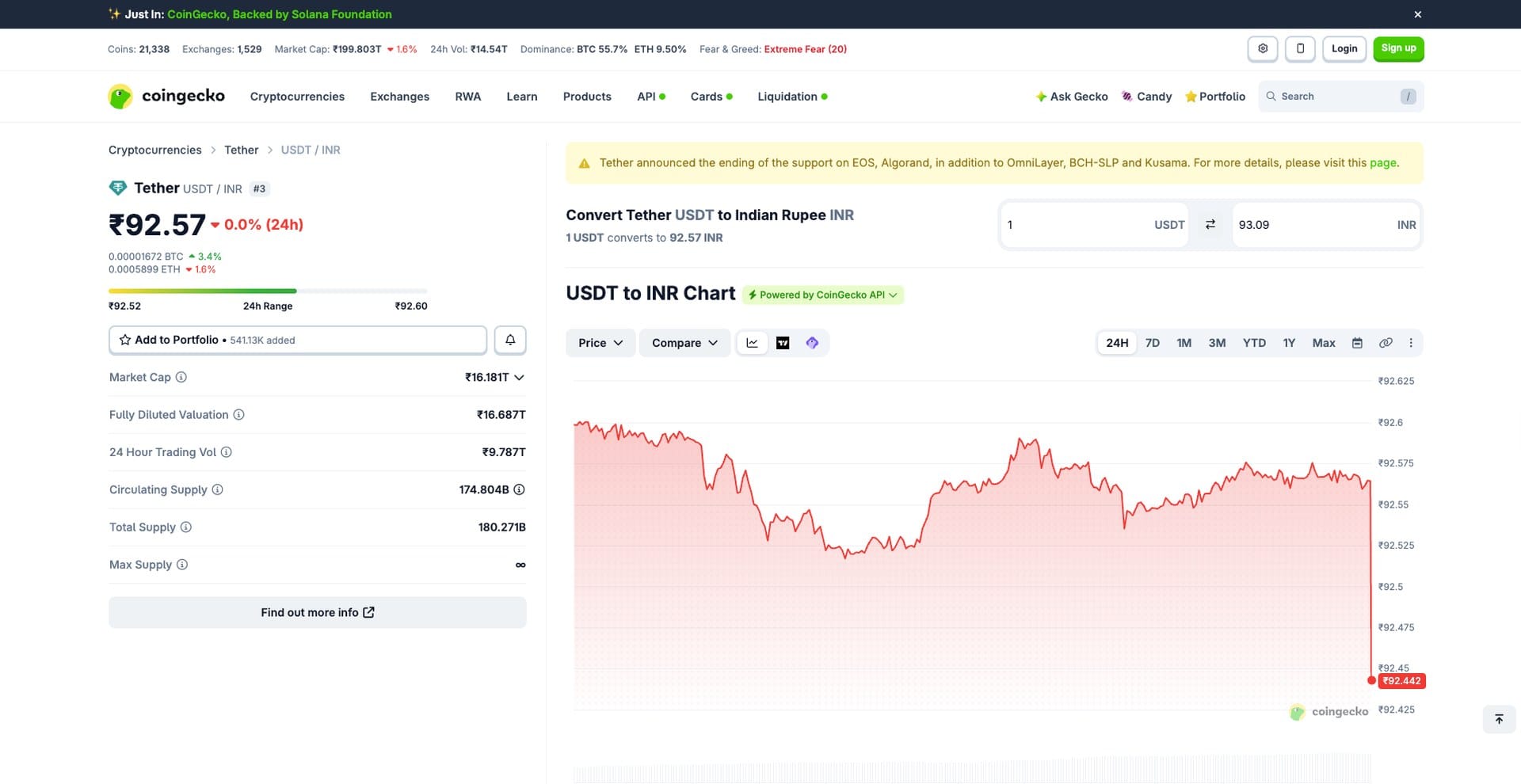
As of November 21, 2026, CoinGecko reported that 1 USDT was valued at approximately ₹92.57, exhibiting a narrow daily price range. This figure serves as a global reference price, not necessarily reflecting the rates offered by every Indian exchange.
Indian exchanges manage their own USDT/INR order books, which means that the price you receive can be higher or lower than the global rate. Always evaluate the final amount in rupees after accounting for fees and TDS, rather than focusing solely on the headline price.
For a transaction involving 1,000 USDT at ₹92.57, the gross value reaches approximately ₹92,570, from which the following deductions will be made.
It is advisable to compare rates from two or three exchanges on the same day since USDT/INR prices can vary significantly.
Option 1: Selling on an FIU-Registered Indian Exchange
This method is the most straightforward and secure for the majority of individuals. A parliamentary report published in March 2026 identified 54 crypto service providers registered with FIU-IND, including CoinDCX, CoinSwitch, and Mudrex.
The process remains consistent across exchanges: complete Know Your Customer (KYC) verification, link your bank account in your name, deposit USDT via a supported network, sell for INR, and withdraw the funds. Mudrex imposes no fees for USDT to INR conversions, deducts 1% TDS, and charges nothing for INR withdrawals.
Many individuals tend to overpay when sending USDT to exchanges. Our guide on the least expensive USDT transfers via Tron provides insights on how to minimize that network cost.
Important to note: verify the deposit network on the exchange before initiating a transfer, as using an incorrect network may lead to delays or loss of your USDT.
Fee Structures on Major Indian Exchanges
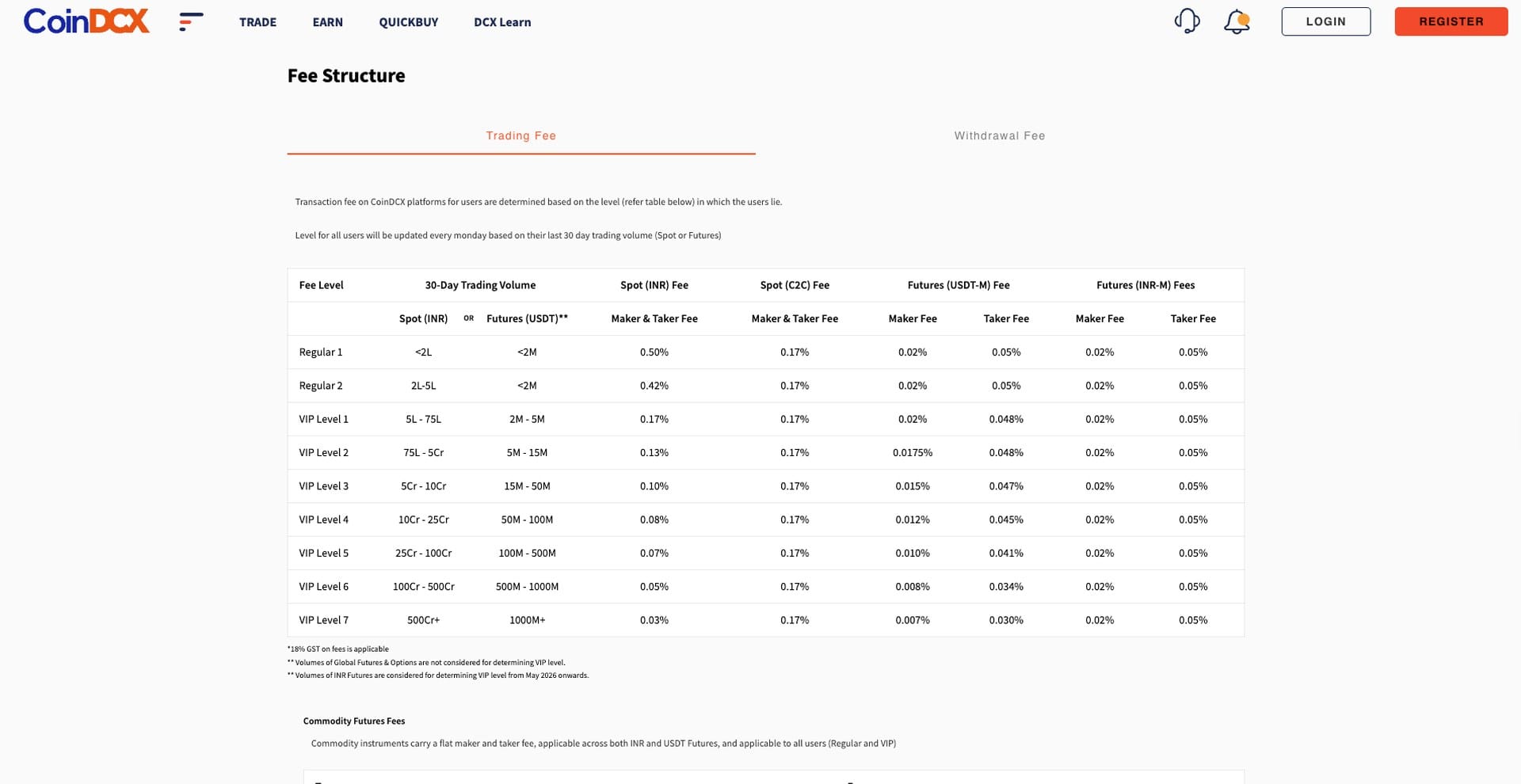
CoinDCX imposes a 0.50% spot trading fee on INR markets for users whose monthly trading volume is less than ₹2 lakh, which decreases to 0.42% for volumes up to ₹5 lakh, and even lower for VIP-tier users. An 18% Goods and Services Tax (GST) is applied in addition to this fee.
| Cost on 1,000 USDT at ₹92.57 | Mudrex convert | CoinDCX spot, under ₹2 lakh |
|---|---|---|
| Trading fee | ₹0 | Approximately ₹463 (0.50%) |
| GST on fee | ₹0 | Approximately ₹83 (18% of fee) |
| 1% TDS withheld | About ₹926 | About ₹920 |
| INR withdrawal | Free | Refer to app |
TDS is not classified as a fee; it represents tax paid in advance, appears in your Form 26AS, and counts towards your overall tax obligations.
A key point to remember: exchanges typically compute TDS based on the amount after fees, which may result in minor discrepancies from the above estimates.
Options 2 to 5: Additional Methods for Cashing Out
- Global exchanges that support INR: Binance and Coinbase are both registered with FIU-IND, and in May 2026, Coinbase reinstated INR deposits and withdrawals for Indian customers.
- P2P trading: this involves selling USDT directly to a buyer who pays via UPI or bank transfer. Rates may be more favorable, but the risk of bank issues is significantly higher compared to other methods.
- OTC desks: these service large transactions at a single quoted price, preventing substantial orders from affecting the order book.
- Invoice payout services: freelancers receiving payment in USDT can utilize platforms like Xflow, which claim to convert offshore and pay INR using an e-FIRA for the invoice.
These five methods are available in other markets as well. Our guide on converting USDT to naira offers a comparison of these methods for Nigeria.
A crucial reminder: regardless of the route taken, a 30% tax and 1% TDS will still apply to the sale.
The Risks of P2P Banking Freezes
The main concern with P2P transactions lies in the source of the buyer's funds. If a scammer compensates you using money obtained from a fraud victim, authorities may freeze all accounts that handled that money, including yours.
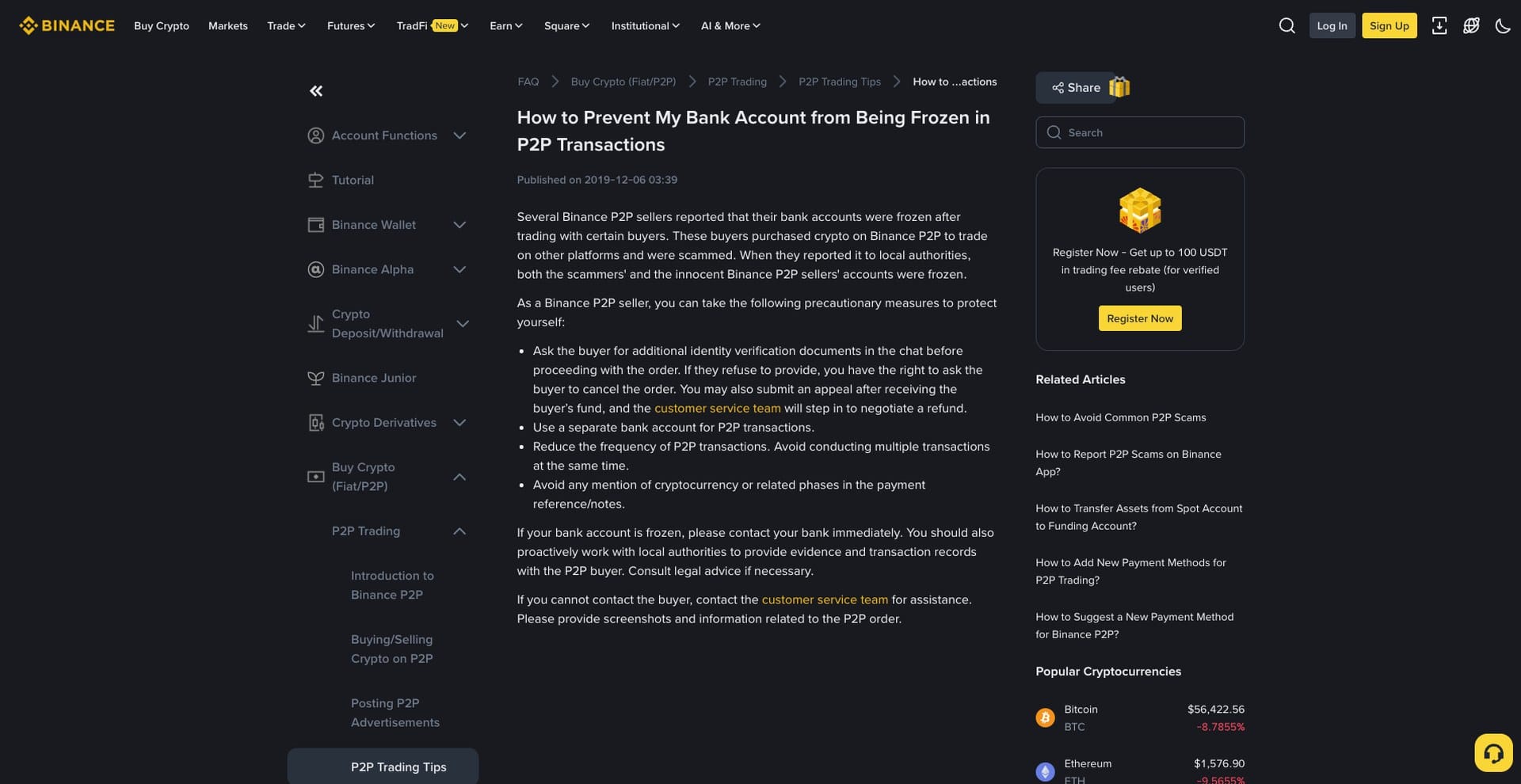
Binance's support page outlines experiences of sellers whose bank accounts were frozen after transacting with buyers linked to fraudulent activities. It recommends using a separate bank account, limiting the frequency of trades, and avoiding the mention of cryptocurrency in payment notes.
Reports from merchants in India have indicated that bank liens can occur weeks after receiving UPI payments for USDT. The process of unfreezing an account can involve lengthy procedures with police and banks.
A key point to remember: if you choose P2P trading, only accept payments from bank accounts that are verified under the buyer's name, never from third parties.
Taxation of USDT Sales in India
In India, the taxation of crypto, including USDT, categorizes it as a Virtual Digital Asset. The regulations from Budget 2026 remain unchanged, with the Income-tax Act of 2025 continuing these rules from April 1, 2026.
- 30% tax on profits: any gains are taxed at a flat rate of 30% plus any applicable cess, with only the purchase cost being deductible.
- No loss set-off: losses incurred from crypto cannot offset other income or be carried over.
- 1% TDS: deducted on sales once yearly transactions exceed ₹50,000 for specified individuals or ₹10,000 for others.
- Reporting: sales must be recorded in Schedule VDA of your income tax return, matched against TDS in Form 26AS.
If you acquired USDT at ₹88 and sold it at ₹92.57, the gain of around ₹4.57 per USDT would be taxed at 30%. Tools discussed in our review of crypto tax software can assist you in tracking this.
It is important to note: USDT received as payment for services may be treated differently, so freelancers should consult a chartered accountant for clarity.
Step-by-Step Guide: Transferring USDT to Your Bank Account
- Select an FIU-registered exchange and complete KYC verification using your PAN and Aadhaar.
- Link a bank account that is in your name.
- Copy the USDT deposit address and verify the network, such as TRC20.
- Send a small test amount, followed by the remainder once the initial transfer is confirmed.
- Sell USDT for INR using either the instant conversion option or the order book.
- Withdraw INR to your bank via IMPS or NEFT, maintaining transaction records.
A crucial reminder: download the exchange's TDS statement annually, as you will require it for your tax submissions.
How This Guide Was Compiled
The fees were sourced from the published fee pages of CoinDCX and Mudrex, while the USDT price was retrieved from CoinGecko on November 21, 2026. Tax regulations were referenced from the Income Tax Department and discussions surrounding Budget 2026. No USDT was sold in the preparation of this guide.
Be aware that fees and rates frequently change. This information is intended for general guidance and should not be construed as tax advice.
It is essential to check the exchange's live fee and TDS breakdown on the confirmation screen prior to executing a sale.
Risks and Limitations
- P2P transactions may lead to bank account freezes or liens.
- USDT/INR prices in India may not align with global rates.
- Withdrawals from exchanges may be delayed due to compliance checks.
- Losses from crypto cannot offset other income in India.
- Unregistered offshore platforms may be prohibited in India.
FAQs
1. Is it legal to convert USDT to INR in India?
Yes, the buying and selling of cryptocurrency is legal in India and classified as a Virtual Digital Asset. It is essential to utilize an exchange registered with FIU-IND and complete KYC procedures.
2. How much tax do I incur when selling USDT?
All gains are taxed at a flat 30% plus any cess, with 1% TDS deducted on transactions exceeding specified annual thresholds. The TDS is accounted for in your overall tax liability.
3. Which exchange has the lowest fees for converting USDT to INR?
Mudrex does not charge any fees for converting USDT to INR, only deducting 1% TDS. Conversely, CoinDCX applies a 0.50% fee plus GST for users trading under ₹2 lakh monthly.
4. Is using Binance P2P safe for selling USDT in India?
It is functional, but sellers have reported instances of bank account freezes when buyers paid using funds linked to scams. Binance recommends maintaining a separate bank account and limiting P2P transactions.
5. How long does it take to receive INR in my bank account?
Withdrawals via IMPS are generally processed quickly once the sale is finalized, although compliance checks by exchanges and bank reviews may introduce delays.