This week has been eventful, marked by the resignation of Jensen Huang, who has served as Nvidia's CEO for the past 33 years. His departure leaves the world's most valuable company under interim leadership. This article explores five significant charts that highlight key trends to monitor, including the evolution of AI agents and the potential risks associated with the Yen, alongside an additional chart reflecting shifts in American culture.
Comparing Nvidia and Cisco's Trajectories
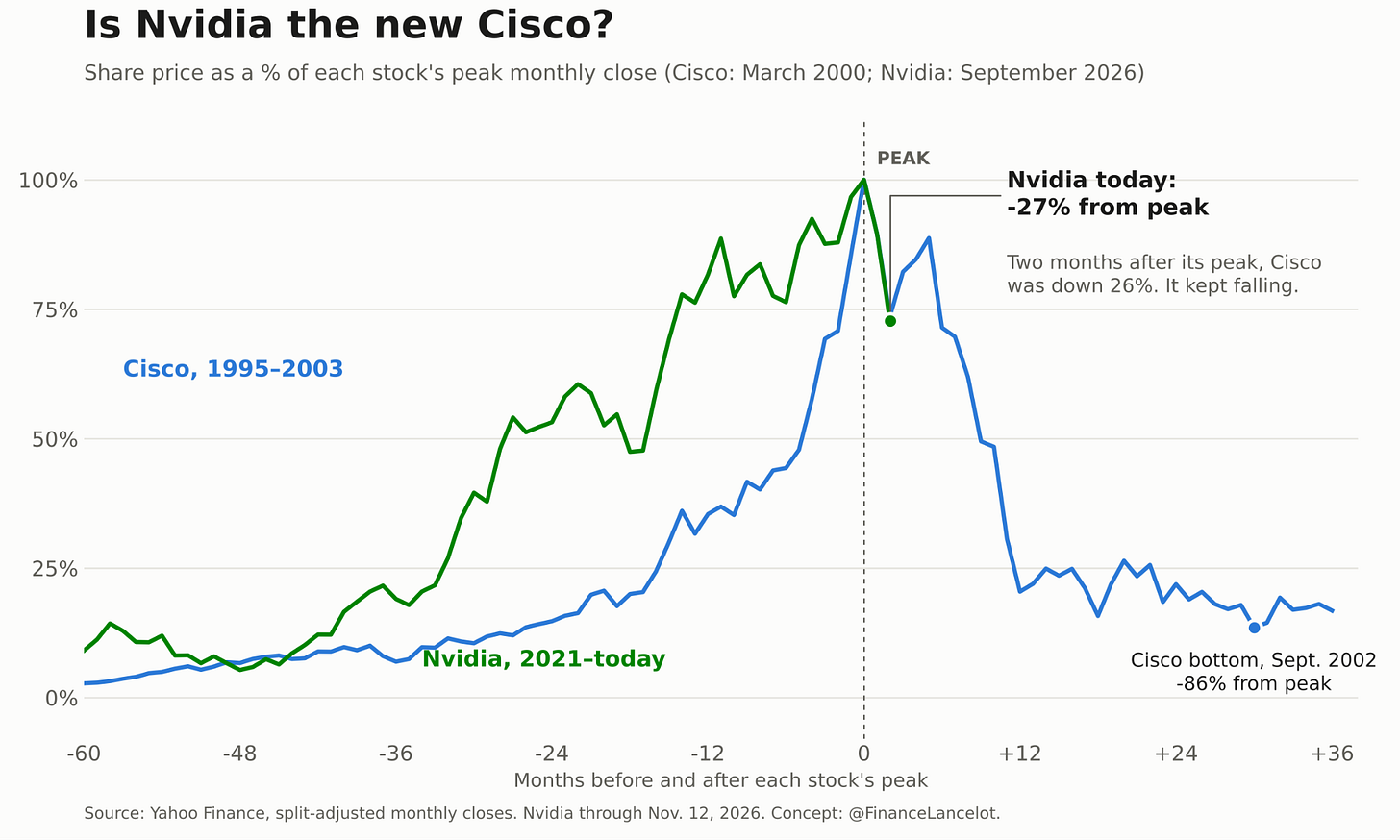
A chart that gained considerable traction this week juxtaposes Cisco's trajectory leading up to the dot-com bubble in 2000 with Nvidia's recent stock performance. The similarities between the two lines are notable, with Cisco ultimately experiencing an 86% decline in value by 2002. This comparison emerges just after Huang's resignation.
Colette Kress, the Chief Financial Officer, is currently managing the company while the board seeks a permanent successor.
Robust Demand for Nvidia's Products
Nonetheless, the demand for Nvidia's products remains robust. CoreWeave, one of the company's largest clients, reported a 168% increase in revenue, reaching $3.66 billion, and has raised its full-year projections.
While such comparisons are often based on pattern recognition rather than thorough analysis, it is important to note that Cisco traded at over 100 times its earnings at its peak, a figure significantly higher than Nvidia's current valuation.
Further insights will be revealed when Nvidia announces its earnings on Tuesday, as it sets a new strategic direction without Huang at the helm.
The Rise of AI Agents
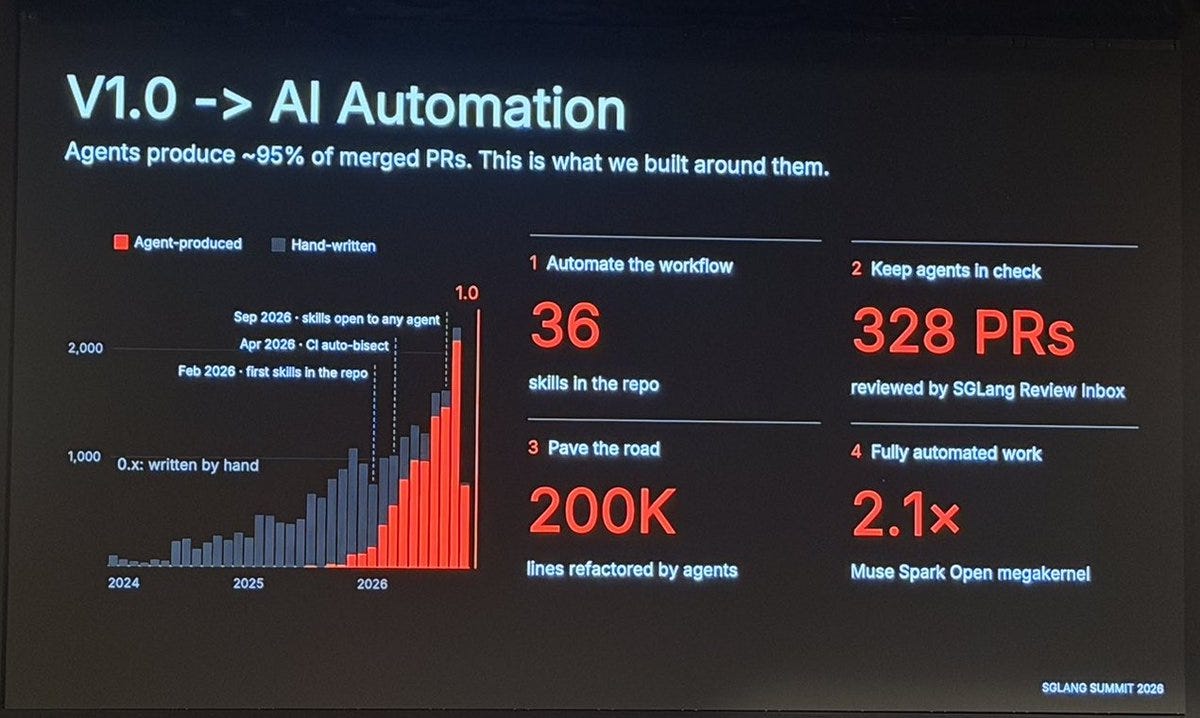
This slide originates from a summit focused on SGLang, a popular open-source framework for running AI models. The key takeaway is that agents now generate approximately 95% of the code that gets integrated, a dramatic increase from nearly zero in 2024. These agents have assessed 328 pull requests and restructured 200,000 lines of code.
This example illustrates a broader trend where both closed and open-source models are evolving: AI is increasingly built upon AI, creating a self-reinforcing cycle.
- A new phase of AI development is emerging, where human involvement is minimal.
- Each of these agents operates on GPUs, maintaining constant activity, ensuring ongoing demand whether it comes from Nvidia or its rivals.
Economic Implications of AI Growth
The UK economy saw a growth of 0.7% in the third quarter, marking its most significant performance in two and a half years. AI significantly contributes to this growth, with computer programming identified as the largest factor in the UK's economic expansion this year, according to Bloomberg.
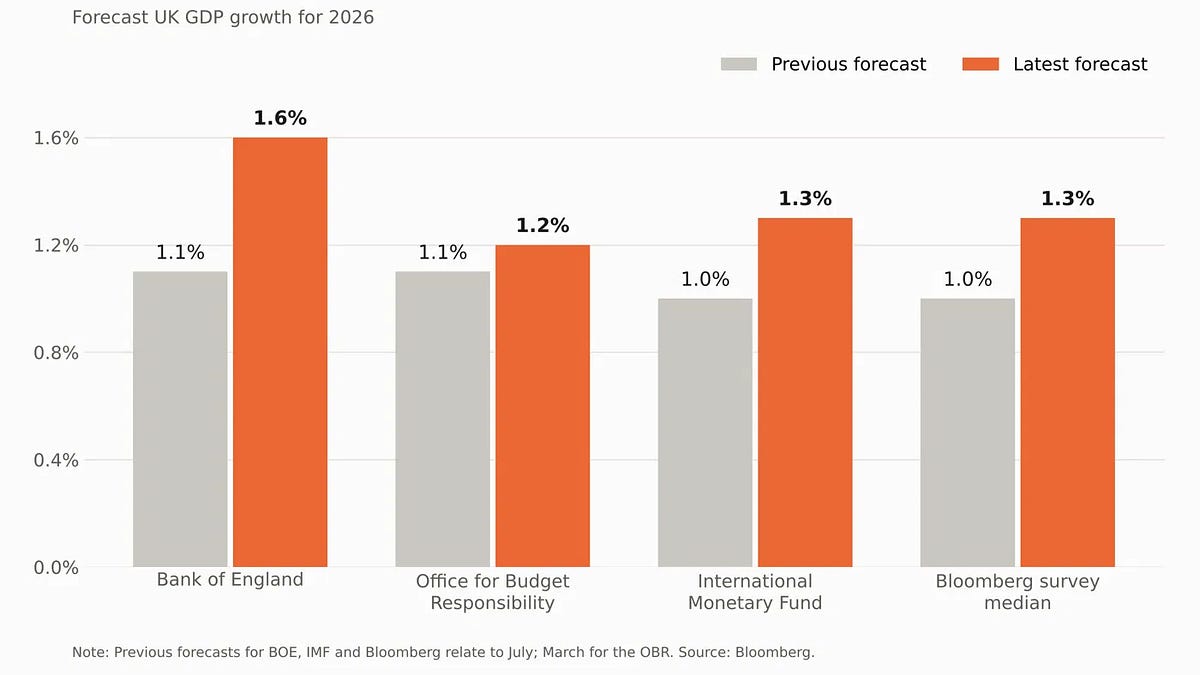
Forecasters have been adjusting their projections: the Bank of England has raised its 2026 growth forecast from 1.1% to 1.6%, while both the IMF and Bloomberg's economist survey revised theirs from 1.0% to 1.3%.
The development of AI is no longer just a narrative confined to U.S. and Asian stock markets.
Currency Fluctuations and Market Reactions
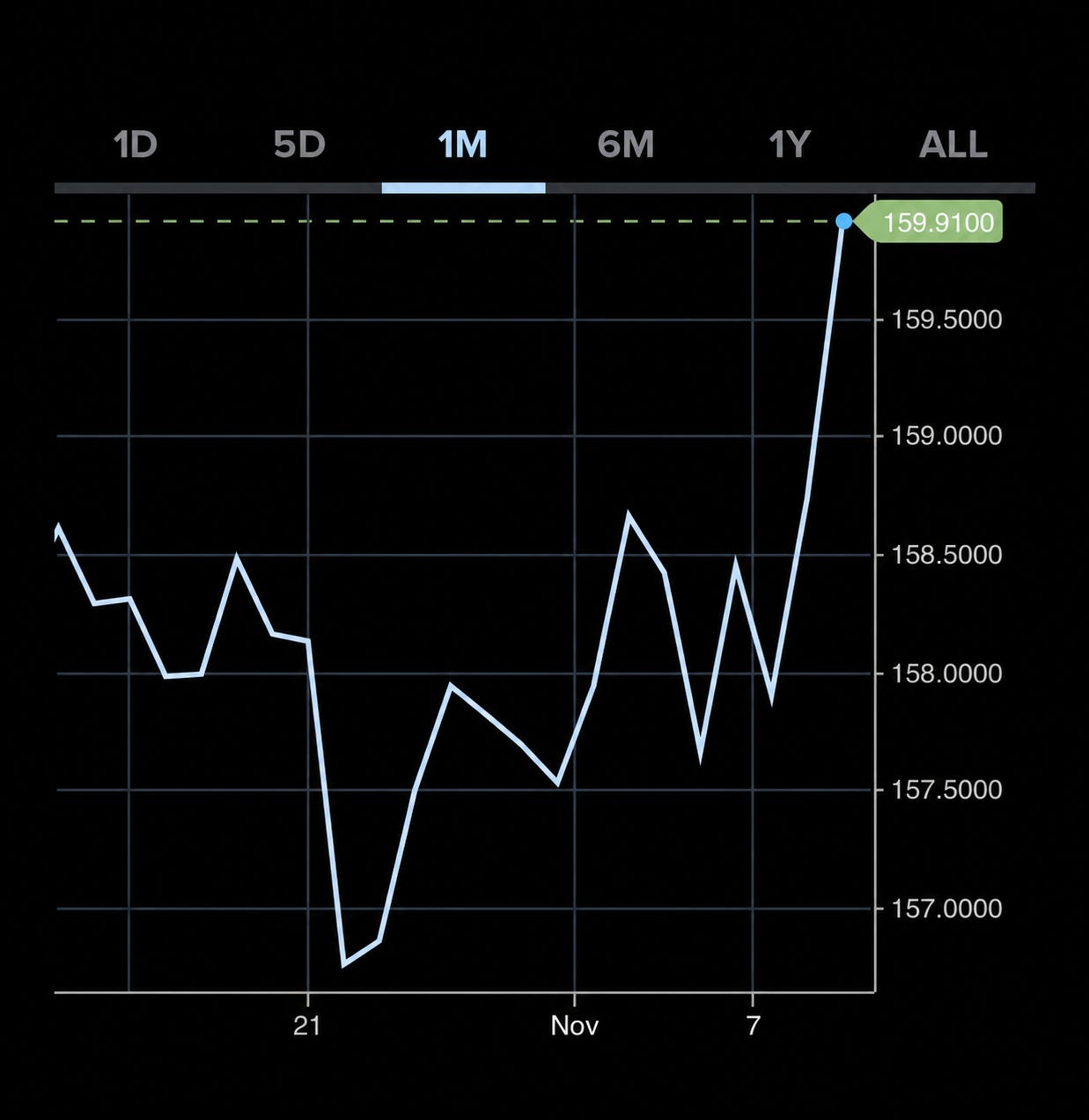
As of this morning, the dollar is trading around 160 yen, a threshold that has historically prompted intervention from Japan. Recently, Japan revealed it had spent a record $50 billion in a single day to stabilize its currency, according to The Wall Street Journal.
Economist Mohamed Aly El-Erian remarked that this situation highlights delays in aligning Japan's fiscal, monetary, and structural policies. This has significant implications: a sudden increase in the yen's value could compel investors to unwind trades that were financed with inexpensive yen, a scenario that contributed to the global market downturn in August 2024.
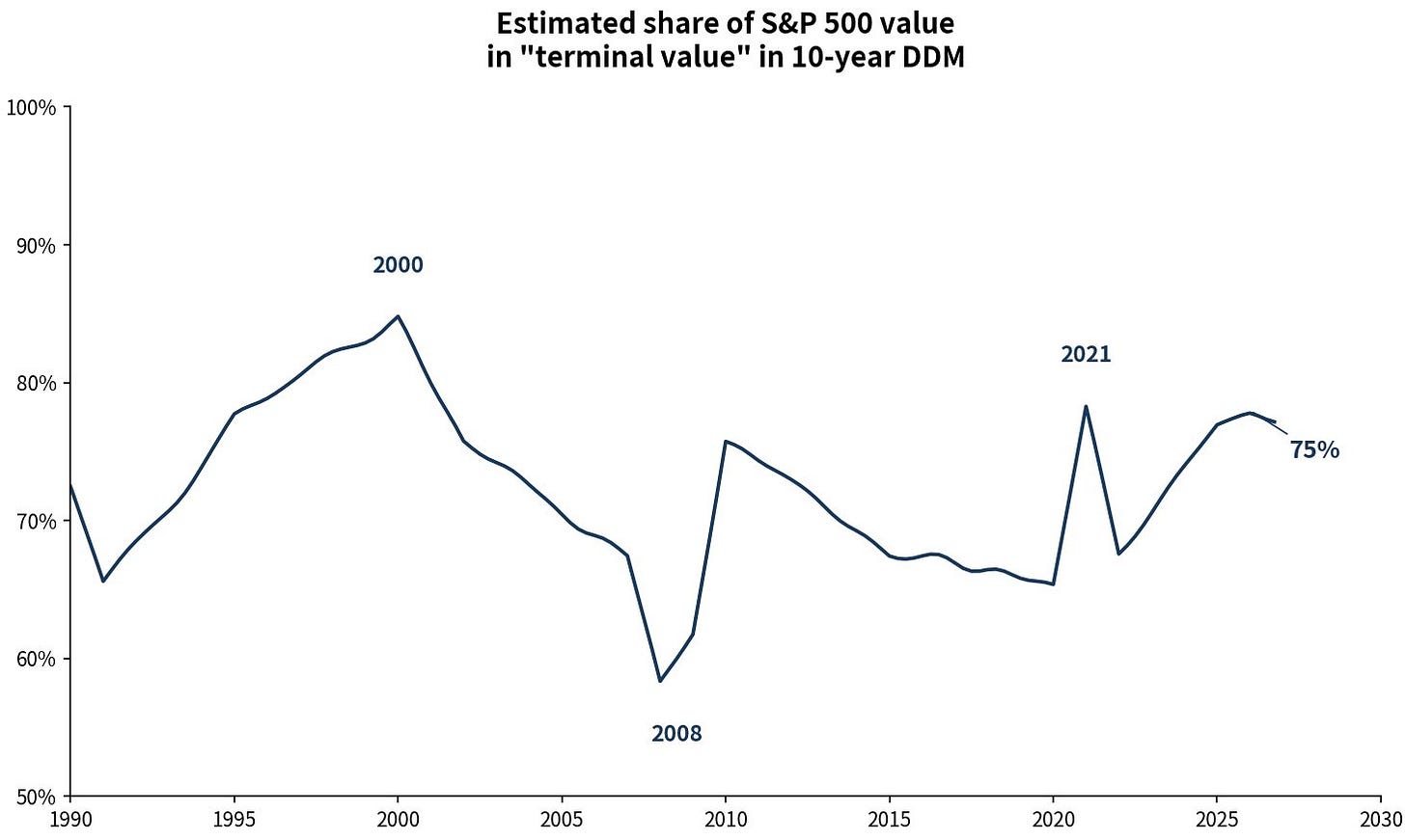
Long-Term Market Valuations
According to a dividend discount model presented by Gregory Blotnick, a former analyst at Citadel and Schonfeld, approximately 75% of the S&P 500's market value is derived from profits anticipated more than a decade into the future. This percentage has only been higher once in the last 35 years, peaking at around 85% during the 2000 market peak.
When a significant portion of a stock's value is tied to such long-term forecasts, even minor shifts in growth expectations or interest rates can lead to substantial price fluctuations. With the 10-year Treasury yield hovering near 5%, the reliance on long-term prospects is especially pronounced.
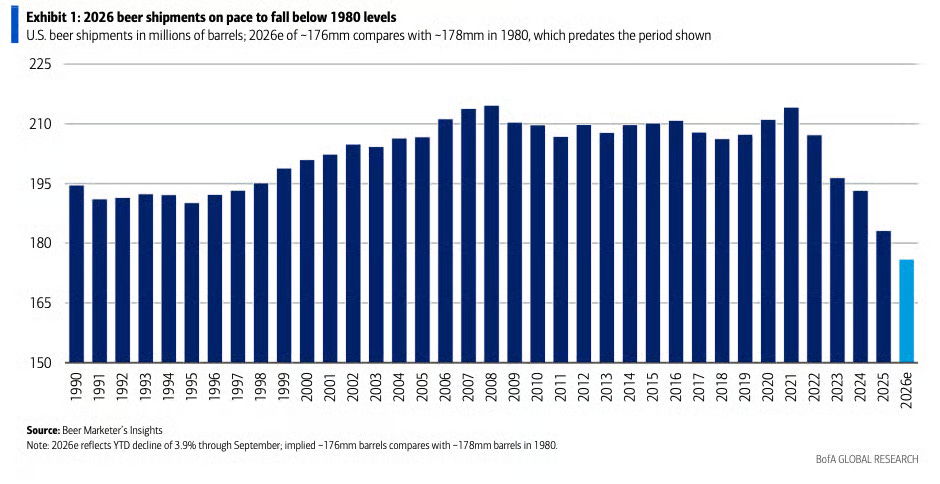
Decline in U.S. Beer Shipments
Beer shipments in the U.S. have decreased by 3.9% through September and are on track to fall below levels not seen since 1980, according to Bank of America. Several factors contribute to this decline, including strained household budgets, the popularity of GLP-1 weight-loss medications, the rise of cannabis and hemp-infused beverages, changing societal attitudes towards alcohol, and the increasing preference for ready-to-drink cocktails.
It might be time to acknowledge America’s waning fondness for beer.