Squid operates as a cross-chain swap and bridge router, allowing users to convert tokens from one blockchain to another effortlessly, eliminating the need for manual bridging and swapping.
This platform also acts as essential infrastructure for a variety of wallets. Over 1,000 applications, including MetaMask, Ledger, and Brave, leverage Squid, enabling numerous users to access its services without directly navigating to its website.
This review delves into how Squid manages trade routing, the costs involved, the functionality of Squid Intents, its security history, and its efficiency for stablecoin transactions.
Squid asserts that swaps involving stablecoins incur no fees from the platform. The actual costs for transferring USDC and USDT across different chains consist solely of gas fees and the selected route.
Key Takeaways
- Squid claims there are no fees for stablecoin swaps.
- A variable convenience fee applies to other front-end routes.
- Squid Intents provide refunds for unsuccessful swaps on the originating chain.
- Squid has undergone nine audits and states that its contracts do not hold liquidity.
- The exploit of the SquidRouterModule in May 2026 was attributed to a third-party contract.
Understanding Squid
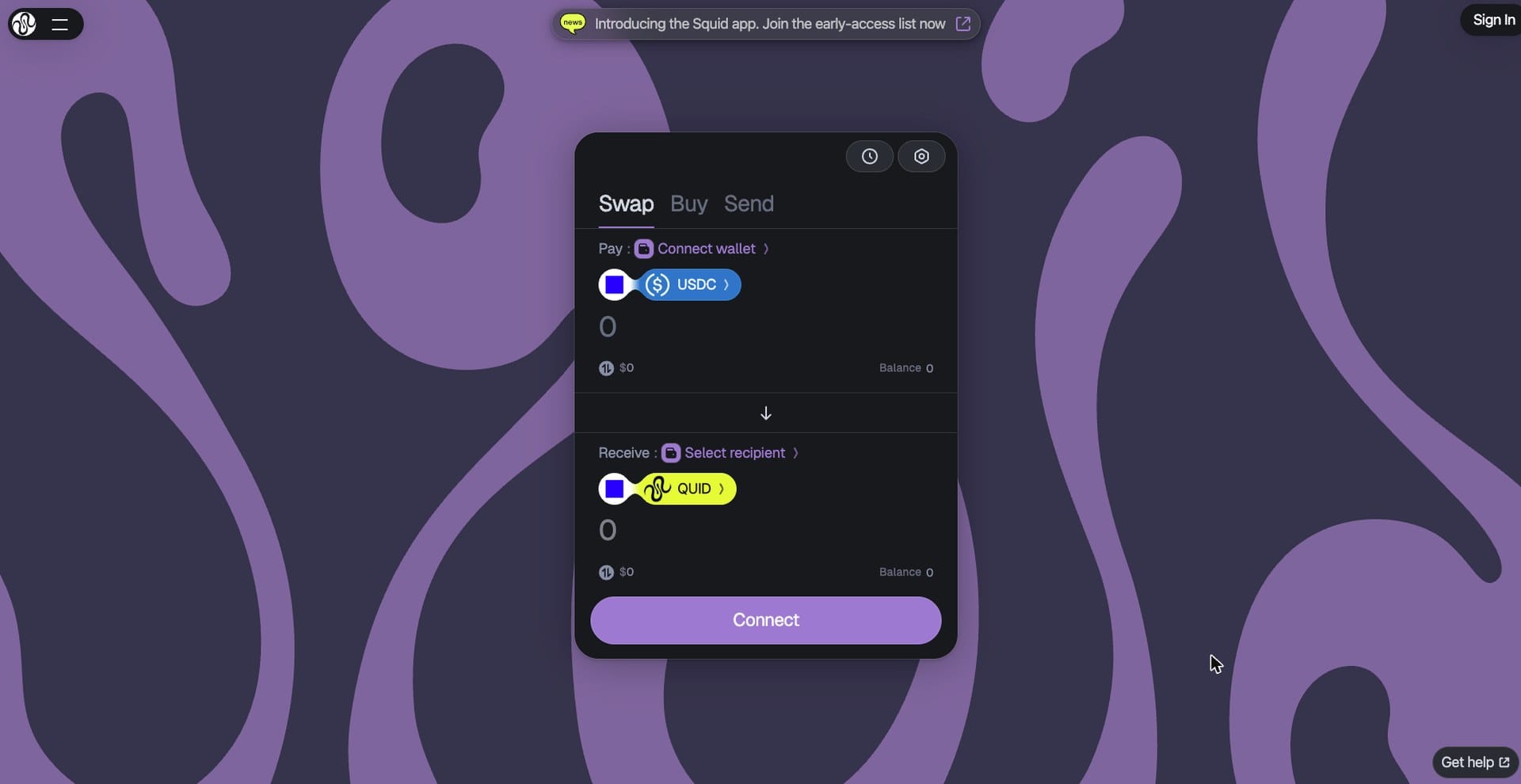
Initially part of the Axelar ecosystem in 2022, Squid has now positioned itself as an independent cross-chain infrastructure. The application available at app.squidrouter.com features three primary tabs: Swap, Buy, and Send.
According to Squid, it has facilitated transactions exceeding $6 billion for more than 1 million users across over 100 chains and 20,000 tokens. The platform claims to source liquidity from more than 130 decentralized exchanges (DEXs) and off-chain market makers.
For comparisons with other routing options, consult our overview of top cross-chain aggregators, where the degree of multi-chain support is a vital consideration.
It is crucial to highlight that Squid operates on a non-custodial basis, meaning users' wallets sign transactions, and Squid never retains user funds.
Routing Trades with Squid
Users select a source token and blockchain, specify a destination token and blockchain, and then confirm the transaction. Squid's engine identifies the optimal path, which may involve DEX swaps, bridging, messaging protocols, and market maker orders.
Squid claims it routes transactions through various protocols such as Axelar, Circle's CCTP, IBC, Chainflip, and LayerZero, rather than relying on a single bridge. This diverse strategy enables connections between EVM chains, Cosmos chains, as well as networks like XRPL, Stellar, Hedera, and Solana.
The routing decision affects the version of the token users receive. For instance, CCTP facilitates the movement of native USDC, while some Axelar routes may utilize wrapped tokens like axlUSDC.
Before confirming a stablecoin transfer, users should ensure that the token on the recipient end is accepted by their target application.
Understanding Costs
As per Squid's FAQ, fees are based on the specific route and asset type, with stablecoin swaps incurring no fees from Squid. The total cost, inclusive of any applicable protocol fees and gas expenses, will be displayed prior to confirmation.
| Cost | What Squid states |
|---|---|
| Squid fee on stablecoin swaps | Zero |
| Convenience fee on other routes | Variable, higher for volatile tokens and hard-to-access chains |
| Source-chain gas | Paid in the native token, covering execution at the destination |
| CCTP bridge step | No bridge fee |
| Integrator fee | Set by the app, shared with Squid |
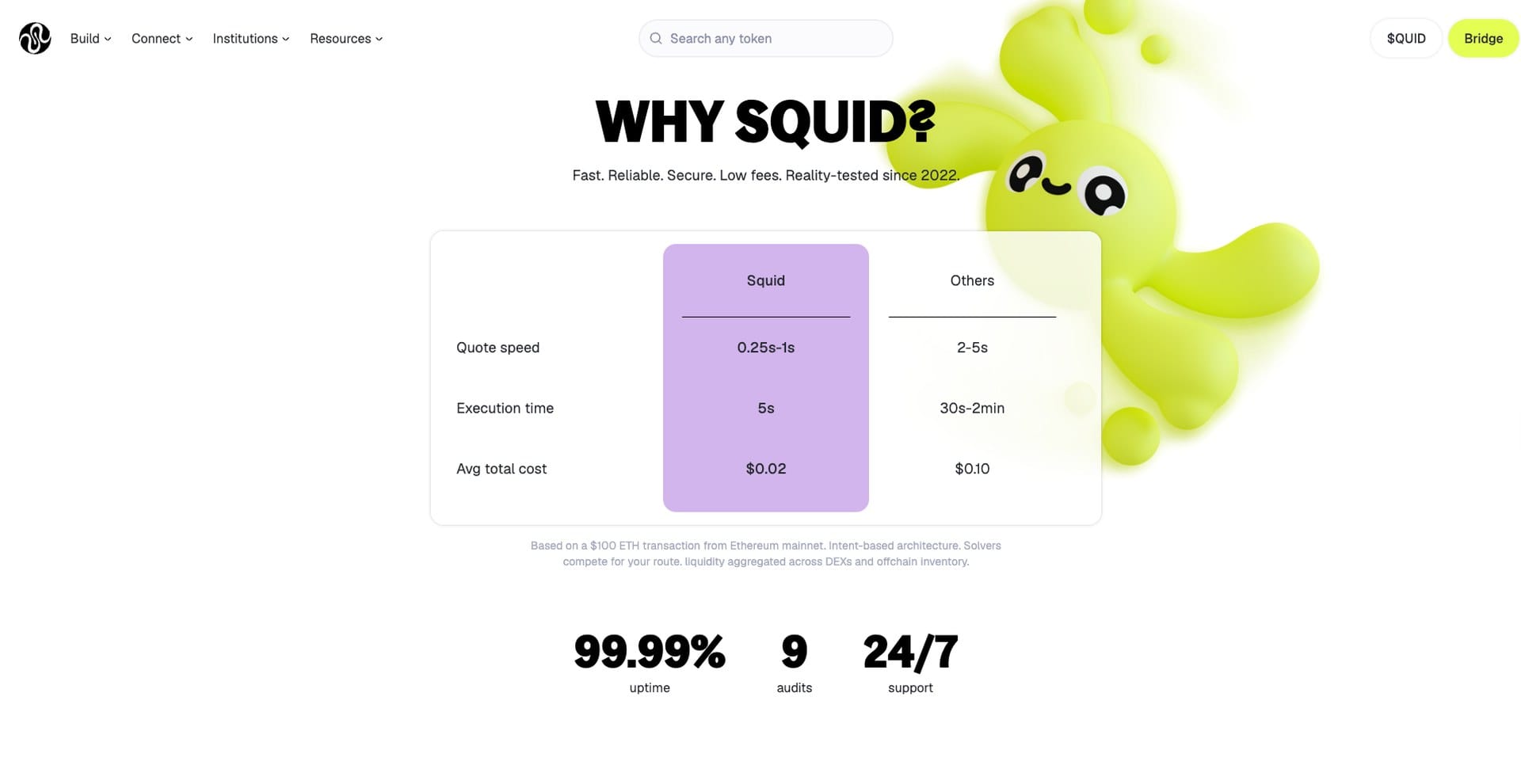
Squid does not disclose its convenience fee rates. Its website mentions an average total fee of $0.02 for a $100 ETH transfer from Ethereum, compared to $0.10 for other options, but this serves as a company benchmark.
It is notable that wallets integrating Squid may impose their own fees, which could lead to higher costs for the same route within different applications.
Functionality of Squid Intents
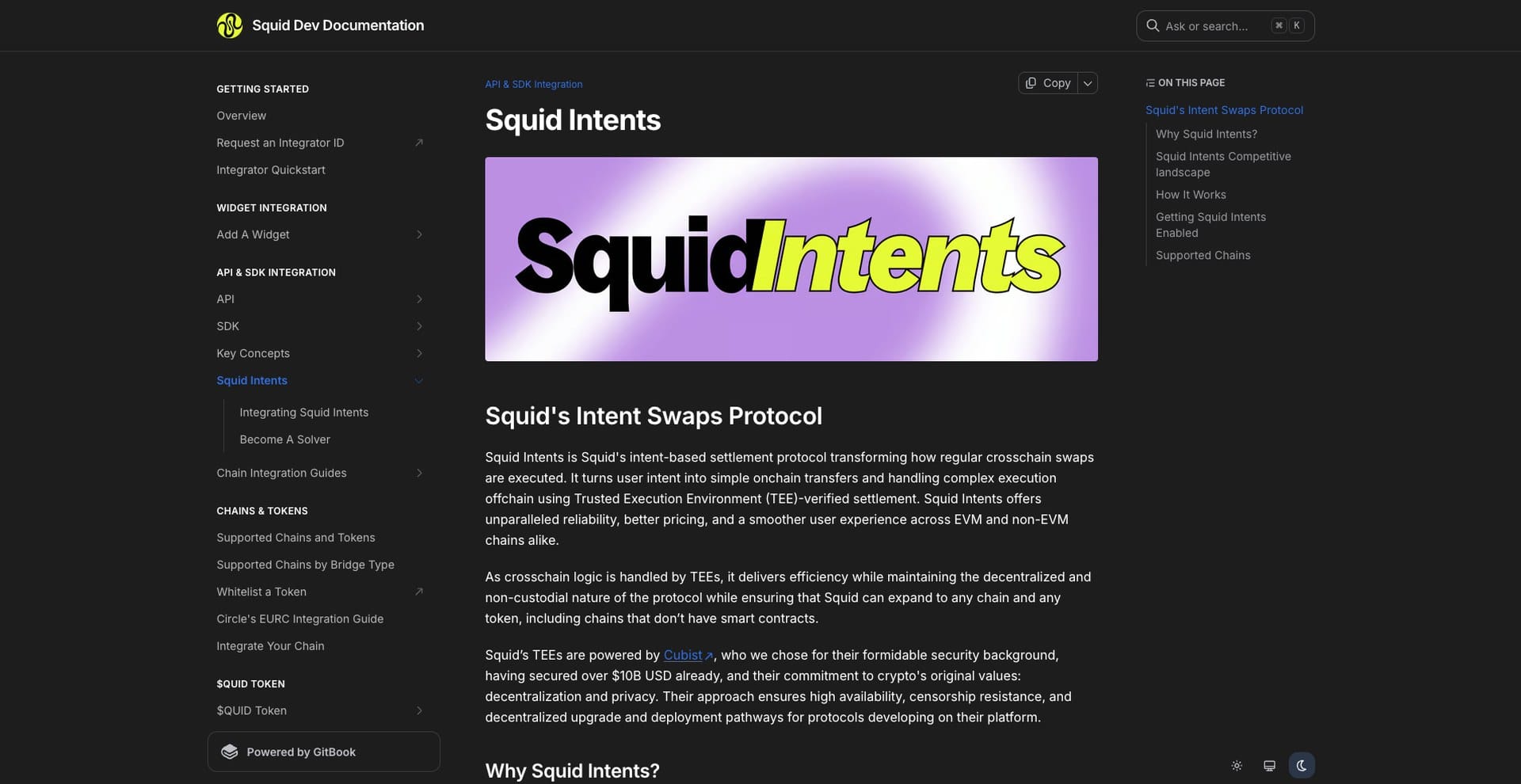
Squid Intents, formerly known as Coral, serves as Squid's intent-based settlement layer. This system simplifies the user's side of the trade into a straightforward on-chain transfer, while market makers fulfill the order on the opposite side.
The coordination process occurs off-chain within Trusted Execution Environments managed by Cubist. Squid claims this architecture maintains a non-custodial environment and supports chains that lack smart contracts.
Documentation indicates execution times of under five seconds for most transactions, offers quotes that do not expire, and provides automatic refunds on the source chain within 15 minutes if a swap fails.
Importantly, intent routes depend on market makers and TEE operators, which follow a distinct trust model compared to a standard smart contract bridge.
Security Overview
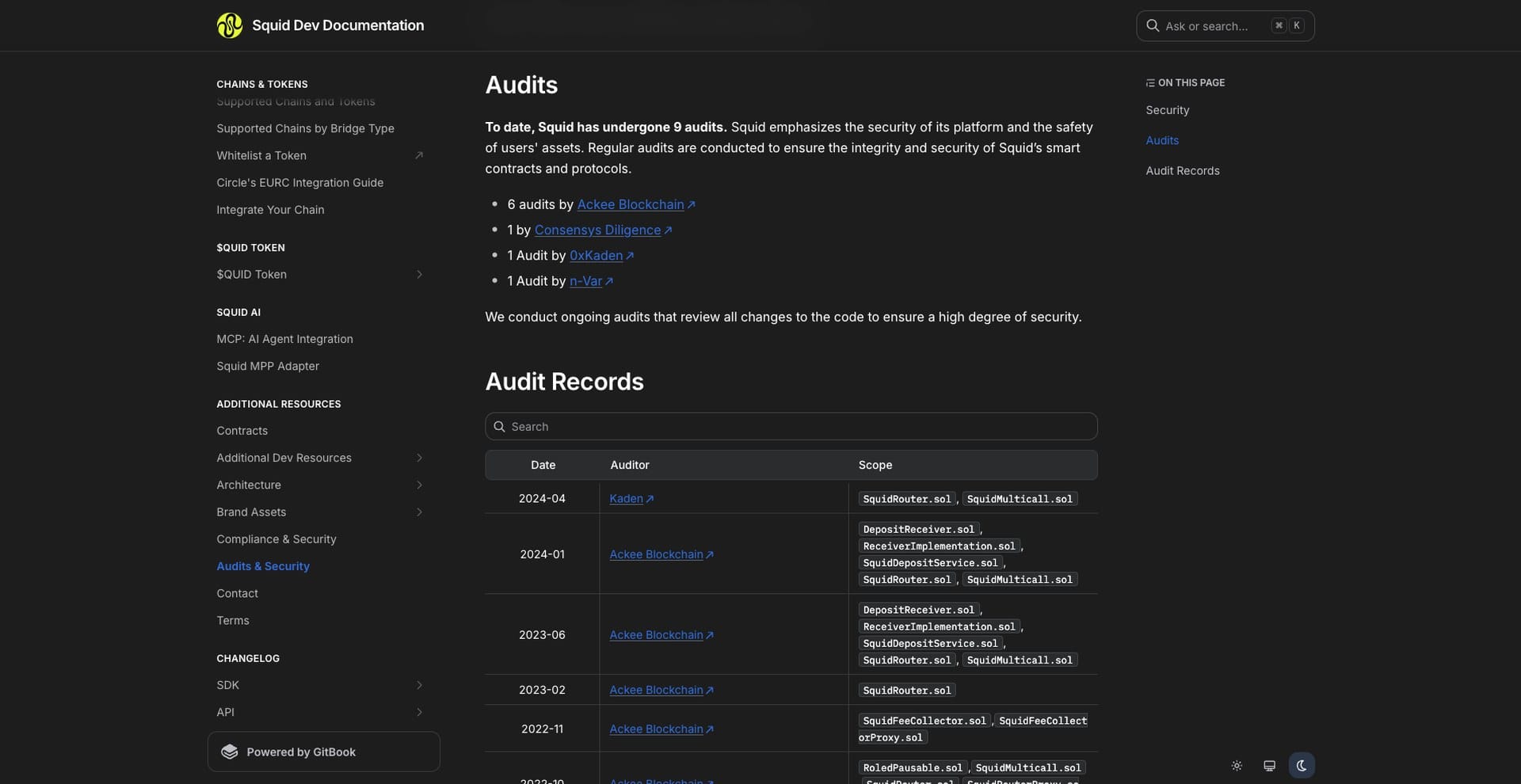
Squid has completed nine audits: six performed by Ackee Blockchain and one each by Consensys Diligence, 0xKaden, and n-Var. According to its documentation, Squid contracts do not hold any liquidity and merely coordinate interactions with DEXs and bridges.
In May 2026, an exploit involving a contract named SquidRouterModule led to a loss of approximately $3.2 million from 86 Gnosis Safe wallets. An analysis by Halborn revealed that the exploit was associated with a third-party Safe module that had no official ties to Squid, which has publicly distanced itself from the incident.
Squid's website asserts that there have been no exploits of its own contracts. However, routes still traverse external bridges and messaging protocols, each introducing its own risks.
It is advised to use Squid exclusively through app.squidrouter.com or a trusted wallet, and to refrain from enabling any unfamiliar modules that may carry Squid's name.
Stablecoin Transactions with Squid
For users focused on stablecoins, Squid's primary advantages include its broad reach and zero fees on stablecoin swaps. It facilitates the transfer of USDC or USDT across chains that most individual bridges do not connect.
According to Squid, Circle has utilized Squid for EURC and USDC routes across Base, Ethereum, Avalanche, and Celo.
Not all routes guarantee the native version of a stablecoin upon completion. Our guide on identifying bridged USDC provides insights on how to verify what token you received.
For larger transactions, it is wise to compare the expected amount received against a direct CCTP or issuer route before confirming.
Ideal Users for Squid
- Multi-chain stablecoin users: benefit from zero fees on stablecoin swaps across over 100 chains.
- Users of non-EVM chains: access routes to Cosmos, XRPL, Stellar, and Hedera alongside EVM chains.
- Developers: utilize an API, SDK, and widget that includes built-in fee collection.
- Less suitable for: individuals needing clarity regarding fee rates for volatile tokens before initiating trades.
Review Methodology
The information presented originates from squidrouter.com, the Squid application, Squid's developer documentation, and blog, reviewed on November 18, 2026, along with reports on the May 2026 exploit. No trades were conducted for this review.
The figures related to volume, users, costs, and speeds are based on company claims. Fee regulations are sourced from Squid's published material and may fluctuate.
It is crucial to always verify the total costs and the token you will receive prior to confirming any transactions.
Risks and Limitations
- Convenience fee rates for routes not involving stablecoins are not publicly available.
- Some routes provide wrapped tokens instead of native stablecoins.
- Routes depend on third-party bridges, messaging protocols, and market makers.
- Contracts that mimic Squid's name have been subject to exploitation.
- Applications incorporating Squid may impose additional fees.
Final Thoughts
Squid distinguishes itself as one of the most comprehensive routers available for transferring stablecoins between various chains. Its zero fees on stablecoin swaps and compatibility with EVM, Cosmos, and other networks make it an attractive option for USDC and USDT transactions.
However, users should consider the lack of fee transparency for other tokens and the mix of bridges involved in each route. Verifying the received token and amount can help address many of these concerns.
For those seeking a dedicated bridge rather than a router, it is recommended to compare it with our list of the top cross-chain bridges.
- Best Cross-Chain Aggregators for 2026
- How to Identify Native USDC vs. Bridged USDC
- Top Crypto Cross-Chain Bridges in 2026
Frequently Asked Questions
1. Does Squid charge any fees?
Squid states that swaps involving stablecoins incur no fees from Squid. Other routes within its application may include a variable convenience fee, with network gas fees always applicable.
2. Is Squid considered a bridge?
Squid is categorized as a router rather than a singular bridge. It integrates DEXs, market makers, and protocols including Axelar, CCTP, IBC, Chainflip, and LayerZero to complete cross-chain swaps within a single transaction.
3. What are Squid Intents?
Squid Intents, previously called Coral, represents Squid's intent-based settlement system. Market makers fulfill cross-chain orders, coordination operates within Trusted Execution Environments, and failed swaps are refunded on the originating chain.
4. Was Squid compromised in 2026?
A third-party Gnosis Safe module named SquidRouterModule was exploited, resulting in a loss of approximately $3.2 million in May 2026. Security firm Halborn reported that there was no official connection to Squid.
5. Is Squid reliant on Axelar?
While Squid was initially developed within the Axelar ecosystem, it now claims to operate independently. It employs various protocols for routing, and Squid Intents function on its own settlement layer.