After selling USDT on a P2P platform, you may find your bank account unexpectedly frozen days or even weeks later.
This issue is notably prevalent among P2P sellers in 2026, particularly in India. Guidance from exchanges like Binance, KuCoin, and Bybit highlights the frequency of this problem.
This article explores the reasons behind banks freezing accounts following P2P transactions, what exchanges require from sellers, insights from Indian courts, and strategies to mitigate risk.
Most account freezes originate from fraud victims, not the sellers themselves. When a scammer pays a seller with stolen funds, the victim reports the incident, leading authorities to freeze all accounts associated with the transaction, including those of innocent sellers.
Key Takeaways
- Account freezes typically follow fraud reports against the buyer.
- Innocent sellers often get caught in the freeze along with the scammers.
- Exchanges require bank documentation linked directly to the specific transaction.
- Bybit allows appeals only within five days after an order closes.
- Indian courts have limited the scope of blanket account freezes.
Reasons for Bank Account Freezes After P2P Transactions
According to Binance's help resources, the most frequent scenario involves buyers purchasing crypto with funds obtained from scammed individuals. When these victims report the fraud, both the scammer's and innocent sellers' bank accounts face freezing.
Additionally, banks may freeze accounts for various other reasons. Binance and KuCoin cite suspicious activity, anti-money laundering compliance, chargebacks, court orders, and issues with identity verification as potential triggers.
Importantly, the freezing action is taken by the bank or law enforcement, not by the exchange itself. Consequently, exchanges cannot unfreeze accounts independently.
It’s crucial to note that a freeze can happen weeks post-transaction, long after you may have forgotten the buyer’s details.
Identifying the Risk: The P2P Transaction
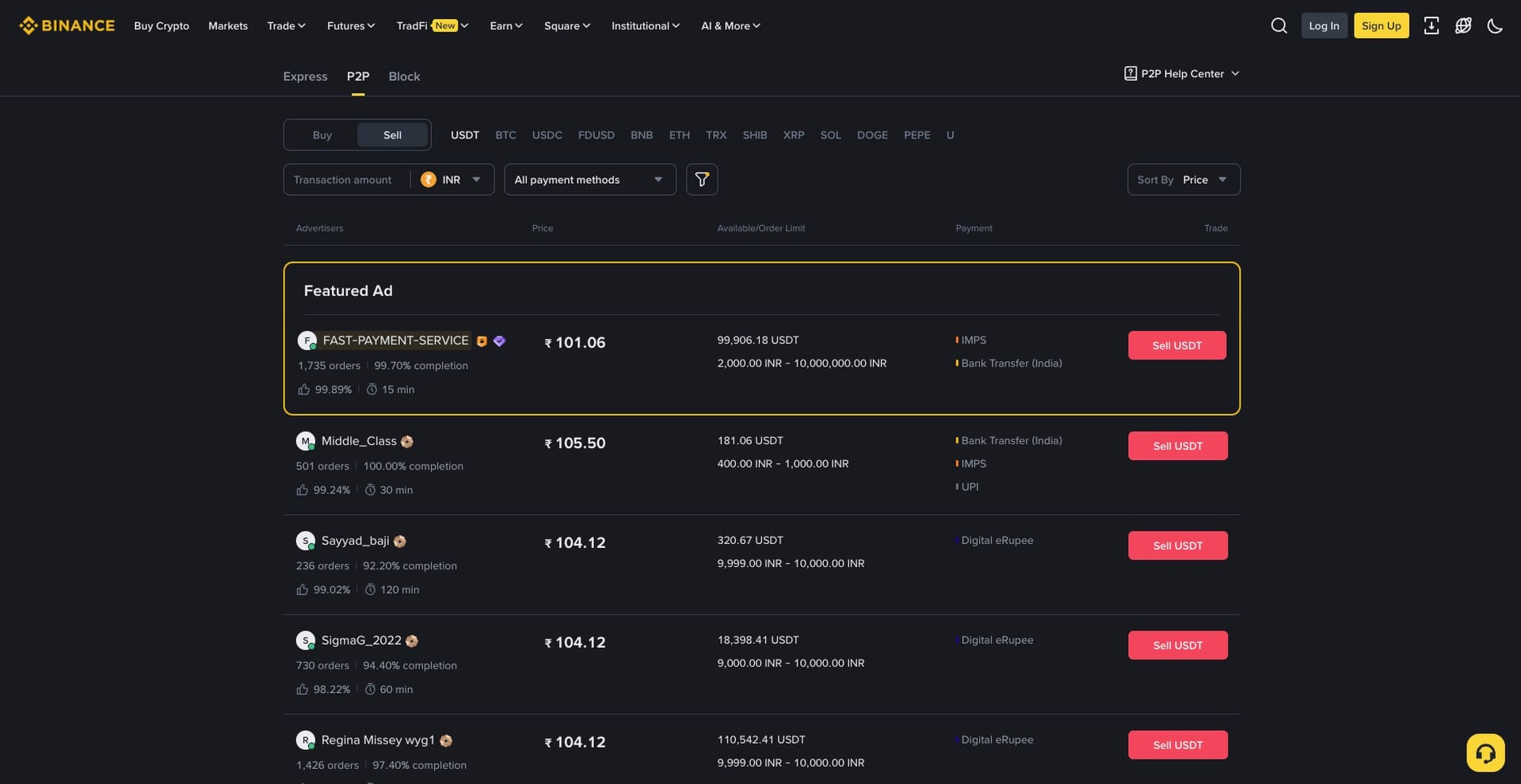
On November 25, 2026, buyers on Binance P2P who purchased USDT with rupees made payments through various methods including UPI, IMPS, bank transfers, Paytm, PhonePe, Google Pay, and Digital eRupee, resulting in a market with 142 pages of offers.
All payments are directly credited to the seller’s bank account. If the buyer's funds originated from fraudulent activities, the seller’s account then becomes part of the money trail.
As observed in other markets, the Featured Ad offered a lower price at ₹101.06 per USDT compared to regular buyers, who paid approximately ₹104.12.
It’s important to understand that a high completion rate merely indicates that a trader completes transactions; it doesn’t guarantee that the funds are legitimate.
India's Cyber Cells and Account Freezes
In India, victims of fraud can file complaints through the National Cyber Crime Reporting Portal or by calling the 1930 helpline. Investigators follow the money trail, and banks often impose a lien or debit freeze at the request of cyber cells.
The amounts involved can be substantial; for instance, Crypto Times reported in October 2026 that SBI froze ₹4.5 lakh in a seller’s account following a single trade of 1,000 USDT.
Indian users on platforms like Reddit have shared experiences of account freezes occurring weeks after a transaction. Our guide on converting USDT to INR contrasts P2P with exchange methods.
It’s worth noting that a procedure established in January 2026 for reporting cyber fraud in India details a grievance process for individuals whose funds are frozen.
Required Documentation from Exchanges
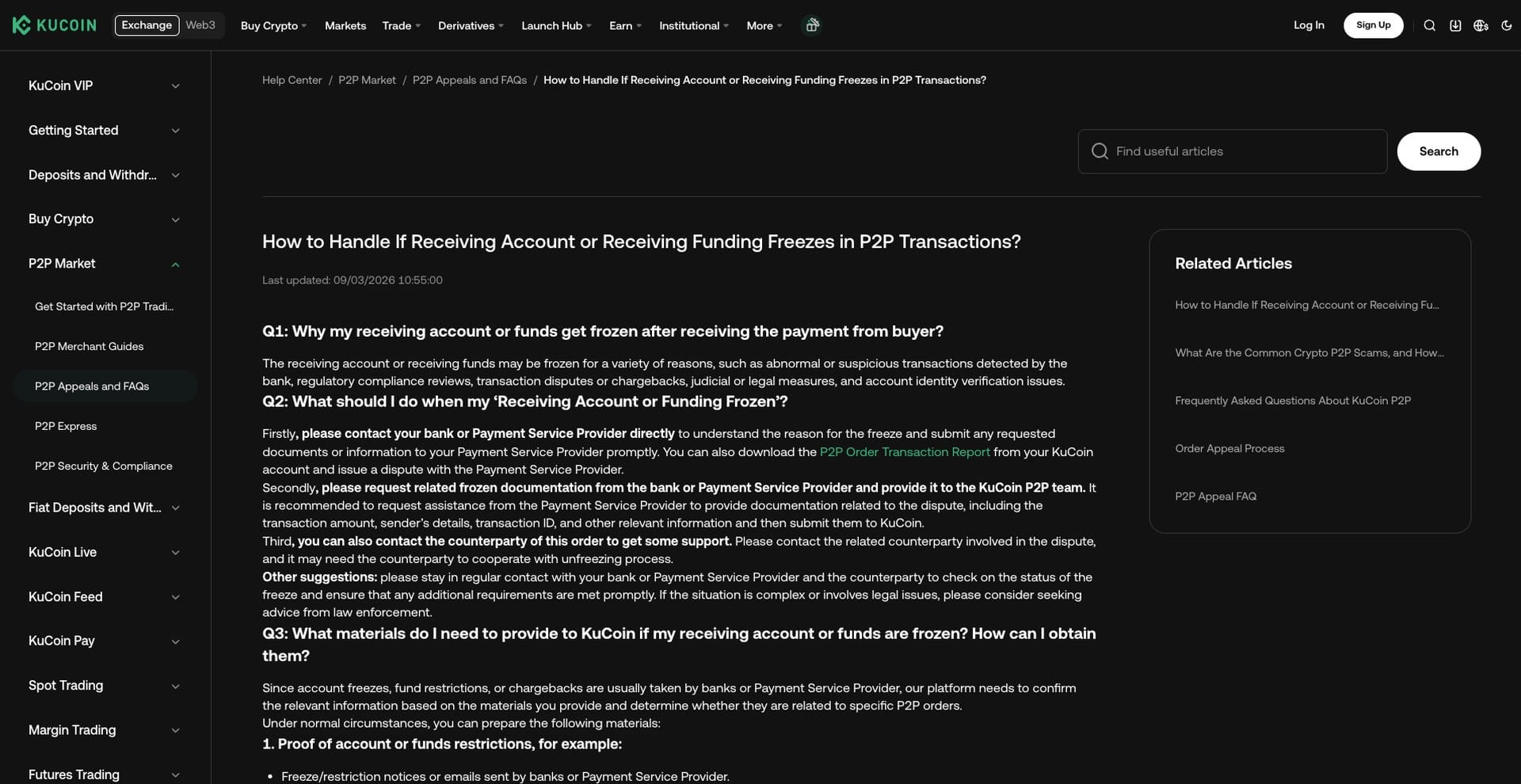
KuCoin advises sellers to first reach out to their bank, download the P2P Order Transaction Report, and submit the bank's freeze documents to its P2P team. Contacting the buyer may also be necessary, as their cooperation could be essential.
Binance enforces stringent evidence requirements. It requests a clear video recorded on a separate device, rejects screen recordings, and mandates that bank emails correspond with the transaction ID, amount, and buyer name.
Binance also clarifies that it has no control over bank transactions. While it can investigate and mediate, it cannot directly unfreeze accounts.
It’s critical that any evidence submitted is explicitly linked to the specific P2P transaction to be considered valid.
Short Appeal Windows
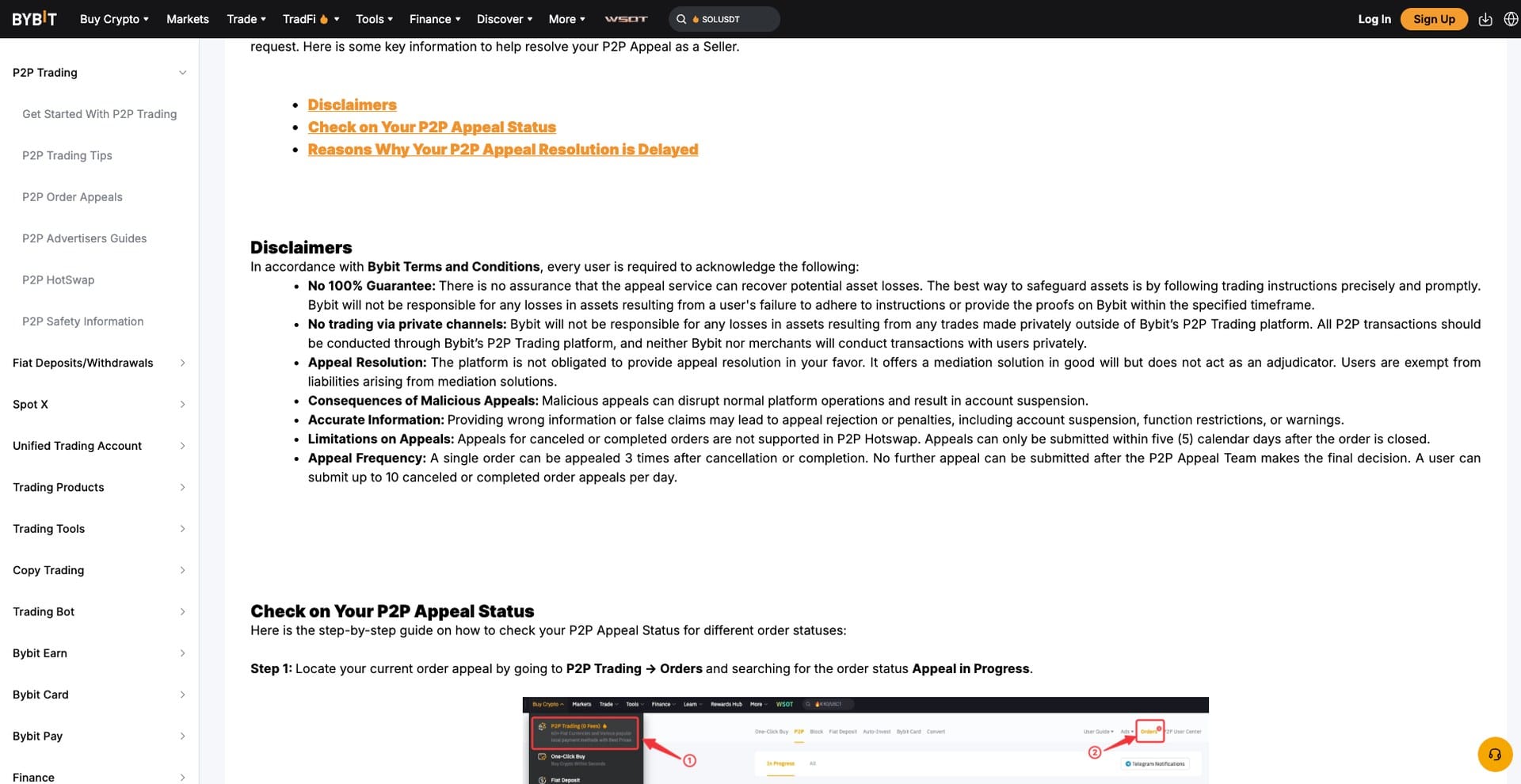
Bybit states that appeals for canceled or completed P2P orders must be made within five calendar days from the order's closure. Additionally, there is no assurance that an appeal will result in recovered losses.
This creates a significant challenge; if your bank freezes your account three weeks after a transaction, the opportunity to appeal on the platform may have already elapsed.
It is advisable to maintain your own records of each transaction, as you may need them long after the exchange ceases to assist you.
Moreover, Bybit warns that requesting a bank to reverse a payment might also lead to account freezes.
Initial Steps to Take Within 48 Hours
- Inquire with your bank regarding the freeze's origin and reason.
- Request the complaint or case number in writing.
- Download the P2P order receipt and chat history.
- If possible, initiate an appeal on the exchange.
- Seek legal counsel if you experience significant or recurring freezes.
Ask whether the freeze affects your entire account or just a specific amount. In India, find out which police station initiated the request.
Collect your transaction history, buyer communications, bank credits, KYC documentation, and proof that the crypto sold was obtained through legal means.
Lastly, be cautious: never pay anyone who approaches you claiming they can unfreeze your account for a fee.
Legal Precedents in India
Several High Courts in India have challenged the practice of blanket freezes. The Kerala High Court ruled in June 2025 that an account freeze under Section 107 of the BNSS requires a Magistrate's order.
In January 2026, the Delhi High Court determined that Section 106 permits evidence seizure but not account freezing, stating that indiscriminate freezes of individuals who are neither suspects nor accused are arbitrary. The same month, the Allahabad High Court asserted that a lien should only cover a specific sum, with a Magistrate being informed within 24 hours.
These judicial decisions provide frozen sellers with a legal basis for their cases, though the outcome will depend on individual circumstances.
It's essential to remember that this information is general in nature and should not be considered legal advice; consult a lawyer regarding your specific situation.
Strategies to Minimize Risk
Binance suggests using a distinct bank account for P2P transactions and refraining from mentioning cryptocurrency in payment references. It also recommends keeping all communications within the P2P chat and declining buyers who propose alternative accounts or lower rates.
Ensure that the payer's name matches the verified name of the buyer, and avoid accepting third-party payments.
Many account freezes originate from scams that target other individuals. Our guide on prevalent stablecoin scams outlines the common patterns that lead to stolen funds entering P2P markets.
Establishing a separate account can help limit potential damages, as a freeze would not affect your primary salary or savings.
A Global Concern Beyond India
Binance's guidance regarding account freezes is available in various local versions of its help center, including for Nigeria. Sellers in other markets with significant P2P activity face similar risks.
In Nigeria, many users engage in selling USDT for naira through P2P platforms. Our guide on converting USDT to naira evaluates P2P against other methods.
The fundamental sequence remains consistent across borders: stolen funds, a fraud report, and subsequent freezes on all accounts involved in the transaction.
If possible, exchanges that enable direct bank withdrawals can prevent funds from unknown buyers.
Potential Risks and Challenges
- Account freezes can occur weeks after a transaction.
- Exchanges cannot lift freezes imposed by banks or law enforcement.
- Appeal deadlines may expire before a freeze is imposed.
- Unfreezing processes can extend for weeks or months.
- Legal fees may surpass the frozen amount.
No funds were exchanged, traded, or withdrawn in the preparation of this guide. The information was derived from the help pages of Binance, KuCoin, and Bybit on November 25, 2026.
The safest P2P transaction is one that you can document thoroughly.
Final Thoughts
Experiencing a frozen bank account after a P2P sale typically indicates that the buyer utilized funds associated with fraudulent activities. Although you have done nothing wrong, your account now becomes part of an ongoing investigation.
It’s crucial to act swiftly: obtain the freeze details from your bank, compile your order documentation, and file an appeal with the exchange while you still can. Recent rulings from High Courts in India may provide support against unjust blanket freezes.
Adopt a separate account for these transactions, accept payments exclusively from verified buyers, and maintain detailed records of every trade.
- How to Convert USDT to INR in India (2026): 5 Ways Compared
- Stablecoin Scams: The Top 10 Patterns and How to Spot Them Fast
- How to Convert USDT to Naira in 2026: 5 Ways Compared
Frequently Asked Questions
1. Why did my bank account get frozen following a P2P trade?
Typically, this occurs because the buyer transferred funds that are linked to fraud. When the victim files a report, both the police and bank may freeze all accounts involved in the transaction.
2. Can Binance assist in unfreezing my bank account?
No. Binance states that it cannot intervene in bank transactions. While it can review evidence and mediate with the buyer, only your bank or the authorities can lift the freeze.
3. What documentation do exchanges require?
They request bank freeze notifications or emails that correspond to the transaction ID, amount, and buyer name. Binance specifically asks for a video recorded on a separate device and does not accept screen recordings.
4. What is the time frame for appealing a P2P order?
On Bybit, you must submit appeals for completed or canceled orders within five calendar days of the order's closure. Always check each platform’s specific rules, as they can vary.
5. How can I prevent my bank account from being frozen when selling USDT?
Utilize a separate bank account, avoid using cryptocurrency-related terms in payment references, only accept payments from verified buyers, and keep thorough records of your transactions.